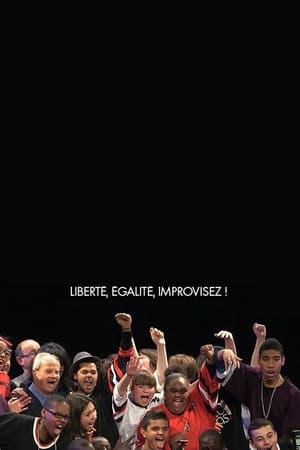
This documentary examines the media's coverage of the Canadian federal election of May 1979. Filmed over a 3-week period, it takes a fascinating look at journalists in action and the politicians who attempt to manipulate the media.
Established by Warren & Chris Hellman and their children in 1994, the Hellman Fellows Program has supported more than 850 junior faculty members, who are now chairs and heads of departments, MacArthur Geniuses and tenured faculty with long track records of successful research.
Games You Can’t Win explores “empathy” gaming, a new video game movement in which developers are sharing some of their most intimate or traumatic personal experiences through artful, documentary-style video games. Using a combination of intimate verité footage and video capture from the games, the short film tells the stories of three developer and the personal experiences that inspired their game.
It often happens that at the moment of death, transgender individuals are shorn of their identity. Their families are ashamed, the funeral takes place in secret, and on the tomb appears the name the deceased had before their transition, in one stroke nullifying the entire life path they had chosen. The same thing happened to Antonia. Her girlfriends gather to honor her memory and give her back her identity denied. In telling her story, the film’s stars, all drawn from the variegated transgender world, interweave the narrative with tales of their own lives, experiences, and memories.
A short documentary explaining the importance of queer community that is safe and radical. Filmed at Nottingham’s first ever transgender pride
Julia is a young transgender woman who left her home country of Lithuania. Now living in Germany, she walks the streets of Berlin, working as a prostitute to survive. This documentary revisits Julia over a ten-year period of her life.
Our era is marked by the transformation of social institutions, with universities central to Euro-American civilisation’s development. Despite past persecution, universities have become bastions of free thought and knowledge, crucial to democratic culture. However, commercialisation and massification have introduced challenges affecting teaching, research, self-governance, and the system overall. How do universities maintain academic freedoms, and what are the consequences of their failure? Can we identify and address these challenges?
Dance for All
Follow the emotional journey of Hiba Noor, a talented artist forced to flee her home country, as she navigates a new life in London while awaiting her asylum fate. This film takes you on a journey into the production of MATAR, a short film about a fellow asylum seeker facing similar problems.
A look at the issue of high-quality early care and education in America, from home to childcare to preschool; the tragic cost of getting it wrong; and the huge payoff - for our kids, our families and our country - of getting it right.
A low budget, comedic documentary following a young man trying to take a deeper look into water, its purpose, and how we, as a society have chosen to use it.
Filmed over five years, we follow Lily Jones, 20, as she transitions from male to female, leaves her seaside home for the city, undergoes gender reassignment surgery and finds love.
Geometry Part 2 goes into detail on perimeter, circumference and area for 2-dimensional and 3-dimensional figures. This DVD is also helpful for students who need extra help understanding the Pythagorean Theorem. Difficult concepts are made crystal clear with easy-to-follow examples and graphic presentations. With the Standard Deviants by your side, you'll be calculating the surface of a sphere or the volume of a cylinder in no time!
Young members of 3 New Orleans school marching bands grow up in America's most musical city, and one of its most dangerous. Their band directors get them ready to perform in the Mardi Gras parades, and teach them to succeed and to survive.
Acabou a Paz: Isto Aqui Vai Virar o Chile
Esquecidos: crise nos anos finais do Ensino Fundamental
A documentary feature film which aims to expand the usually one-sided conversation between students and teachers. During its runtime, raw experiences heard from all sides of the conversation are laid bare during its 77 minute runtime. From all of these interviewees, including a student, a school psychiatrist, and five teachers, the viewer shouldn't expect to be confronted with a narrow perspective but rather a question: "where do I stand?"
At America's elite MIT, a Ghanaian alum follows four African students as they strive to graduate and become agents of change for their home countries Nigeria, Rwanda, Tanzania, and Zimbabwe. Over an intimate, nearly decade-long journey, all must decide how much of America to absorb, how much of Africa to hold on to, and how to reconcile teenage ideals with the truths they discover about the world and themselves.
In the late 1960s, with the triumph of bilingualism and biculturalism, New Brunswick's Université de Moncton became the setting for the awakening of Acadian nationalism after centuries of defeatism and resignation. Although 40% of the province's population spoke French, they had been unable to make their voices heard. The movement started with students-sit-ins, demonstrations against Parliament, run-ins with the police - and soon spread to a majority of Acadians. The film captures the behind-the-scenes action and the students' determination to bring about change. An invaluable document of the rebirth of a people.
Morgan Spurlock tours the Middle East to discuss the war on terror with Arabic people.