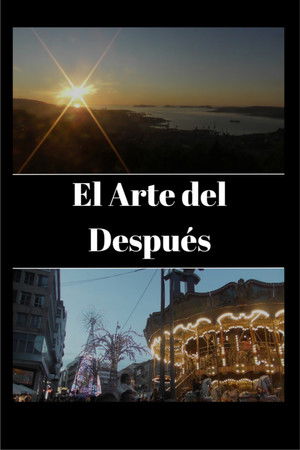
Can an adolescent experience define our perception of love? Can or should everything be connected or have a reason? A character recounts to his niece or nephew, in the form of a confession, an event from his adolescence that defines his particular way of perceiving love. While this exercise serves to tell a story that, regardless of genre, has surely been experienced by more than one person, it expresses the director's idea that discourse can sustain a work on its own, even if what is depicted on screen appears to have no connection.
El Arte del Despues
El doble fin de semana de los críticos
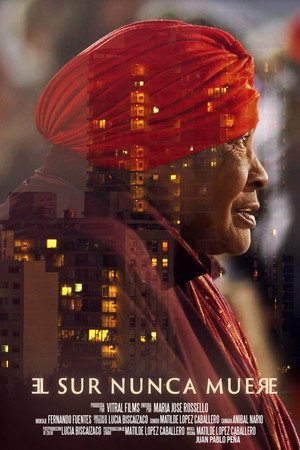
Growth is beautiful, and often progress, too, but if it's not measured, growth can be predatory. Made using the principles of essay film, and using an anonymous character, this film chronicles and critiques how provincial cities grow, change, and gradually lose their identity.
Fragmentos del reflejo en el espejo
Grata
In this video essay, the filmmaker reflects on the contrast between himself and the space around him, a student dormitory.
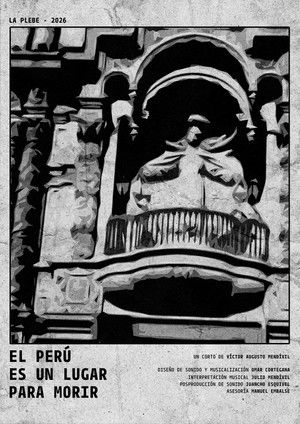
Using footage filmed in Peru in 1950 by a foreigner, Víctor writes a letter to his son to question the country he will inherit: among heartbeats and ruins, he searches for a hope that still endures amid disillusionment.
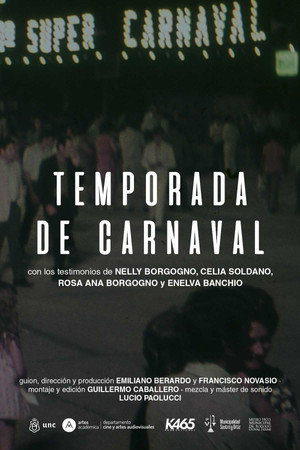
In Sastre y Ortiz, a small town in the province of Santa Fe, carnival is experienced as something far deeper than a mere celebration. Constructed from archival footage, this non-fiction work reflects on the carnival as a collective ritual and a space of resistance against oblivion. A place where a town unites to confront its pain, allowing joy and sorrow, the sacred and the profane, and the very contradictions of human experience to coexist.
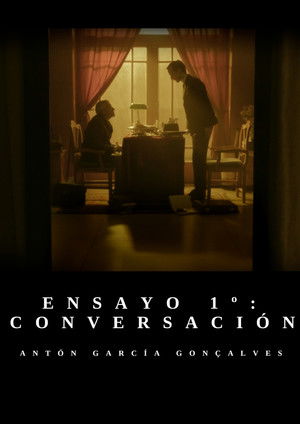
Ensayo 1º: Conversación.
El sur nunca muere
Desesperadas medidas
Teenage Cecilia comes from a working class family. She lives with her mother, three brothers, and alcoholic father. Cecilia finds emotional relief and security with Tore, an older girl at her school.
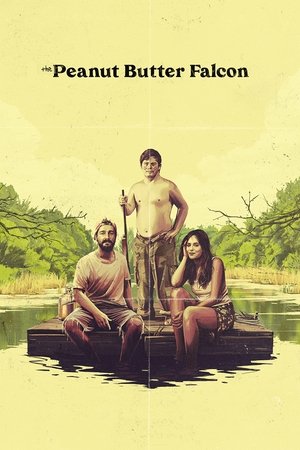
A down-on-his-luck crab fisherman embarks on a journey to get a young man with Down syndrome to a professional wrestling school in rural North Carolina and away from the retirement home where he’s lived for the past two and a half years.
When his dream girl returns to school a hopeless romantic teen tries to win her heart, until he hits rock bottom and realizes his true love has been there all along.
In the summer of 1953, Margaret Johnson, the wife of an American businessman, is touring Italy with her daughter, Clara. While sightseeing, Clara—a beautiful, surprisingly childish young woman—loses her hat in a sudden gust. As if guided by an unseen hand, the hat lands at the feet of Fabrizio Naccarelli, a handsome Florentine, who returns it to Clara. This brief episode, charged with coincidence and fate, sparks an immediate and intense romance between Clara and Fabrizio. Margaret, extremely protective of her daughter, attempts to keep Clara and Fabrizio apart.
A girl from a country village goes to town and falls in love with a songwriter struggling for success. Soon however their life-paths go different ways and they split. Only for a short time naturally : a song he writes will help them to reunite.
Young Dutch widow Emilie travels to a seaside resort in Italy, where she falls in love with Italian officer Aldo. Meanwhile, her deceased husband's assistant Hugo plans to propose to her as soon as the period of mourning is over.
A touching, at the same time funny and sad story of love and separation, which fit into one broadcast of the program "Shop on the couch". What is it – a vivid cross-section of modern trends or an old-as-the-world history of the relationship between a man and a woman? He is not ambitious enough, she is not romantic enough, and, of course, there is someone third between them. A story of one love, sold in the "Shop on the couch" for the price of one sweater.
A husband and wife have won the lottery, but they can't spend the money. Every time they make a purchase, they get hurt.