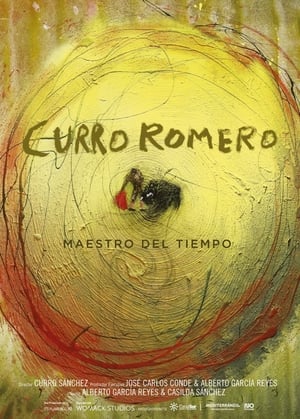
Curro Romero, Maestro del Tiempo
Documents the band "Korter í Flog". Their way to the top and their ultimate downfall. Post-dreifing, THAT Húrra concert and so much more.
What would happen if you met someone who has the power to change your entire life and destiny? This documentary tells the story of five people who assure audiences that He is alive and has brought them back to life.
A filmmaker explores why women are at the forefront of documentary filmmaking in the Philippines by chronicling their narratives of struggle and victories as they navigate the masculine filmmaking industry. Throughout the film, she discovers her own reflexivity as a filmmaker but most importantly, as a woman.
Featuring notable Minimalist artists such as Bride Marden, Claes Oldenburg, and Donald Judd, What is Minimalism: The American Perspective 1958-1968 explores the movement during an explorative exhibit at the Museum of Contemporary Arts in Los Angeles. Exhibition curator, Ann Goldstein, walks us through multiple rooms of the exhibit and offers her insight on Minimalism and its role in our society, stating that "It marked a fundamental, and critical and pivotal and irrevocable change in the course of art history," (Ann Goldstein). This film observes and analyzes the compelling creative choices behind some of the featured artists most applauded works of art.
Koly, a textile worker from Mali, confuses his search for identity with his desire to marry a European woman. The film documents migrant housing estates in the Northeastern suburbs of Paris. They have been constructed since the late 1960s and recently underwent vast transformations in the course of the urban planning project, Grand Paris.
San Francisco Bay Area salsa and Latin jazz performers and audiences struggle to maintain culture, creativity and community in the face of powerful socioeconomic and demographic changes. This fascinating history of the Bay Area Latin music scene explores the post-WWII growth of California’s multi-ethnic music community, the 1950s Mambo craze, the 70s heyday of Salsa, and subsequent expansions of the art form. In today’s fast-changing environment, despite decreasing audiences and venues, Bay Area performers are transforming the future of the Afro-Latin music and dance through education and outreach.
“Light has no tongue but it is all eye.” – John Donne. A series of short films about how the night immerses us in a world where the deepest thoughts emerge. Shot frame-by-frame with long exposure times and developed by hand before dawn.
Les 20 chanteuses préférées des Français
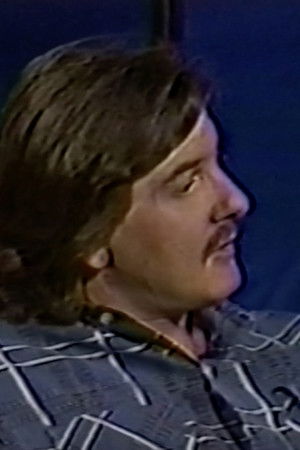
Tupac's Interview in Clinton Correctional Facility Prison. Approximate date is September - October 1995. He mentions having just signed to Death Row, contracts with death row were signed in September. There is also credibility because he refers to peoples comments on his vibe interview - Puffy, Biggie, and the public responded to Tupac's VIBE interview in July-August 1995.
Nu har vi talt nok om kvinder
There are about 600 murders each year in the UK. So, what drives people to kill? Are some people born to kill or are they driven to it by circumstances? Michael Mosley delves into the BBC archives to chart scientists' progress as they probed the mind of the murderer to try to understand why people kill, and to find out whether by understanding murder we can prevent it.
The United Way is the legendary story of one of the most iconic sports teams in the world, Manchester United, from their humblest of beginnings to a behemoth with over 650 million supporters worldwide. Presented by Eric Cantona and featuring Charlton, Best, Cantona, Beckham, and Ronaldo, alongside stunning archival and never-before-seen footage, The United Way celebrates the global phenomenon of a unifying club for the people, by the people.
A look at the prison breakout of Richard Matt and David Sweat from Clinton Correctional facility, as well as a look back at some of the most daring and ingenious prison breaks in American history.
A documentary about some of Marvel's most famous characters.
A devoted group of entrepreneurs and activists believe they see the writing on the wall, and they're determined to add a new chapter.
The debate within a family from the Panamanian elite on a referendum for expanding the Panama Channel is illustrated through a poetic journey along a river, a coastline and an inter-oceanic channel. On this journey, the documentary inquires as to whether our understanding of development is at the service of man or if, on the contrary, man is used for the benefit of variables stemming from the notion of development.
The particular reality experienced by Panama for almost a century due to the military presence of United States in the former Canal Zone is narrated through unpublished materials and revealing interviews with many of the social and cultural personalities who left their imprints in this story. The life in "the zone", the identity of the "zonians", the events that led to the handover of the military bases and the administration to the Panamanians are part of a plot as complex as the story itself.
How does progress in a city influence the life of its inhabitants? Panama is one of the fastest-growing economies in Latin America, as reflected primarily in the various construction mega-projects that have been adorning the capital of this small country. Many in this city brag about the pace of development that is taking place, but to what point can we speak of development? The documentary seeks to assess this development in terms of the improvement or worsening it produces in the Panamanians’ quality of life.
The life of General Victoriano Lorenzo, of indigenous descent, guerrilla fighter from the One Thousand Day War, shot by a firing squad of the oligarchy before the birth of Panama as a Republic and the building of the Canal by the North Americans in 1903, is reconstructed through several characters who know his history, life and myth. An indigenous painter, an indigenous chief, a peasant, a violinist, a singer of rhymes and a former guerrilla fighter talk to us about the life of our Transparent Hero, as we delve into their worlds of daily struggle in a country that is proud of its economic growth and gradually seeks to eliminate the memory of its people. These are stories that are weaved to highlight the figure of Victoriano Lorenzo through the imagination that creates time in the self-image of Panamanians amidst memories, versions and contradictions.