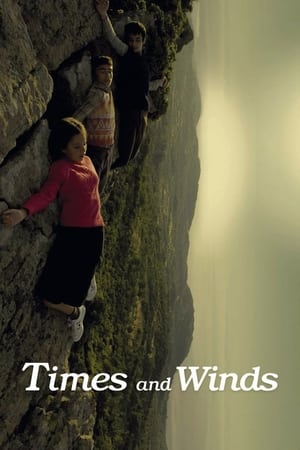
In a small, poor village leaning over high rocky mountains, the villagers are simple and diligent people who struggle to cope with a harsh nature. They earn their living off the earth and a few animals they feed. Fathers always prefer one of their sons. Mothers command their daughters ruthlessly. Ömer, the son of the imam, wishes hopelessly for the death of his father. When he understands that wishful thinking does not have any concrete results, he begins to search for childish ways to kill his father. Yakup is in love with his teacher, and one day after seeing his father spying on the teacher he dreams too, like Ömer, of killing his father. Yıldız studies and tries to manage the household chores imposed by her mother. She learns with irritation about the secrets of the relationship between men and women.
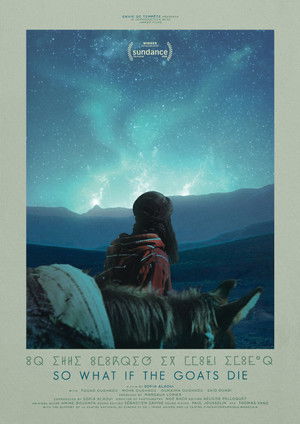
Abdellah, a young shepherd living in the mountains, is forced to brave the snow blocking him in order to get food and save this cattle. Once he gets to the village, he faces a supernatural phenomenon.
A privileged six-year-old Pakistani girl embarks on a mission to save her beloved pet goat from being eaten on the Muslim holiday of Eid al-Azha, only to learn the meaning of sacrifice.
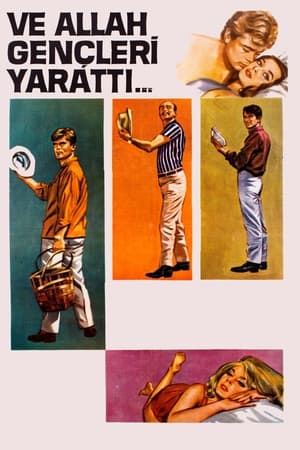
The film tells two separate love stories involving Turhan (Tamer Yiğit), a young man camping on Büyükada, and two island residents, Jale (Leyla Sayar) and Mine (Tülin Elgin).
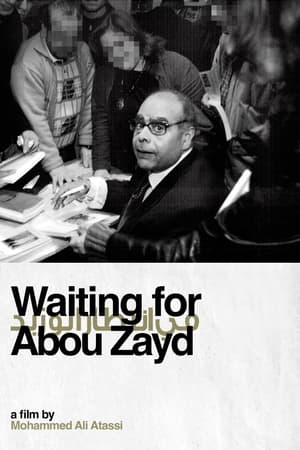
"Nasr Hamed Abou Zayd is not Godot, and the expectation promised by the title is misleading: this great gentleman is present in almost every shot. Who is he? An Egyptian Muslim theologian of international reputation, he has published exegeses of the Koran which led to his being condemned for apostasy. Exile, forced divorce from his wife Ibtihal Younes since his marriage was subject to annulment, separation from his son, such are the consequences of his writings. But Abou Zayd has not given up, residing in Leiden in the Netherlands, he continues, always on the road, to give conferences, to explain with great serenity his positions in public debates, on television, etc. C It is this particularly impressive dedication that Mohammad Ali Atassi's camera recorded over a period of six years.
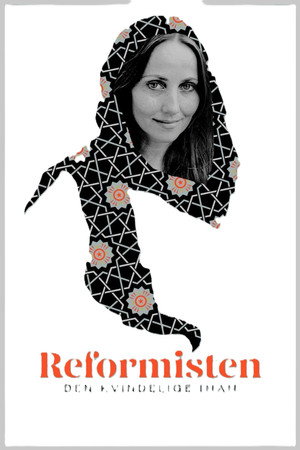
With the help of hidden camera, Danish TV 2 documents how a known Danish imam teaches Muslim women about Islam's violent rules of adultery.
A Catholic priest must convince a man to step forward to save the wrong person from being sent to the electric chair.
The film is an attempt to recreate the world of Marc Chagall and his myth within the genre of a folklore ballad. We are not exploiting Chagall's images, but are attempting to create a dramatized projection of his creativity onto the movie screen, relying on both, facts and fantasy (as Chagall himself would).The story is based on real events which occurred at the time of Chagall's short-lived period in Vitebskin in 1917-18, during which time he creates the Academy of Modern Art, inspired by his dreams of a bright and beautiful future. Many pictures by Chagall and Malevich are used in the film.
Budding photographer Chloe (Ory) comes from a family of failed romances. At a local flea market, she stumbles upon an old photo album from the 1970s, chronicling the ideal romance of a happy couple (Hindle and Barbeau). Unable to find her own "true love," she sets out to find the couple in the album and prove that true love exists. Along the way, she meets Gabe Sinclair (Macfarlane), a mysterious, but charming bartender, who seizes the opportunity to join Chloe's mission and soon finds himself falling in love with her. With limited resources, the two go on an adventure, searching for clues that will lead them to the couple, and hopefully to true love. As the search continues, Chloe begins taking an interest in Gabe, but won't let these feelings distract her from her mission to find the couple. Will Chloe learn to give up her fear of falling in love and finally find true happiness?
A young boy in Alaska becomes involved with the legendary battle between a raven and a wolf.
Muriel and her mother leave their home for good and a freak occurrence leaves them stranded in the country. They beg a woman to let them stay and a shaky friendship develops between the two families.
Lucy & Desi: Before the Laughter is described by CBS as "a dramatic love story" about the lives of Lucille Ball and Desi Arnaz.
In Florence, at the time of Lorenzo de Medici, known also as Lorenzo the Magnificent, the aristocrat brothers Chiaramantesi rule with an iron fist the streets of the city. Ruthless and fierce, the two brothers have chosen as their special victim the innocent and harmless Giannetto. Even though determined to not react to the cruel pranks of the brothers, Giannetto is forced to take a stand when Ginevra, a beautiful girl that works in the Chiaramantesi household, is dragged into the game. To defend his honor and protect the girl, Giannetto works out a fiendish plot that will end in blood and madness.
Growing up poor on the streets of New Jersey, Frank Siena (Danny Nucci) has little hope of realizing his dream of becoming a doctor. But "fate" has a way of intervening. Now a brilliant, successful cardiac surgeon, Frank seems to have it all, except for one terrible secret: Before he swore to save lives and do no harm, Frank took another oath... to mob boss Nicola Delarusso (Paul Sorvino), who paid his way through medical school in exchange for absolute loyalty. And when Delarusso demands payment in full Frank suffers a crisis of conscience that could cost him his job, his wife... and his life!
A mother's dementia reignites a past of crime and lust, forcing her daughter to make difficult decisions.
India’s first major gay-themed film, is an adaptation of Mahesh Dattani’s seminal play On a Muggy Night in Mumbai. Kamlesh, a young gay man, invites his friends home ostensibly for an evening of camaraderie. However, with the arrival of his sister and her fiancé, a series of dramatic confrontations is set into motion, leading to startling revelations and unexpected catharsis.
The story of Johann Friedrich Böttger, an apothecary’s apprentice and alchemist’s assistant. Fleeing from the Prussian King, he goes to Saxony, where King Frederick August the Strong takes him to a fortress and demands that he create gold. Böttger is equipped with everything he would need for the task, but he has known for a while that actual gold production is a myth and instead experiments with porcelain—white porcelain, as the Chinese are said to possess. In 1709, he finally succeeds in surprising the King with the "white gold," the first white porcelain made in Europe, he hopes for freedom.