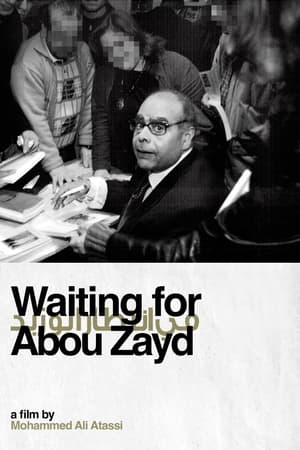
"Nasr Hamed Abou Zayd is not Godot, and the expectation promised by the title is misleading: this great gentleman is present in almost every shot. Who is he? An Egyptian Muslim theologian of international reputation, he has published exegeses of the Koran which led to his being condemned for apostasy. Exile, forced divorce from his wife Ibtihal Younes since his marriage was subject to annulment, separation from his son, such are the consequences of his writings. But Abou Zayd has not given up, residing in Leiden in the Netherlands, he continues, always on the road, to give conferences, to explain with great serenity his positions in public debates, on television, etc. C It is this particularly impressive dedication that Mohammad Ali Atassi's camera recorded over a period of six years.
With the help of hidden camera, Danish TV 2 documents how a known Danish imam teaches Muslim women about Islam's violent rules of adultery.
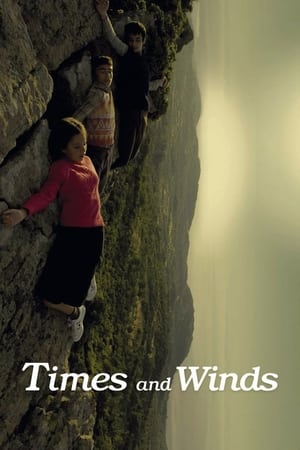
In a small, poor village leaning over high rocky mountains, the villagers are simple and diligent people who struggle to cope with a harsh nature. They earn their living off the earth and a few animals they feed. Fathers always prefer one of their sons. Mothers command their daughters ruthlessly. Ömer, the son of the imam, wishes hopelessly for the death of his father. When he understands that wishful thinking does not have any concrete results, he begins to search for childish ways to kill his father. Yakup is in love with his teacher, and one day after seeing his father spying on the teacher he dreams too, like Ömer, of killing his father. Yıldız studies and tries to manage the household chores imposed by her mother. She learns with irritation about the secrets of the relationship between men and women.
A teenager who works on a campaign of a well-known cleric running for government elections, accidentally found a lewd video collection of the cleric's sexual harassment among his students and congregation.
Cameras follow Irish solo sailor Tom Dolan as he attempts to sail single-handed around the island of Ireland, which is one of the toughest feats in sailing.
Nicolas Cage dies all the way from Hollywood to Direct-To-DVD.
Working men and women leave through the main gate of the Lumière factory in Lyon, France. Filmed on 22 March 1895, it is often referred to as the first real motion picture ever made, although Louis Le Prince's 1888 Roundhay Garden Scene pre-dated it by seven years. Three separate versions of this film exist, which differ from one another in numerous ways. The first version features a carriage drawn by one horse, while in the second version the carriage is drawn by two horses, and there is no carriage at all in the third version. The clothing style is also different between the three versions, demonstrating the different seasons in which each was filmed. This film was made in the 35 mm format with an aspect ratio of 1.33:1, and at a speed of 16 frames per second. At that rate, the 17 meters of film length provided a duration of 46 seconds, holding a total of 800 frames.
It often happens that at the moment of death, transgender individuals are shorn of their identity. Their families are ashamed, the funeral takes place in secret, and on the tomb appears the name the deceased had before their transition, in one stroke nullifying the entire life path they had chosen. The same thing happened to Antonia. Her girlfriends gather to honor her memory and give her back her identity denied. In telling her story, the film’s stars, all drawn from the variegated transgender world, interweave the narrative with tales of their own lives, experiences, and memories.
Tom Angelripper narrates the struggles of the band in the mid-Nineties, his many side projects, and yet another drastic line-up overhaul.
Sequel to the "The Waterfowl People". The author interprets the kinship, linguistic and cultural relationships of the Finno-Ugric peoples. Finns, Vepsians, Votes, Setos, Erzya-Mordvinians, Mansi, Hungarians, Sami, Nganasans, and Estonians appear in the film. The film was shot in 1977 on location in northern Finland, Sapmi, Vepsia, Votia, Mordovia, Khantia-Mansia, Hungary, the Taymyr Peninsula, the Setomaa region in Estonia, and on the Estonian islands of Saaremaa and Muhu. Footage was also shot in 1970 in the Nenets Okrug. The second documentary in Lennart Meri's "Encyclopaedia Cinematographica Gentium Fenno - Ugricarum" series.
Made famous by the 1957 Hollywood movie, the bridges of the River Kwai emblematize one of the most misunderstood events in history. Contrary to the romanticized film version, the structures represent a period of terror, desperation, and death for over 16,000 POWs and 100,00 local slaves. The Thailand - Burma Railway was the vision of the Japanese Imperial Army: a 250-mile track cut through dense jungle that would connect Bangkok and Rangoon. To accomplish this nearly impossible feat, the fanatical and ruthless Japanese engineers used POWs and local slaves as manpower. Candid interviews with men who lived through the atrocity - including Dutch, Australian, British, and American POWs - illuminate the violence and horror of their three-and-a-half-year internment. From Britain's surrender of Singapore the enduring force of friendship, The True Story Of The Bridge On The River Kwai narrates a moving and unforgettable account of a period in history that must be remembered.
From hooliganism and violence through to the ecstasy and the rise of rave culture, Andy Swallow, co-founder of West Ham's ICF and later Centreforce 883, opens up about his life for the very first time.
This second entry in MGM's "Romance of Film" series documents how celluloid movie film is processed and features behind-the-scenes glimpses of current MGM productions.
An eye opening program to find out what its like to be a police officer facing the deadly force dilemma
Documentery from 1991 where The 2 Live Crew, Chuck D (Public Enemy), Too Short, Ice-T, Geto Boys, H.W.A. drop real talk on different topics.
History of the first ascent of Aconcagua by the south face in February 1954 by the French shock team led by René Ferlet and composed of Lucien Bérardini, Adrien Dagory, Edmond Denis, Pierre Lesueur, Robert Paragot and Guy Poulet. In seven days of combat, they extricate themselves from the mountain in a pitiful state; all except Robert Paragot will be victims of severe frostbite which earned them amputations, some important as for “Lulu” Bérardini who lost part of his left hand.
A documentary crew returns to the shooting locations of Sam Peckinpah's legendary western to reflect on the film and the way it impacted their lives.
Anything can happen on Russian roads and is precisely shot by the dashboard camera. Super-objective video registration grows into the strong image of Russian national character – with its permanent awaiting for the miracle and habitual approach to real dramas. A forest on fire as a symbol of Russian hell, a military tank at a car wash and car chase in the vicinity of Kremlin shot with a dashboard cam at the same time when Boris Nemtsov, the leader of political opposition, was shot dead near Kremlin. Dashboard cam depicts life in it’s purity as an unbiased observer.
Internet comedian Carl Déman from the humor group JLC lived a life that looked glorious. But beneath the surface was a terrible gambling addiction that almost cost him his life. In 2019, he and other gambling addicts struggle to stay afloat in a contemporary age marinated in gambling advertising. Carl wants to ask those who make the advertising how they think and wonders why the advertising profiles now also come from the world of culture and entertainment.
The movie "Clown Face" offers a very rare glimpse into the backstage private world of Circus Clowns. Here, you can look behind the curtain. You will see the clowns in their backstage habitat, Clown Alley, preparing for a circus performance