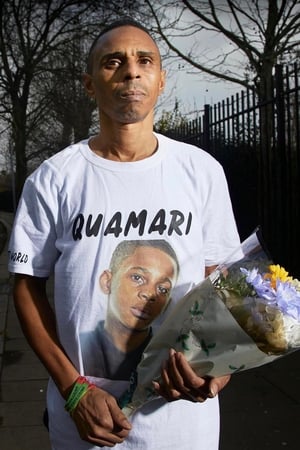
The story of how police repeatedly allowed a serial murderer to slip through their fingers. Stephen Port date-raped and murdered four young gay men in East London within fifteen months and dumped all four bodies within a few hundred metres of each other. The film tells the story through eyes of the families of Port's victims, unpicking how the police failed to properly investigate each of the deaths in turn. The police's assumptions that these young gay men had died from self-inflicted overdoses of chem-sex drugs allowed Port to continue raping and killing innocent young men.
Black Box BRD steps back into German history, showing the Federal Republic of Germany of the 70s and 80s. The country is polarized due to the power struggle of the German state and the "Red Army Faction". Society is torn, the fronts are irreconcilable. The life stories of both Wolfgang Grams and Alfred Herrhausen are tragically linked to this era. Grams is the one who takes up arms for moral rigor; Herrhausen however seizes power and dies when powerful.
The documentary, devoted to the last days of the professor who was tragically beheaded by an Islamist terrorist. This film highlights the failings of the state and the national education system in this deeply disturbing case.
There are about 600 murders each year in the UK. So, what drives people to kill? Are some people born to kill or are they driven to it by circumstances? Michael Mosley delves into the BBC archives to chart scientists' progress as they probed the mind of the murderer to try to understand why people kill, and to find out whether by understanding murder we can prevent it.
Virginia McCullough murdered her parents and lived with their bodies for four years.
A behind-the-scenes look at the most famous lawyer of his generation as scandal threatens his career and legacy.
Is that what mass graves are like, one body on top of the other and nothing else? Through the rain, Oliver sends signals to his mother to help her unearth the truth.
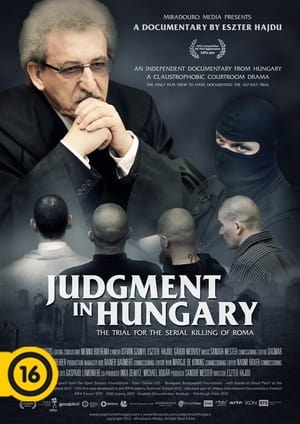
Hungary was the site of serial murders on ethnic basis. Over the course of one year, the murderers killed and seriously injured Roma children and adults. The state charged 4 men with committing the crime with racial motivation. This historical trial started March, 2011, and ended August, 2013 in Budapest. The 167 days of hearings was only documented continuously by our crew. We had exclusive permission to use multiple cameras in the court-room. The film is a classical chamber-drama, taking place in a small, claustrophobic court room, in the middle of Europe. What will be the outcome of the marathon, 3 year-long trial?
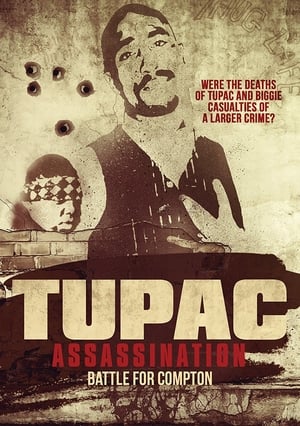
Tupac: Assassination is a documentary film about the unsolved murder of rapper Tupac Shakur. The film is produced by Frank Alexander (Tupac's bodyguard who was the only guard assigned and present at the time of the shooting) and RJ Bond, who also directed the film.
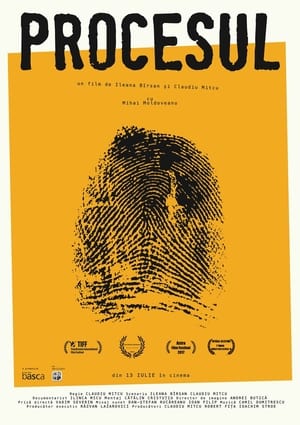
Mihai Moldoveanu, a former Romanian army officer, was sentenced to 25 years behind bars for a crime he claims he did not commit. Following a long series of attempts to prove his innocence, the European Court of Human Rights ruled in Moldoveanu's favor in June 2012. The documentary follows him after his provisional release and focuses on the referral of the case and the consequences of the new sentence, giving the viewer the role of a juror in a complicated and controversial lawsuit.
Murder, rape, satanism and necrophilia is the staple diet of millions of teenagers who listen to the lyrics of extreme heavy metal music. This World investigates the potential links between "death metal" and a series of gruesome crimes around the world. In Italy a group of young death metal fans formed a satanic cult called the Beasts of Satan. At least four gruesome killings resulted. But death metal musicians deny that they have any responsibility for the actions of people who profess to be their fans. With exclusive access to the families, one of the killers and graphic police footage, the film tells the inside story for the first time. We hear from the musicians, the children and the parents from Oslo to California and ask just how far can music go in its ability to shock, and just how damaging might it be?
A documentary about the rival gangs Mara 18 and Mara Salvatrucha, originating in Los Angeles but terrorizing El Salvador. It explores their origins as possible founding myths of organized crime in a globalized world.
Over three nights in April 1922, 13 men were murdered in west Cork, because, according the late Canadian historian Peter Hart, they were Protestants. This documentary goes to the root of the bitter dispute his controversial views have created.
Travelling the length and breadth of Britain, the film explores the impact of teenage killings on families of different religion, race and class.
Never-before-seen testimony is included in this documentary on Emmett Louis Till, who, in 1955, was brutally murdered after he whistled at a white woman.
In 1999, teen Rocío Wanninkhof is murdered. Her mother's ex-partner, Dolores Vázquez, is suspected. Did she do it? A second victim reveals the truth.
The line between justice and revenge blurs when a devastated family uses social media to track down the people who killed 24-year-old Crystal Theobald.
Hear from the prosecutors who handled Susan Smith's case and why authorities doubted her story from the beginning. The boys' father, David Smith, talks about why he believes 30 years in prison isn't long enough for Susan and what he's prepared to tell a SC Board of Pardons and Paroles to keep her behind bars.
Les 16 de Basse-Pointe
In 1967 Canadian filmmaker Hugh O'Connor came with a crew to eastern Kentucky to make a film showing people from all walks of life in the United States. They finished the day by filming coal miners and their families in rental houses. As the filmmakers were leaving, Hobart Ison, the owner of the property, drove up and fired three shots, killing Hugh O'Connor. Elizabeth Barrett, from Kentucky herself, explores why this happened by trying to understand the people and culture of eastern Kentucky.