After the COVID-19 time, the weather gradually turned cool and the octogenarian couple led a quiet life. The couple realized that there were only three people left in their generation after stumbling upon a photo. So they decided to visit their relative who lived in another city.
What would your family reminiscences about dad sound like if he had been an early supporter of Hitler’s, a leader of the notorious SA and the Third Reich’s minister in charge of Slovakia, including its Final Solution? Executed as a war criminal in 1947, Hanns Ludin left behind a grieving widow and six young children, the youngest of whom became a filmmaker. It's a fascinating, maddening, sometimes even humorous look at what the director calls "a typical German story." (Film Forum)
In a series of letters to her young son, a mother, soldier and filmmaker documents her thoughts from the Ukrainian frontline.
An Oscar nominated documentary about a middle-class American family who is torn apart when the father Arnold and son Jesse are accused of sexually abusing numerous children. Director Jarecki interviews people from different sides of this tragic story and raises the question of whether they were rightfully tried when they claim they were innocent and there was never any evidence against them.
By means of objects, photos, tapes and films, director Angelika Levi, half-German, half-Jewish, examines the story of her family. The film deals with trauma and the way history is produced, filed away, turned into discourse and ordered on macro and micro levels.
The documentary's title translates as "to be and to have", the two auxiliary verbs in the French language. It is about a primary school in the commune of Saint-Étienne-sur-Usson, Puy-de-Dôme, France, the population of which is just over 200. The school has one small class of mixed ages (from four to twelve years), with a dedicated teacher, Georges Lopez, who shows patience and respect for the children as we follow their story through a single school year.
A handful of prisoners in WWII camps risked their lives to take clandestine photographs and document the hell the Nazis were hiding from the world. In the vestiges of the camps, director Christophe Cognet retraces the footsteps of these courageous men and women in a quest to unearth the circumstances and the stories behind their photographs, composing as such an archeology of images as acts of defiance.
In rural Kosovo, identical houses are built for family members working abroad, in the hope that they will one day return to settle in their old homeland.
Through archival footage of his parents' wedding, the filmmaker reflects on love and marriage in contemporary Serbia. Observing traditional Balkan rituals, he questions his own place as an LGBT individual in a society resistant to equality. The film explores the tension between tradition and modern love, and the hope for a future where everyone can experience love freely. Through his personal journey, he confronts family expectations and dreams of acceptance.
Rostros perdidos
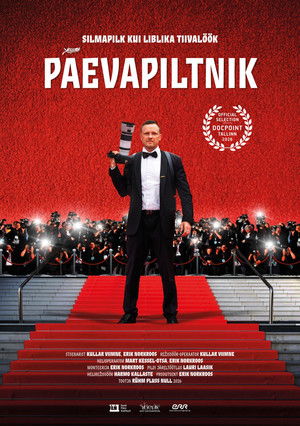
A tribute to the cameramen of the newsreel companies and the service film units, in the form of a compilation of film of the cameramen themselves, their training and some of their most dramatic film.
Renée R. : Lettres retrouvées
Jöran has a bipolar disorder, which makes him vulnerable to depression, mania and psychosis. He can sympathize well at the moment, but that has been different in the past. Jöran delves into his dark past and talks to the people who experienced his illness up close. How do you deal with this disorder and the misunderstood behavior that comes with it? And how do you break the taboo that still exists on disease pressure?
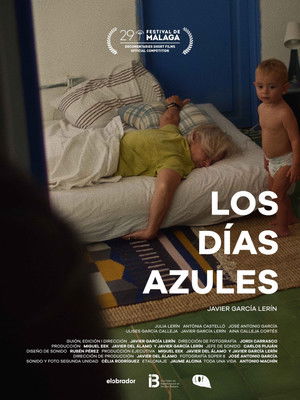
Rafaela, an 80-year-old woman, has a long conversation with her grandson, going over his path from childhood to old age. Now that she has been diagnosed with chronic breast cancer, faith is more present in her life than ever, which coexists with Rafaela's fear of death, and her grandson's fear of dying.
Le Polyhandicap : Une immersion au plus près de l'humanité
Ibuka follows Valentine and Jean-Claude, a new couple, at the very beginning of the civil war and the massacres that swept through Rwanda in 1994. Living in Kigali, the national capital, these young parents make numerous attempts to escape the killings with their newborn. Ibuka is a poetic work filled with tenderness and clarity about a historical tragedy, experienced through the intimacy and formation of a young family forever bonded.
The Bokelberg photographic collection brings to life the Paris of the Belle Époque (1871-1914), an exhibition of workshops and stores with extremely beautiful shop windows before which the owners and their employees proudly pose, hiding behind their eyes the secret history of a great era.
When a Mongolian nomadic family's newest camel colt is rejected by its mother, a musician is needed for a ritual to change her mind.
Gary's Story is part of a collective filmmaking project that looks at relationships between teenagers and their grandparents in families that have recently immigrated to the US from the former Soviet Union. Gary's family is from Moscow.