A haunting story of the FBI's dark hand in American life. In 2015, Khalil Abu-Rayyan was just a young Muslim man in Detroit, Michigan: to get by, he delivered food for his family's pizzeria. Depressed and lonely, Khalil found solace in smoking weed and looking at extremist material online. Then two young women started messaging him, and he fell in love. But one of them suggested he start doing increasingly violent things. Nothing was as it seemed. And Khalil's life would never be the same. A documentary by Garret Harkawik for the Gravel Institute.
The Mangaung Prison opened in 2001 as South Africa’s first privately run penitentiary. Its operator, the multi-billion-dollar British security firm G4S, promised the most humane treatment and the best facilities for its nearly 3,000 prisoners—and naturally at the lowest cost. Testimonials from whistleblowers and former prisoners, and the findings of investigative journalist Ruth Hopkins expose the reality of prison privatization. Guards are underpaid, overworked and fear every day for their lives. Prisoners are a source of income, so rehabilitation isn’t a priority. Prison for Profit shows how this profit maximization system works, and what happens when governmental tasks like detention are outsourced to powerful international corporations. And what are the negative consequences for society at large?
Incarcerated men defy the odds to expose a cover-up in one of America’s deadliest prison systems.
Turn off the alarms and throw away the keys as these two comics set the inmates of Arizona State Prison rolling with laughter.
The film follows a group of former female inmates who stage a play condemning the country’s prison system. At its center is Nathalie, who fights for the release of her sister Aline, held in prolonged pretrial detention – a widespread practice in Haiti.
The creative process of the first crochet fashion collection fully developed by male prisoners in Brazil and presented at the country's main fashion event, The São Paulo Fashion Week.
Da Grade Pra Cá
Young Kids Hard Time explores the story of young children sentenced to adult prison for decades, through the eyes of 12-year old Paul Gingerich and 15-year old Colt Lundy, both serving 30 years in adult prison for killing Colt's stepdad.
Historias de la Teleprisión
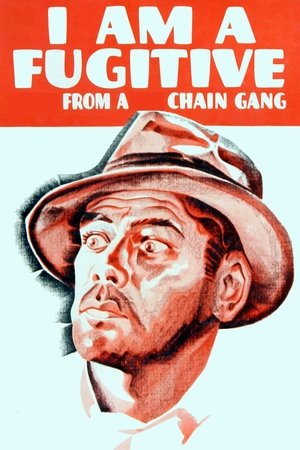
A World War I veteran’s dreams of becoming a master architect evaporate in the cold light of economic realities. Things get even worse when he’s falsely convicted of a crime and sent to work on a chain gang.
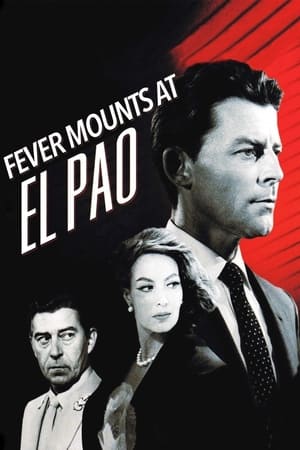
After Caribbean despot Mariano Vargas is murdered at the hands of his enraged populace, his secretary Ramón Vázquez takes not just control but also Vargas' widow Inés, with whom he's been having an affair. Special military unit leader Alejandro Gual arrives to overthrow Vázquez by turning the people and Inés against him.
Civilian Mary Dane and falsely imprisoned Bud Leonard love each other. Lou Rinaldo, who framed Bud to get Mary, and escape-minded King Callahan want to keep him in stir, but convict Bertie and the others, even including the Warden, set events in motion to prove that love and justice will prevail. NB: Prisoner numbers given in lieu of character names in many cast lists for this film do not match the numbers shown on the characters' uniforms, when these can be seen at all, and are not used in dialogue at all.
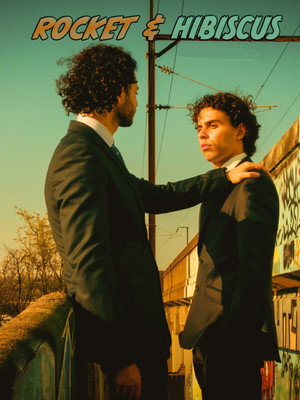
Rocket and Hibiscus are two lawyers, two brothers with opposing methods. They find themselves facing a most absurd case: a man has sued himself after attempting to throw an egg at the President of the Republic. One defends the accused, the other the victim... Unable to agree, the two brothers come to blows.
Produced by Bob Cording and Jerry Humphries in 1977, "Set Free" takes a look at the role that Christianity can play in the rehabilitation of the incarcerated. The film was something of a departure for Cording-Humphries films, as the company was most well-known for its inspirational sports films including the breakthrough Christian surfing film; 'Tales from the Tube'. At the time "Set Free" was made glimpses inside penitentiaries were rare, as cameras rarely penetrated their secure walls. The film's message remains relevant today.
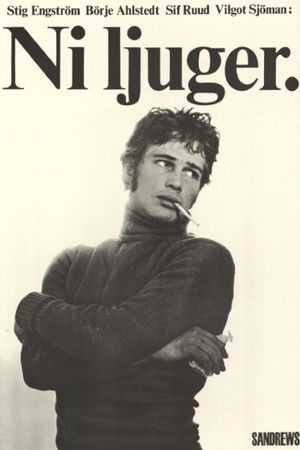
About an alcohol-damaged young man, his life in and out of prison, his friend the art teacher and his difficulties reintegrating into society.
Tarachime is a documentary film which observes 'life' through childbirth. Kawase Naomi, a film director working under the theme of family, life and death, presents the bond of life through her own childbirth experience. "First, I was planning to film from the day I conceived a child and to the moment I gave birth. But I realized, while filming, that this is not the story of "one life." In the end, the film sublimed to a higher stage on which we can witness the knot tying one life with another."
Kiko Goifman always knew he was adopted. At age 33 he finally decides to undertake a journey to find his biological mother, and film it as a documentary. He starts off with the few facts he knows, aided by two private detectives, his adoptive mother, and his wife. He also writes an online diary detailing his activities and findings, which gives him additional tips. The title 33 not only refers to Kiko's age, but also to the famous film noir ".33", the age of Christ - "like Kiko - a Jew" , and other coincidences involving the number 33.
ABC of a Strike captures the 1979 metal workers strikes outside of São Paulo. The footage sat untouched until after the death of highly-regarded director Leon Hirszman in 1987, by which time the material had a new relevance. The gripping film captures the negotiations between the labor unions and the factory bosses and shows the birth of the region’s Worker’s Party, as well as the emergence of its charismatic leader, Luiz Inácio Lula da Silva. Rising from extreme poverty, Lula gained national prominence as a union activist during the late 70s and early 80s. After being jailed during his time as a union leader, he eventually becomes Brazil’s president from 2003 to 2010.
Intermissions follows Lula during the hectic election campaign for the presidency in 2002. Lula gave filmmaker João Moreira Salles and his crew complete access, and the result is an intimate documentary of what went on behind the scenes. Sometimes, Lula is afraid that he will lose his freedom as president. Combined with Lula's candor, the film's observational style provides some very special insight into one of Brazil's most popular leaders.
On 21 December 1988 a Pan Am 747 jet exploded over the small Scottish town of Lockerbie. On the 25th anniversary of the worst terrorist attack on British soil, this is the story.