NASA launches its most ambitious hunt for traces of life on Mars, landing a car-sized rover in a rocky, ancient river delta. The rover will stow samples for possible return to Earth and test technology that may pave the way for human travel to Mars.
The Hubble Space Telescope has spent more than 30 years scrutinizing the cosmos in an attempt to unravel the secrets of the Universe and go as close as possible to its origin. But Hubble has also become the superstar of space, offering us magnificent paintings of the Universe.
BBC Horizon Documentary. Jupiter, the largest and fastest rotating planet among the eight major planets in the solar system, is the fifth planet from the inside out. This film tells the latest information from NASA's Juno Jupiter probe, unveiling the wonders of Jupiter.
More and more bacteria are becoming insensitive to antibiotics, not least due to excessive drug consumption. According to the EU, this problem could soon become as explosive as the environmental issue - and antibiotic resistance threatens to become one of the main causes of death worldwide. Research must therefore find alternatives - not miracle cures, but permanently effective drugs. There has already been one in the past: One hundred years ago, the French biologist Félix d'Hérelle discovered mysterious "bacteria-eating" viruses, known as bacteriophages or phages for short. He used these to successfully treat bacterial infections before the development of antibiotics, but his method was forgotten again. Is bacteriophage therapy the miracle medicine of the future?
Does infinity exist? Can we experience the Infinite? In an animated film (created by artists from 10 countries) the world's most cutting-edge scientists and mathematicians go in search of the infinite and its mind-bending implications for the universe. Eminent mathematicians, particle physicists and cosmologists dive into infinity and its mind-bending implications for the universe.
L'autre monde des dinosaures
David Attenborough and scientist Johan Rockström examine Earth's biodiversity collapse and how this crisis can still be averted.
Capturing the Electrons documents the life and career of Nobel Prize-winning Hungarian physicist Ferenc Krausz. His research team has generated and measured the first attosecond light pulse and used it for capturing electrons' motion inside atoms, marking the birth of attophysics. In 2023, jointly with Pierre Agostini and Anne L'Huillier, he was awarded the Nobel Prize in Physics.
Darwin express - Les nouveaux défis de l'évolution
Cataclysmes, les grands régulateurs
Le mystère de l'homme de Denisova
Nuclear energy: a clean energy for the future or a risk for humanity? As the European Union has classed nuclear as a green energy, France is building new power plants whilst Germany is decommissioning them. An in depth look at the future of atomic energy in the coming decades.
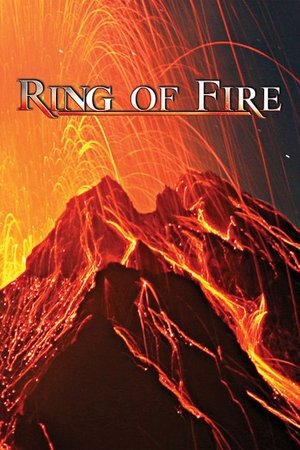
Ring of Fire is about the immense natural force of the great circle of volcanoes and seismic activity that rings the Pacific Ocean and the varied people and cultures who coexist with them. Spectacular volcanic eruptions are featured, including Mount St. Helens, Navidad in Chile, Sakurajima in Japan, and Mount Merapi in Indonesia.
Dr. Robert Ballard of Woods Hole Oceanographic Institute and his research team become the first undersea explorers to locate, photograph, and explore the wreckage of the ill-fated HMS Titanic, which sank on its maiden voyage 2 1/2 mile deep in the icy waters of the Atlantic in 1912, taking 1500 passengers and crew with it to a watery grave. Utilizing dazzling state-of-the art equipment and cutting edge expertise they record the decaying remains of the ocean liner once thought "unsinkable."
During a canoe trip, neurologist Magnus Heier suffers from sudden amnesia: for eight hours, he records nothing. Everything he does is immediately forgotten. This episode becomes the starting point for an exploration of his own memory. How can his functioning explain the incident he suffered? And what happened to the doctor during those lost hours? To understand the amnesia that has affected him, Magnus Heier embarks on an investigation among his peers. His journey takes him to Finland, Germany and Italy, where he visits researchers working on the astonishing brain faculty of memory.
An expedition looks into whether Titanic's hull had a construction design flaw that caused her to break apart. Featuring advanced CGI technology, archive documents and photographs, as well as footage from the modern-day History(R) expeditions, "Titanic's Achilles Heel" is a remarkable journey into the ongoing legacy of a ship that continues to capture the world's attention.
In this documentary, scientists reveal their findings on the influence of solar storms on animal behavior and human transport infrastructure. The documentary explains why solar storms pose a threat to humanity: In extreme cases, they can damage satellites, slow down air traffic and paralyze high-voltage and telecommunications networks.
TGV M : La Techno du nouveau fleuron de la SNCF
The fascinating landscape formations of Iceland in the North Atlantic bear witness to the beauty and primal power of nature. They were created through the interaction of powerful volcanic, geological and biological processes that have been changing the face of the earth for billions of years. This is what the Earth might have looked like four billion years ago. Iceland is the realm of ice and fire. Nowhere else is there such a high density of volcanoes. The landscapes, which are continually reshaped by eruptions, make the island a natural laboratory full of clues about the formation and development of the earth. The documentary follows a group of scientists through the most active areas of Iceland, along a mountain range that has emerged from the ocean. On the slopes of the volcanoes, in the fog of the fumaroles and on streams and rivers, the three researchers explore how the first forms of life populated the earth's surface and in what evolutionary steps they took over the earth.
At the edge of our solar system supposedly lies an immense planet. Five to ten times the size of the Earth. Several international teams of scientists have been competing in a frantic race to detect it, in uncharted territories, far beyond Neptune. The recent discovery of several dwarf planets, with intriguing trajectories, have put astronomers on the trail of this mysterious planet. Why is this enigmatic planet so difficult to detect? What would a ninth planet teach us about our corner of the universe? Could it help us unlock some of the mysteries of our solar system?