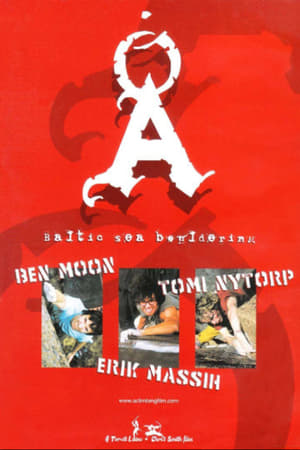
In late summer 2003, climbers from Britain, Sweden, and Finland descended upon the sleepy archipelago of Aland in the Baltic Sea to discover for themselves, its combination of spectacularly beautiful scenery and array of climbing problems. Baltic Sea Bouldering presents an insight into how climbers tackle this fresh and exciting bouldering destination. What we receive is a fascinating look at how some of Europe's best climbers tackle an unclimbed highball project that stretches mental strength to the limits.
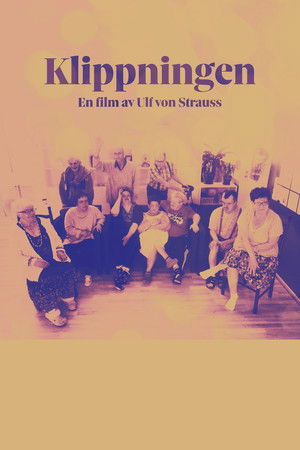
Maria Jansson is a teacher in Tyresö. Every other month she travels to Åkersvängen, a home for people with disabilities on Åland. She travels to cut the hair of her brother and his friends at Åkersvängen.
Finland’s first nature documentary. The filmmakers’ expedition leads them all the way to the Åland Islands and the Karelian Isthmus.
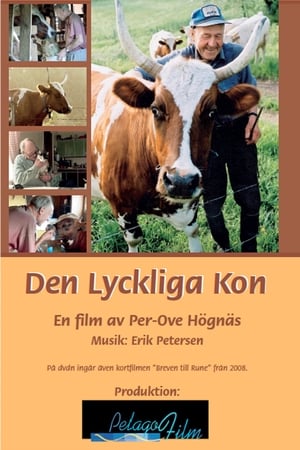
The Happy Cow ”is a documentary about the love and concern of a human being for animals. At the same time, it is a story about a person's great sacrifices and the stubborn struggle to maintain a lifestyle and culture that are irrevocably about to disappear. Rune has chosen to stay out of EU regulations. He refuses to fill out forms and refuses to mark his cows with yellow plastic markings in their ears. Therefore, he cannot even deliver his milk to the dairy. Some of the milk is given to the calves, but most of it ends up in the manure pile. Thousands of litres of milk are thrown away every year.
Världens Minsta Parlament
The old bus "Tired Theodore" came into service in 1954 and operated for long periods along the line Lumparland - Mariehamn. One summer day a number of older people had gathered for a bus ride along the winding country roads in Lumparland, and to relive old memories. At the same time one of the locals, Putte Karlsson, took up a large project: rebuilding the old mill in Lumparby. The mill was owned by his grandfather, skipper and farmer in the village. Sawmills previously existed in many villages in Åland Islands but today they are no longer in use. It is a big challenge and many are skeptical that Putte will put everything to work.
Bomarsund 1854 tells the story of two humanists, whose actions during the Crimean War prevented bloodshed. They are the British hydrographer, Bartholomew James Sulivan, and the Russian commandant, Jacov Andreyevitch Bodisco, two men who fought on opposite sides in the war. It also traces the rise and fall of the multi-cultural community of Bomarsund. The small island of Åland, located in the Baltic Sea between Sweden and Finland, played a significant role in the war that raged during 1854, originally called the Oriental War and partially fought in Northern Europe. The Baltic campaigns became the forgotten theatre of the Crimean War. The attention awarded events elsewhere has overshadowed the significance of this theatre, which lay close to the Russian capital of St Petersburg.
Sveket
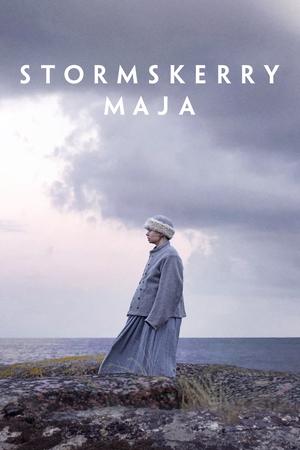
Maja and Janne move to the barren and remote island of Stormskerry, where survival is a daily struggle. Growing up in a world of old values, Maja becomes aware of a new era: a woman can be an equal partner instead of a mere bystander. The couple have children, and life is good until trouble sets in: war arrives on the island, Janne is forced to flee from the English troops, and Maja and the children are imprisoned. The family also faces many financial difficulties and death. Years pass, but Maja remains strong and stays in Stormskerry despite all the hardships and difficulties.
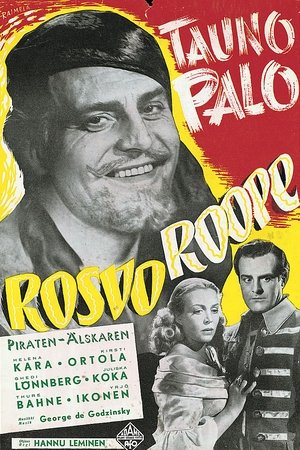
In the 18th century, Robert's beloved Helena is forced to marry the cruel Henrik Brest. Robert becomes Roope the Pirate, the most famous pirate in the Baltic Sea, whose legendary life includes scheming and partying, sword fights and women's adventures.
At the intersection of a provincial track and an international road a Gypsy community of a small Romanian town begin and end their day. It is the point of the geographical crossing that divides them from the rest of the world and keeps them within the traditional lifestyle, where in generations survive families, elderly, men and women, children and teenagers.
Every month, hundreds of unemployed nurses travel from the south to the north of Italy in search of work. Two of them organise the trips by overnight buses; a long journey of hope that often leads to nothing at all. Shot as a road movie, the two filmmakers paint a pitiless portrait of modern Italy before, during and after the health crisis.
In Pasolini's vision, Euripides' Medea becomes an emblem of the Third World deceived and exploited by the pragmatic rationality of the West (Jason). The sequences of human sacrifice, shot in Turkey, are among the highest and cruelest in Pasolini's cinema. Maria Callas in her only film role, is a lunar goddess of revenge.
Adam Ondra is the best. Born in 1993, the Czech climber has broken a series of records and is widely recognised as the most accomplished in his discipline. No mountain or wall can resist him. But who is this young man who knows no fear and never seems to encounter failure? Jan Šimanek and Petr Záruba deliver an intimate portrait, beyond the usual sensationalism of sports headlines.
At the death of her mother, Aga decides to leave her life in Germany with her partner Maja to look after her younger brother in Poland. To do this, she has to hide her love for another woman from the authorities. Closely following its protagonists, Silent Love delicately narrates their discreet struggle against a prying and viscerally homophobic society.
Jerusalem can rightfully be called the hat capital of the world. Whereas the rest of the world has allowed its hats to gather dust in the closet since the 1950s, Jerusalem still teems with hats and caps. From soldier to monk, everyone is identifiable by his hat. Director Nati Adler, who is neither religious nor a hat-wearer, explored the how and the why of the hats of Jerusalem. His colourful and personal trip takes us along the diverse headdresses of the three religions populating the city. What begins as an innocent exercise by a curious documentary filmmaker develops as it were into a Pandora's box full of stories and history lessons. Every answer evokes new questions. Why do people in Jerusalem wear so many hats, what is a shtreimel, why don't Armenian Christians use their Turkish hats in their ceremonies, and why do women actually have to cover their heads?
Swedish punk documentary from 1985 about Anti Cimex, more specifically Sixten Andersson. Shows the edgier side of Swedish music in the 80s, the anarchist ideals of the members and friends of the band and an overall discontent with the 'promising' future of the "Svensson life".
In this essay film, the narrator describes how his fixation on a gay pornographic model from a phone sex advertisement leads to a new project, an elegy for a complex, troubled man named Alain Lebeau.
Irritated by Catholicism, Linda, an American-based, Blonde Caucasian, falls in love with Qater-based Ali Al-Saigel, adopts the Islamic faith, and gets married. She follows her new faith to the letter, and subsequently gives birth to seven children (four daughters and three sons), brings them up according to true Islamic dictum's, and reflects on her 20-year married life, her children, as well as her reaction when her husband indicates that he wants to re-marry.
The Coup of 1979 was the "straw that broke the camel's back". The most influential sectors in the country, both from the Left and the Right, radicalized and decided to rebel against a power they considered unjust and unbearable. From this decision to rebel emerged three Revolutionary Juntas made up by civilians and the military.