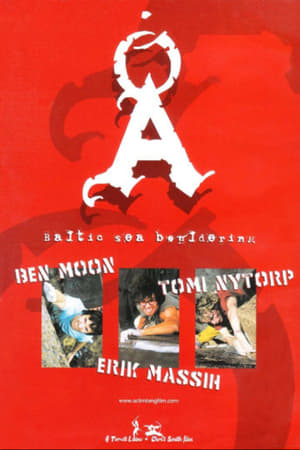
In late summer 2003, climbers from Britain, Sweden, and Finland descended upon the sleepy archipelago of Aland in the Baltic Sea to discover for themselves, its combination of spectacularly beautiful scenery and array of climbing problems. Baltic Sea Bouldering presents an insight into how climbers tackle this fresh and exciting bouldering destination. What we receive is a fascinating look at how some of Europe's best climbers tackle an unclimbed highball project that stretches mental strength to the limits.
Finland’s first nature documentary. The filmmakers’ expedition leads them all the way to the Åland Islands and the Karelian Isthmus.
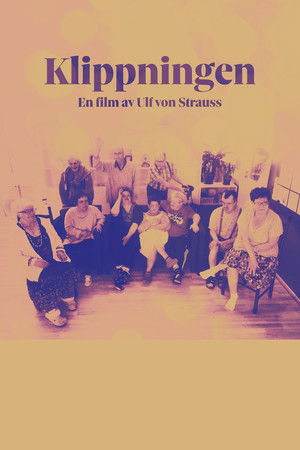
Maria Jansson is a teacher in Tyresö. Every other month she travels to Åkersvängen, a home for people with disabilities on Åland. She travels to cut the hair of her brother and his friends at Åkersvängen.
How can an entire career in the cultural sector not count? The Minister of Education has announced that one-third of the funding for adult education associations is to be cut, with the money instead being invested in educational programs that lead to “real jobs.” What happens to the next generation of creators? And what do we lose as a society when the pathways into the cultural sector become increasingly scarce?
A film about Edo's petrol station run by two brothers that seems like it has been frozen in time since the 1950s.
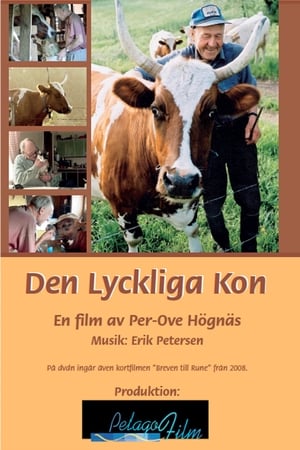
The Happy Cow ”is a documentary about the love and concern of a human being for animals. At the same time, it is a story about a person's great sacrifices and the stubborn struggle to maintain a lifestyle and culture that are irrevocably about to disappear. Rune has chosen to stay out of EU regulations. He refuses to fill out forms and refuses to mark his cows with yellow plastic markings in their ears. Therefore, he cannot even deliver his milk to the dairy. Some of the milk is given to the calves, but most of it ends up in the manure pile. Thousands of litres of milk are thrown away every year.
The old bus "Tired Theodore" came into service in 1954 and operated for long periods along the line Lumparland - Mariehamn. One summer day a number of older people had gathered for a bus ride along the winding country roads in Lumparland, and to relive old memories. At the same time one of the locals, Putte Karlsson, took up a large project: rebuilding the old mill in Lumparby. The mill was owned by his grandfather, skipper and farmer in the village. Sawmills previously existed in many villages in Åland Islands but today they are no longer in use. It is a big challenge and many are skeptical that Putte will put everything to work.
Bomarsund 1854 tells the story of two humanists, whose actions during the Crimean War prevented bloodshed. They are the British hydrographer, Bartholomew James Sulivan, and the Russian commandant, Jacov Andreyevitch Bodisco, two men who fought on opposite sides in the war. It also traces the rise and fall of the multi-cultural community of Bomarsund. The small island of Åland, located in the Baltic Sea between Sweden and Finland, played a significant role in the war that raged during 1854, originally called the Oriental War and partially fought in Northern Europe. The Baltic campaigns became the forgotten theatre of the Crimean War. The attention awarded events elsewhere has overshadowed the significance of this theatre, which lay close to the Russian capital of St Petersburg.
Extrem rechts - Undercover in geheimen Netzwerken der AfD
Kampen om identiteten | Socialdemokraterna 2010-2014
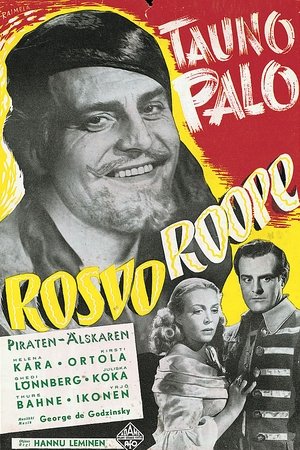
In the 18th century, Robert's beloved Helena is forced to marry the cruel Henrik Brest. Robert becomes Roope the Pirate, the most famous pirate in the Baltic Sea, whose legendary life includes scheming and partying, sword fights and women's adventures.
Sabri (72) dreams of taking a photo with a politician. With his nephew Ahmet’s (38) help, it happens but the photo never arrives. When the meeting video goes viral, Ahmet’s quiet life unravels under political rumors.
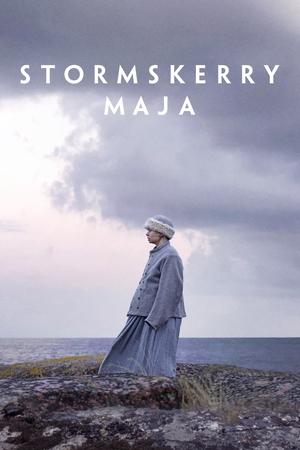
Maja and Janne move to the barren and remote island of Stormskerry, where survival is a daily struggle. Growing up in a world of old values, Maja becomes aware of a new era: a woman can be an equal partner instead of a mere bystander. The couple have children, and life is good until trouble sets in: war arrives on the island, Janne is forced to flee from the English troops, and Maja and the children are imprisoned. The family also faces many financial difficulties and death. Years pass, but Maja remains strong and stays in Stormskerry despite all the hardships and difficulties.
Sveket
Moves the viewer into the perspective of a foreigner. Mexicans who live in Austria and Austrians who spend their lives in Mexico: through clichés and yearnings - these emigrants create a picture of their countries, and through determining their location, attempt to their identity. They are accompanied by two cinematographers, who also go to a "foreign" place. Their views go along with the narrators and narratives into the respective, other country.
By day, Bohdana lives an ordinary student life: metro rides, classes, music in her headphones. By night, she is thrown back to Ukraine — into memories of family, constant danger, and the echo of sirens.
Donald is shown in both animated and costumed form, interacting with emcee Dick Van Dyke and other cast members. The film not only shows Donald's life, but also depicts an extensive international tour that Donald went on in 1984 as well as showing various celebrities of the day wishing Donald happy birthday. The tour culminates in a parade in Donald's honor at Disneyland.
A Valentine's Day special featuring rock and roll music set to scenes from Disney animation.
"Living with the Taliban" offers a powerful glimpse into post-2021 Afghanistan. Through personal stories, it shows the experiences of regime supporters and those whose lives have changed, highlighting the struggle between hope and despair.
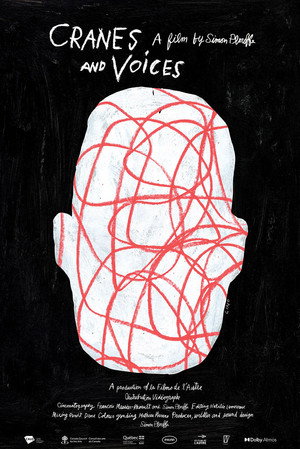
Cranes and Voices follows, on one side, people who hear voices and share their daily lives, and on the other, a collective of tenants who investigate their neighbourhood through its noises, its vibrations and its construction sites. The film moves through apartments, streets, meetings and moments of sound creation, where voices, urban noises and recorded materials are transformed into collective sound compositions and spaces for exchange. Sound appears here as an ambivalent force, at once invasive and generative, shaping the way we inhabit the city, other people and ourselves. Cranes and Voices invites us to pay attention to these singular listening experiences, to hear what they reveal about the housing crisis, about how mental health is viewed and about the ways we organise our shared spaces.