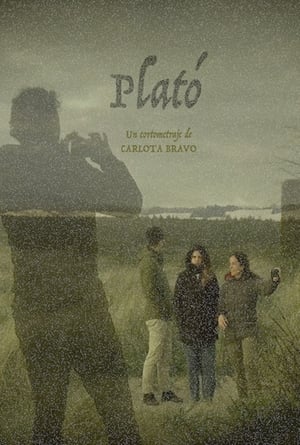
In 1996 I took the conservatory exam. I missed it. A year ago I was asked to do a masterclass on acting in cinema. I went there. I met a lively, joyful and passionate youth. Among my students there was Clémence. The following year, she asked me to film their last show. I felt her urgency and the fear she had of leaving this mythical place. So I accepted. By filming this youth, I revisited mine.
For 18-year-old Finnish–Kosovan Fatu, a simple visit to the grocery store feels as nerve-racking as a lunar expedition: for the first time in his life, he’s wearing makeup in public. Luckily his best friend Rai, a young woman on the spectrum of autism, is there to ferociously support him through the voyage.
Those who do not know the Sahara think there is only sand in the desert. But in the desert there are children who play and draw and make movies, and who would like to not have to think about the war. In the desert there's a European colony, an occupied country called Western Sahara, where there are thousands of Sahrawi refugees living a hard life in exile. "Little Sahara" tells their story, the story of a supportive, resilient people who try to thrive and grow in the Hamada, where everything has a hard time growing.
Young Masters is an original series commissioned by NOWNESS China focusing on traditional Chinese cultures, and how they continue to be defined by a new generation of the country's youth. High above the clouds in a village in Mao County in Sichuan Prefecture, a post-90’s generation of young cultural guardians work to uphold the values and traditions of ancient Qiang culture. These cultural guardians, known as a ‘Shibi’, remain especially vital for a culture whose knowledge and language exist merely through practice and in sound, and without script. The role of a Shibi involves that of a priest, alongside folk rap, singing, and dance performances, amongst others. As a result, Qiang people have endowed them with a sacred status, believing that they possess a psychic power.
Known for her intimate films, director Kim O’Bomsawin (Call Me Human) invites viewers into the lives of Indigenous youth in this absorbing new documentary. Shot over six years, the film brings us the moving stories, dreams, and experiences of three groups of children and teens from different Indigenous nations: Atikamekw, Eeyou Cree, and Innu. In following these young people through the formative years of their childhood and right through their high school years, we witness their daily lives, their ideas, and aspirations for themselves and their communities, as well as some of the challenges they face.
Due to the measures taken by the government, students have fewer and fewer prospects for a meaningful future. Life is on pause and society is kept in fear. The confidence in a bright future is gone. Even after 18 months, there is still no light at the end of the tunnel. The many promises have not yet changed this situation. In this moving documentary, young people give an idea of the impact of the measures on their lives. Is there still hope or has the damage already been done?
At the beginning of the 70s, Sahia Studio produced a number of social investigations commissioned by the Central Committee of the Romanian Communist Party, intended to expose the so-called "social parasitism". The decision was taken after the theses of July 1971, which provide that "one of the main objectives of political work, especially among the youth, is the firm fight against the tendencies of parasitism, of an easy life, without work, the cultivation of responsibility and the duty to work , in the service of the country, the people, the socialist society". The most famous films, made with the competition of the Ministry of the Interior and the Ministry of Justice, are Să treacă vara and Iarna unor pierde vară
The political upheaval in North Africa is responsibility of the Western powers —especially of the United States and France— due to the exercise of a foreign policy based on practical and economic interests instead of ethical and theoretical principles, essential for their international politic strategies, which have generated a great instability that causes chaos and violence, as occurs in Western Sahara, the last African colony according to the UN, a region on the brink of war.
Has the time of women finally come? Have their everyday lives truly changed over the past sixty years? Guided by Agnès Jaoui, women—famous and unknown—share their stories across generations. From childhood to retirement, the documentary traces shared experiences shaped by prejudice, but also by hope, strength, and humor. Blending personal archives, historic moments, and social media footage, the film places women at the center of their own story. Welcome to the Time of Women.
Eleni is 16 and has just moved from California to Virginia, where she must adapt to a new school. This comes easily to her thanks to her intense passion, which she instills in her peers. She becomes president of the school's rocket club and aims to build the perfect model for a competition attended by hundreds of teams from across the United States.
On June 12, 2019, the Committee to Investigate Violence in Youth Care presented its final report. The conclusions were startling. Kim Feenstra set out to find out what progress has been made within the Youth Care system since then and ended up in a circle of grief and pain dominated by money, power and powerlessness. In her search, Kim Feenstra spoke to many people involved. The stories can be described as downright shocking. In many cases Youth Care appears to act as a revenue model that is exploiting parents and children. The complex system has only one entrance, but the exit is obstructed by all stakeholders who want to maintain their revenue model. The people who really matter, the parents and children, encounter a power block of inhuman proportions. A system dominated by money, power and powerlessness.
Today in France, one in five young people suffers from severe depressive symptoms, and the number of minors visiting psychiatric emergency rooms has tripled in the last five years. Despite the political will that has been demonstrated, child psychiatry is nevertheless faced with a severe lack of resources. The interminable waiting times for treatment are causing a surge in prescriptions for psychotropic drugs.
This is the story of an ordinary man transformed by history. A simple baker from Besançon who became a political symbol of resistance. That of a France that knows how much it needs others to grow. Of working classes rejecting the siren calls of populism. He says: "I was nothing and I became a monster" to express the vertigo of his transformation. And so the baker entered politics, visited the United States in the footsteps of Martin Luther King, brought aid to the Ukrainians, and ran for legislative elections. Fearless. Fighting with all his heart. It is this inspiring, touching, and funny human epic that Pedro da Fonseca's camera followed closely, capturing his doubts, his hesitations, and his emotions.
This documentary follows two long-lost Ukrainian friends, Arsalan and Nastya, as they reconnect in Germany after russia's full-scale invasion against Ukraine. Arsalan, an actor now in Frankfurt after time in a refugee camp, and Nastya, journalist and producer who stayed in Kyiv, reflect on the divergent paths their lives have taken due to the war. Through their conversations and therapy sessions, the film explores themes of displacement, identity, and the emotional impact of war on youth.
Sainte-Marie-aux-Mines, in rural Alsace. A vocational high school. A class of year 12 ASSP (Assistance, Care and Service to Person) pupils experience contemporary dancing based on improvised contacts for the first time.
Perspectiva (Versão da Diretora)
A portrait of the diverse opinions of Chicagoans as they reflect on the general state of affairs in America, the war in Vietnam, social and racial conflict, freedom and personal liberty, happiness, and social justice. Ratamata was made by future Tom Palazzolo collaborator Kreines when he was 16 years old, and was an award winner at the Young Chicago Filmmakers Festival.
Jérôme was sexually abused as a child by a priest. In a deeply personal film, he tries to search for clues in his memories and come to terms with the complicity of his former social environment.
A girl from St. Petersburg walks around protest-ridden Moscow, talking to riot police and believing that sooner or later they will go over to the side of the demonstrators. An 18-year-old student of a St. Petersburg college introduces herself as Alice and tells about herself that from the age of four she lived in an orphanage and in foster families. In Moscow, Alisa, for whom this is the first rally in her life, walks along the police cordons and looks under the OMON helmet. "Under the mask you can't see, are you even human?"
On October 27, 2005, Zyed Benna and Bouna Traoré died in an electrical substation while fleeing the police, sparking three weeks of riots across France. A decade later, as the officers involved are acquitted, the film revisits the voices of those who lived through the uprising. Through their stories, it explores what remains of that anger and how their view of society has evolved.