A short documentary about the life and love of New York surf culture following transplanted San Diego surfer, Shawlin Tucker, who forced found a way to bring his passion with him when a college acceptance from New York University summons him to the big apple.
For 18-year-old Finnish–Kosovan Fatu, a simple visit to the grocery store feels as nerve-racking as a lunar expedition: for the first time in his life, he’s wearing makeup in public. Luckily his best friend Rai, a young woman on the spectrum of autism, is there to ferociously support him through the voyage.
Les enfants de Vercheny
Known for her intimate films, director Kim O’Bomsawin (Call Me Human) invites viewers into the lives of Indigenous youth in this absorbing new documentary. Shot over six years, the film brings us the moving stories, dreams, and experiences of three groups of children and teens from different Indigenous nations: Atikamekw, Eeyou Cree, and Innu. In following these young people through the formative years of their childhood and right through their high school years, we witness their daily lives, their ideas, and aspirations for themselves and their communities, as well as some of the challenges they face.
A documentary about a night café called Walkers, its workers and the youth – largely immigrants – populating the café during the night.
In 2010, director Michiel van Erp started filming a group of children in Utrecht. He kept filming them till 2018, the year they turned 18. The film portrays those moments which were crucial for the development and personal growth of the kids.
As a young father, watching his daughter go through her life experiences, film director Alexandre Mourot discovered the Montessori approach and decided to set his camera up in a children's house (3 to 6 years of age) in the oldest Montessori school in France. Alexandre was warmly welcomed in a surprisingly calm and peaceful environment, filled with flowers, fruits and Montessori materials. He met happy children, who were free to move about, working alone or in small groups. The teacher remained very discreet. Some children were reading, others were making bread, doing division, laughing or sleeping. The children guided the film director throughout the whole school year, helping him to understand the magic of their autonomy and self-esteem - the seeds of a new society of peace and freedom, which Maria Montessori dedicated her life work to.
The plot of the movie brings two people together - an immigrant filmmaker from Belarus and a 10 years old girl from the village in the south of Kyrgyzstan.
A portrait of growing up told through filmmaker Sean Wang's middle school yearbook. Go Hornets.
Before leaving for Rome with his mother, five year old Natan is taken by his father, Jorge, on an epic journey to the pristine Chinchorro reef off the coast of Mexico. As they fish, swim, and sail the turquoise waters of the open sea, Natan discovers the beauty of his Mayan heritage and learns to live in harmony with life above and below the surface, as the bond between father and son grows stronger before their inevitable farewell.
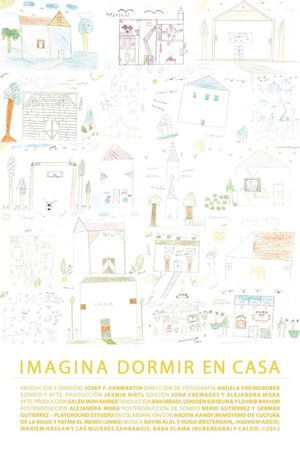
Those who do not know the Sahara think there is only sand in the desert. But in the desert there are children who play and draw and make movies, and who would like to not have to think about the war. In the desert there's a European colony, an occupied country called Western Sahara, where there are thousands of Sahrawi refugees living a hard life in exile. "Little Sahara" tells their story, the story of a supportive, resilient people who try to thrive and grow in the Hamada, where everything has a hard time growing.
Honour West and Joan Camuglia-May share their experiences in this upbeat roller-skating documentary.
A group of young architects, confined to a forest in Barcelona during the COVID crisis, explore the problems generated by the ambition of wanting to be completely self-sufficient.
James May celebrates the toys that made his childhood hell as he opens the lid on his sisters' toy box. Sandwiched between elder sister Jane and younger one Sarah, many of their favourites he couldn't understand - or stand the sight of - or see the point of.
Equal parts punk and psychedelia, the Flaming Lips emerged from Oklahoma City as one of the most bracing bands of the late 1980s. The Fearless Freaks documents their rise from Butthole Surfers-imitating noisemakers to grand poobahs of orchestral pop masterpieces. Filmmaker Bradley Beesely had the good fortune of living in the same neighborhood as lead Lip Wayne Coyne, who quickly enlisted his buddy to document his band's many concerts and assorted exploits. The early footage is a riot, with tragic hair styles on proud display as the boys attempt to cover up their lack of natural talent with sheer volume. During one show, they even have a friend bring a motorcycle on stage, which is then miked for sound and revved throughout the performance, clearing the club with toxic levels of carbon monoxide. Great punk rock stuff. Interspersed among the live bits are interviews with the band's family and friends, revealing the often tragic circumstances of their childhoods and early career.
Twenty-one-year-old Julia had to leave her daughters under the care of a children's shelter house. Five years later, Julia keeps fighting to rebuild her life and get reunited with her daughters.
Reclaiming what was once stolen from him, a man journeys back to the place of his childhood nearly 80 years after his world came crashing down.
Writing a letter to Paul B. Preciado, trans philosopher and filmmaker, as one would write to a friend. Undertake a healing process as a queer child growing up in a Spanish evangelical family. From Lausanne to New York, Lézio Schiffke-Rodriguez follows in the footsteps of revolutions that invite us to redefine our vision of binary bodies.
Due to the measures taken by the government, students have fewer and fewer prospects for a meaningful future. Life is on pause and society is kept in fear. The confidence in a bright future is gone. Even after 18 months, there is still no light at the end of the tunnel. The many promises have not yet changed this situation. In this moving documentary, young people give an idea of the impact of the measures on their lives. Is there still hope or has the damage already been done?
In 1996 I took the conservatory exam. I missed it. A year ago I was asked to do a masterclass on acting in cinema. I went there. I met a lively, joyful and passionate youth. Among my students there was Clémence. The following year, she asked me to film their last show. I felt her urgency and the fear she had of leaving this mythical place. So I accepted. By filming this youth, I revisited mine.