A team of altruistic vigilantes destroy evidence to keep as many people from prison as possible, but when one of their crime scene clean-ups is revisited by the killer, the strength of their convictions is tested.
Bear (10 minutes, 35 seconds) was Steve McQueen's first major film. Although not an overtly political work, for many viewers it raises sensitive issues about race, homoeroticism and violence. It depicts two naked men – one of whom is the artist – tussling and teasing one another in an encounter which shifts between tenderness and aggression. The film is silent but a series of stares, glances and winks between the protagonists creates an optical language of flirtation and threat.
Against the backdrop of New York City of the early 1850s, a young woman -- naively seeking to win the love she reads about in the romance novels she devours -- finds one prospect in an earnest denizen of the Bowery, and another in an elegant young aristocrat. Focusing on the bygone era's fashions, the novelty of the bicycle-built-for-two, and an inventor's quest for the horseless carriage, the film gently stirs the audiences' nostalgia for simpler times.
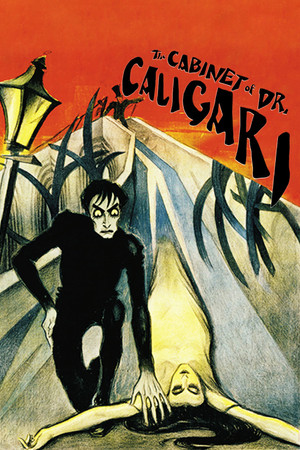
The Count sets out to make a private room for him and his Countess, built in such a way no one can see, hear, and most importantly, disturb them. But unbeknownst to the Count, his wife has set her eyes on the court minstrel. Based on Edgar Allan Poe's “The Cask of Amontillado” and Honoré de Balzac's “La Grande Breteche”.
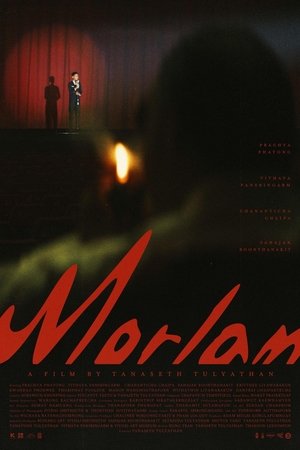
The film tells the story of a man and woman who don't know each other. After being matched by a matchmaker, after going through a series of red tape, they were sent to the bridal chamber and began a difficult life as a couple. Despite the primitive shooting methods and lack of training of the actors, the film has a very important place in the history of Chinese film.
A minister founds a fraud company, but a lawyer smells a rat.
A family is shattered when seven-year-old Jennifer disappears while she and her mother, Sharla, are shopping.
Peter Olsen, a young social outcast who lives alone on a rundown farm and raises vegetables for a living, finds his only consolation in liquor, though Dorcas Chatham, daughter of the general store owner, begs him to forego this indulgence. Returning from town, he finds a dog by the roadside, apparently injured by a car, and takes it home. Later, on a drunken spree, Peter is attacked by robbers, but the dog comes to his rescue and frightens the assailants away. Stirred by the unselfish devotion of his dog, Peter gradually regains his self-respect, and Dorcas falls in love with him and accepts his proposal, though she fears the dog. When Peter enters the dog in a show, another exhibitor proves to be its owner, and Peter is first parted from, then reunited with, "his" dog. Dorcas overcomes her fear and is united with Peter.
A waitress learns about a chance to become a general manager at the diner she works at, and has to decide if she wants to compromise her morals or find comfort within an unlikely group of women who are hiding from the law.
Fannie joins Johnny to perform a music-hall act which becomes a success, until two Broadway producers catch the act and offer Fannie a job on their latest show; however, they have no place for Johnny, so Fannie turns down the offer. (Film considered lost.)
A girl in search of sailors lost in the Pacific.
A fisherman and a rising lawyer who grew up together as brothers fall in love with the same woman.
On a South Seas island, "three white derelicts drink away memories of the past. After many adventures during which a girl enters the picture, the three are rehabilitated and everything turns out happily."
Just as Galeen and Wegener's Der Golem (1915) can be seen as a testament to early German film artistry, The Story of the Kelly Gang (1906) symbolizes both the birth of the Australian film industry and the emergence of an Australian cinema identity. Even more significantly, it heralds the emergence of the feature film format. However, only fragments of the original production of more than one hour are known to exist, preserved at the National Film and Sound Archive, Canberra; Efforts at reconstruction have made the film available to modern audiences.
Based on the collection of letters by Ozaki Hidemi, who was implicated in the Sorge spy incident, the film depicts the bond between a husband and wife who remain loyal to their love despite being called traitors, Ozaki (played by Sakazaki in the film) is played by Mori Masayuki, and the daughter is played by 16-year-old Asaoka Ruriko with fresh freshness.
During America’s Civil War, Union spies steal engineer Johnny Gray's beloved locomotive, 'The General'—with Johnnie's lady love aboard an attached boxcar—and he single-handedly must do all in his power to both get The General back and to rescue Annabelle.
A gold prospector in Alaska struggles to survive the elements and win the heart of a dance hall girl.
Thankam follows the story of Muthu and Kannan, two gold agents from Thrissur, known as the gold capital of India. As they travel across Kerala and Tamil Nadu, delivering consignments of gold, their lives take a dark turn when a routine trip leads to unexpected complications.
Robin Hood is a 1912 film made by Eclair Studios when it and many other early film studios in America's first motion picture industry were based in Fort Lee, New Jersey at the beginning of the 20th century. The movie's costumes feature enormous versions of the familiar hats of Robin and his merry men, and uses the unusual effect of momentarily superimposing images different animals over each character to emphasize their good or evil qualities. The film was directed by Étienne Arnaud and Herbert Blaché, and written by Eustace Hale Ball. A restored copy of the 30-minute film exists and was exhibited in 2006 at the Museum of Modern Art in New York City.
Adrift in the vast expanse of the ocean, a solitary boat carries three castaways—a man and two women. Stranded and devoid of any glimmer of rescue, they find solace in recounting the tales of their lives to one another. As they delve into their personal narratives, reminiscing about the circumstances that led them to this desolate predicament, they navigate through the depths of three distinct destinies. Bound by the confines of their shared space, every aspect of their existence becomes a boundary, underscoring their plight.