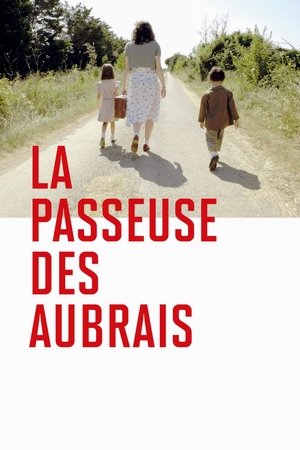
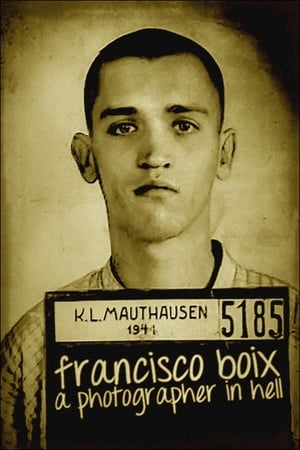
The film traces two families, one of which is Jewish, who preserved the images for decades but hadn’t brought them to light. 80 years after their creation, the son of the photographer finds the forgotten negatives and launches an investigation. With a team of researchers, archivists, and animators who use near-forensic precision to reconstruct locations and contexts, they trace the circumstances of those tragic days and the lives captured in each frame.
The story of the post World War II Jewish refugee situation from liberation to the establishment of the modern state of Israel.
The Holocaust began with the indiscriminate mass shootings by the Einsatzgruppen in the bloodlands of Eastern Europe and was perfected in the gas chambers at Auschwitz. “Bullets And Blueberries” explores the motives, methods and madness of the perpetrators, using never-before-seen images captured by the killers themselves — images that fully capture the banality of evil.
One man's foresight and opposition to the Nazis destructive forces and years later the trials and tribulations of his Grandson who would rise above his tragic childhood to share his Grandfather's courageous story.
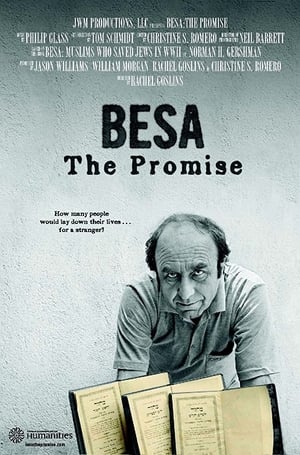
A film about non-Jews who saved Jews during the Holocaust.
Secret Courage: The Walter Suskind Story
In this short film, poet and holocaust survivor John Guzlowski bears witness to his parents’ survival of Nazi slave labor camps. More than a personal remembrance, the poem carries his mother’s plea — “tell them we weren’t the only ones” — a call to acknowledge the countless lives scarred by war, displacement, and silence. Through Guzlowski’s measured reading, the film becomes both intimate and collective: a meditation on inherited trauma, the duty of memory, and the fragile line between history and forgetting.
Reflections of Courage is a gripping documentary that follows Eddy Boas’s powerful account of his family’s survival during the Holocaust in Nazi-occupied Holland. As the youngest survivor, Eddy reveals how moments of bravery and kindness helped them endure unimaginable terror. This is a story of resilience, hope, and the courage to survive against all odds.
When Isabella learned that her great-great-uncle was imprisoned in Stutthof, the first German concentration camp established on Polish soil during the Second World War, she begins an investigation into his story and the camp’s little-known history. Despite its significance, Stutthof remains one of the least documented sites of Nazi persecution, leaving families of its victims with lingering questions. Through witness testimonies and archival traces, the film follows Isabella’s search for Uncle Edmund and the lives of those who endured Stutthof, offering a quiet reflection on memory, loss, and the lasting echoes of trauma that continue to shape the generations that followed.
Leonardo Defilippis stars in this gripping one-man drama chronicling the remarkable life of Maximilian Kolbe, a Polish friar and eventual saint who was arrested and sent to the Auschwitz concentration camp for speaking out against the Nazi regime.
While fleeing their hometown during the Nazi invasion, Jewish teenagers Fanye and Rivkah are chased through the woods by an armed Nazi soldier and are forced to make life-and-death decisions.
The story of catholic saint Maximilian Kolbe (1894-1941), who volunteered to die in place of a stranger in the Nazi concentration camp of Auschwitz.
Angst
Anne Bean, John McKeon, Stuart Brisley, Rita Donagh, Jamie Reid and Jimmy Boyle are interviewed about their artistic practice and the legacy of Surrealism on their work.
Documentary about painter Petar Dobrovic.
Perhaps this is Robert Vas' most personal film; a portrait of his country - Hungary - as seen through the eyes of an exile. Robert Vas escaped from his homeland after the brutal crushing of the 1956 Hungarian Uprising by the Russians and he was never able to return. He portrays his country through the writings of Hungary's national poets and illustrates the film with images of the Revolution and of the society it would become in the years immediately following 1956. The film was transmitted on the 20th anniversary of the crushing of the uprising.
A documentary about a convent of Russian Orthodox nuns in Estonia who have dedicated their lives to serving God.
A visual artist and a musician create a series of works in which paintings and musical scores form cohesive pieces intended to be experienced together. The works interpret the excitement and monotony of life in the urban desert sprawl from the diverse perspectives of the native and the newcomer.
Featuring unprecedented access inside the White House and State Department, The Final Year offers an uncompromising view of the inner workings of the Obama Administration as they prepare to leave power after eight years.
Dammbeck, himself an alumnus of the Leipzig Academy for Graphic and Book Design, presents the origins of the new German realism developed by the so-called Leipzig School, which took place in the context of socialist-realist dogma in the GDR before the Wall was built in 1961. After the Wall came down in 1989, what happened to the major Leipzig School painters Werner Tübke and Bernhard Heisig, who had been called “Dürer’s red heirs” by West German journalists in the 1970s? In the film, Tübke, Heisig, and former GDR officials who were involved with the cultural scene in Leipzig at the time talk about modernism, conformism, political pressure, party discipline, personal claims, and fading memory. The documentary paints an insightful, often critical picture of early East German art history.