L, a student in India witness to the government's violent response to university protests, writes letters to her estranged lover while he is away.
In May 1974, the Israeli Air Force carried out an extermination operation against the Palestinian refugee camp Nabatiyeh. With this as a starting point, it is reviewed how the last 50 years of Zionist colonization of Palestine have partly led to the establishment of the state of Israel, partly to the expulsion of a people, the Palestinians, from their land. The film shows scenes of daily life in Palestinian refugee camps. We hear various of the inhabitants talk about their desire to return to their country, and we follow how the resistance movement works to free women from their traditional backward role. At the same time, the emergence of the armed resistance struggle is analysed, and the significance of the latest military technological developments for guerilla wars in the 3rd world is explained.
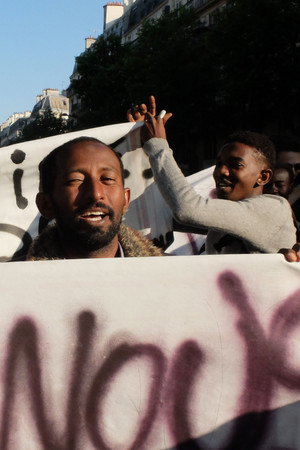
Here in Toronto, four young Somali refugees are finishing high school. What did they bring with them? What did they find in Canada? Their testimonies, about us and about themselves, interspersed with newsreel footage and sequences of a theatrical creation in which they put all their soul, make them immediately endearing and overturn many prejudices held against refugees. A film that makes you want to get to know them better.
Les enfants de la lanterne magique
A girl from St. Petersburg walks around protest-ridden Moscow, talking to riot police and believing that sooner or later they will go over to the side of the demonstrators. An 18-year-old student of a St. Petersburg college introduces herself as Alice and tells about herself that from the age of four she lived in an orphanage and in foster families. In Moscow, Alisa, for whom this is the first rally in her life, walks along the police cordons and looks under the OMON helmet. "Under the mask you can't see, are you even human?"
Jérôme was sexually abused as a child by a priest. In a deeply personal film, he tries to search for clues in his memories and come to terms with the complicity of his former social environment.
This film documents the youth groups personalities, interests and what they like to do for fun. It also highlights important and relevant issues facing young travellers and their peers in East Cork and Cork City. A film the by the Connect Youth Project. Directed and filmed by the members of the Connect Youth Project in East Cork.
A unique visual interpretation of Tyler, the Creator's latest album, Chromakopia.
During the 16th Workers' Festival in Dresden in 1976, a student group of Chilean emigrants paints a mural symbolically depicting the activity of the Unidad Popular during Salvador Allende's reign. Festival guests comment on this work. Music by Chilean music group Jaspampa, formed in Leipzig in 1972.
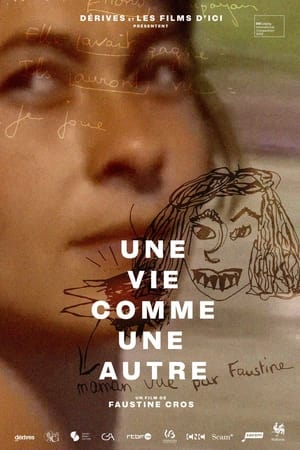
Over many years, the director’s father filmed his family life almost obsessively. His daughter’s birth, his son’s first steps, and always Valérie, the young mother. An impressive fund of material which their now grown-up daughter Faustine appropriates to tell quite a different story: that of a woman who sees her role as a mother and its demands take away her freedom step by step.
In 1963, Rosans, a village in the Hautes-Alpes region depopulated by the rural exodus, welcomed Harkis (military soldiers) forced to leave Algeria for supporting France during the Algerian War. Around thirty families settled in a camp below Rosans. Nearly half a century after their arrival, first- and second-generation Harkis and native Rosanais recount their experiences of this culture clash, often painful, sometimes happy. Language barriers, religious differences, living in barracks for 14 years, and unemployment were all obstacles to overcome in order to be accepted and then achieve mutual enrichment. Enriched with archive footage to explain the historical context of the time, the film seeks above all to express feelings and unspoken words.
A family with five children flees the war raging in their home village on the Russian border. They end up in Mshanets, a farming village on the other side of the country, remote and unknown. Here the family starts building a new home. At the same time, two documentary makers come to the village, looking for a story. In the Lymar family they find the ideal characters for their film. But one day, when the renovation of their house is almost finished, the family disappears. The filmmakers go in search of their characters and along the way they try to find an answer to the question: what does a person need to feel at home?
Jarred by the loss of his closest friend, a farmer on Tasmania’s remote West Coast, begins to mentor at-risk local youth. In an area renowned for its poverty, low literacy, and high suicide rates, Stafford Heres is determined to provide opportunities for kids who have few. Eden Alone Surpasses Thee explores his relationship with the land, loss, and the young men he takes under his wing.
On October 27, 2005, Zyed Benna and Bouna Traoré died in an electrical substation while fleeing the police, sparking three weeks of riots across France. A decade later, as the officers involved are acquitted, the film revisits the voices of those who lived through the uprising. Through their stories, it explores what remains of that anger and how their view of society has evolved.
Les dieux de Molenbeek
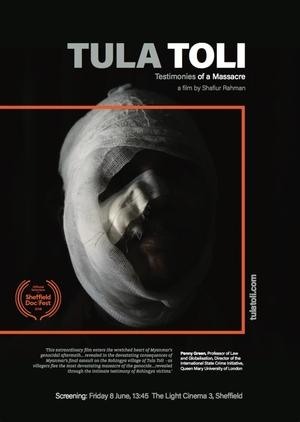
Filmed along the Myanmar-Bangladesh border and within Rohingya refugee camps, Shafiur Rahman’s documentary on the 2017 Tula Toli massacre exposes chilling interviews and evidence of Myanmar military’s premeditated atrocities. The film documents mass killings, sexual violence, and the systematic destruction of the village of Tula Toli, highlighting a humanitarian crisis that forced over half a million people—many of them children—to flee in an exodus of historic scale.
In the Gaza refugee camp of Jerash, Palestinians face the critical issue of lacking identification documents. This situation undermines their rights and hinders access to essential services and opportunities.
Plató
The moving story of Carlo Acutis, a young British-Italian amateur computer programmer who died in 2006, aged 15, as a result of leukemia. However, even though he is no longer here, to this day Carlo continues to be a great symbol of strength among young people. The documentary brings together a series of reports from people who entrusted themselves to the intercession of the boy, beatified by the Catholic Church in 2020, and had their lives transformed.
Habonim Dror Brasil - A História