Several comic greats pay tribute to the legendary stand-up stage founded by Budd Friedman in 1963.
A 'Vlogumentary' following Joseph as he meets up with legendary street artist: George. Watch as George breaks down the political barriers of society through his wonderful and very serious works.
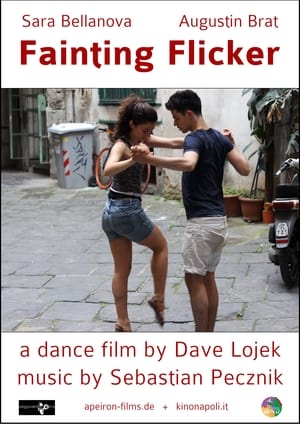
Two young strangers meet in Naples and begin to flirt and dance in the street.
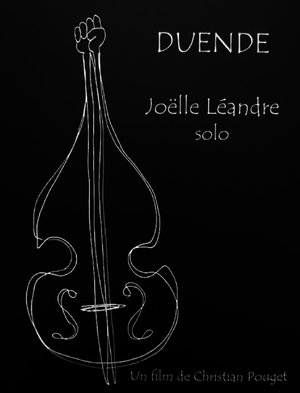
Duende: Joëlle Léandre solo
This is an acoustic live concert by the folk metal band Ensiferum filmed on October 28th, 2016 at On the Rocks in Helsinki, Finland.
Orson Welles presents a proposed film project to prospective investors in Spain. Speaking to an audience of wealthy arts patrons, Welles outlines his vision for an improvised, documentary-style fiction set in the world of bullfighting, centered on a solitary, existential matador who stands apart from his peers. As he expounds on cinema, performance, and the ritualized spectacle of death, the film captures a project that would ultimately remain unrealized.
This early travelogue film, made in a Kenyan train station, captures an impromptu musical performance. Some passengers eagerly join in while others sleep—blissfully unaware of the performance taking place around them.
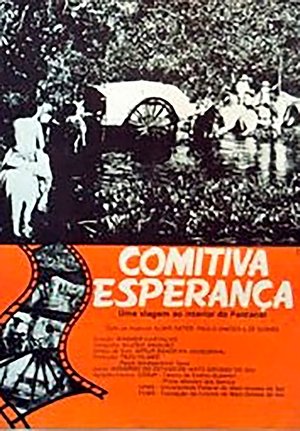
Comitiva Esperança
An important audio-visual record of a landmark series of four concerts staged in London in 2022 when more than 30 musicians joined improviser, percussionist and animateur Eddie Prévost to mark his 80th birthday. The film takes a close look at improvisers who create music in the moment, free from the authority of a composer, score or conductor. Ranging from profound delicacy to subversive atonality, the “awkward wealth” of this music raises vital questions about artistic freedom, individual responsibility and what it means for people to make music together in the 21st Century. Featuring performances by John Butcher, Sue Lynch, Ute Kanngiesser, Marjolaine Charbin, Nathan Moore, Seymour Wright, Veryan Weston, Alan Wilkinson, John Tilbury and Eddie Prévost amongst others. Plus readings by musician and author David Toop. The film includes the last ever concert by AMM, the pioneering improvising group co-founded by Eddie Prévost in the mid-1960s.
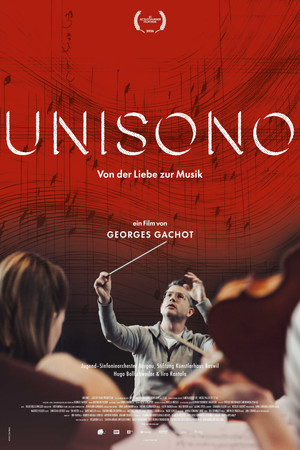
When young musicians come together to play classical music, they send out a strong signal to our today’s world. The film follows talented young Swiss musicians as they work, search for inspiration, but also expose their thought how to play nowadays the “old” Classical music.
Toshio and Shizuko Omiro, both over seventy years old, have lived in Kawasaki, Japan since 1981. With their free-spirited lifestyle, the improvisaton duo continues to pursue their vision of changing the world into a more peaceful one in an inappropriate and unseemly way.
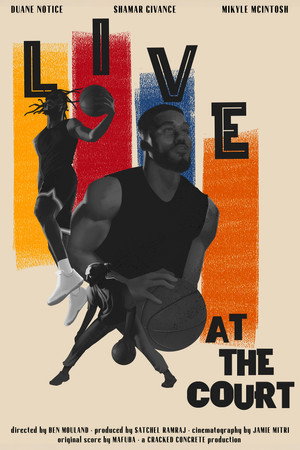
Three basketball players step onto the court, each with a rhythm of their own. As their movements are studied and reimagined, their game is then recontextualized into jazz, revealing the artistry within sport and the music hidden in motion.
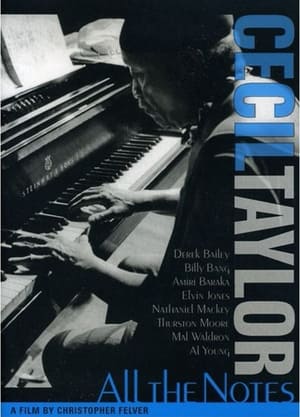
Cecil Taylor was the grand master of free jazz piano. "All the Notes" captures in breezy fashion the unconventional stance of this media-shy modern musical genius, regarded as one of the true giants of post-war music. Seated at his beloved and battered piano in his Brooklyn brownstone the maestro holds court with frequent stentorian pronouncements on life, art and music.
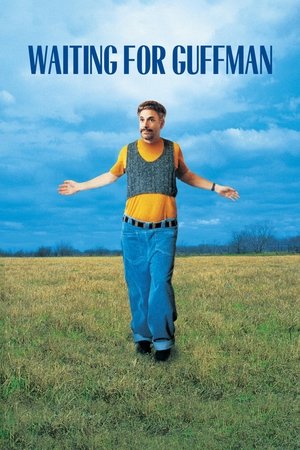
Aspiring director Corky St. Clair and the marginally talented amateur cast of his hokey small-town musical production go overboard when they learn that Broadway theater agent Mort Guffman will be in attendance.
Unknown comedians Alex Dolezal and Aidan Fealy attempt to launch the national tour of their absurdist late-night talk show parody but a combination of ADHD and poor choices threaten to derail them before they can even start.
With noise-canceling headphones, they communicate with an inaudible counterpart. Decoupled, they move around the room and meet their surroundings. Intimate stories and needs are discussed. The personal blends into a shared portrait.
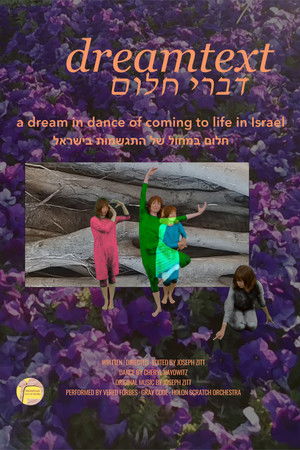
Joseph Zitt’s film dreamtext דברי חלום is a feature-length dream of coming to life in Israel. Four images of dancer Cheryl Nayowitz move past and through images of Israel and words spoken by the Holon Scratch Orchestra, along with music by the ensemble Gray Code. The film and its music are anchored by the song “Sachki Sachki,” sung by Vered Forbes. The film has no story, dialogue, or characters (other than the dancer). While there is text in Hebrew and English, you don’t need to know either language to enjoy the film. The English is a dreamlike text scrambled to approximate what you might hear while falling asleep. The Hebrew words which are heard and seen onscreen during much of the film are streams of consciousness, improvised by women’s voices on the themes of segments of the film. When we hear the song “Sachki Sachki,” the words appear onscreen both in the original Hebrew and in an English translation.
An indie film crew throw caution to the wind when they attempt to shoot a completely improvised drama where the film's big twist is being kept secret from their lead actress, while also navigating on-set mishaps, bizarre twists of fate, and the first year of a global pandemic.
In 1989, a collective of young hip hop artists gathered at a health food café in South Central Los Angeles. Their mandate? To reject gang culture and expand the musical boundaries of hip hop. DuVernay's documentary chronicles the historic legacy of the Good Life Cafe — the open mic nights that became an L.A. institution, the eclectic array of talented young MCs that emerged there, the alternative hip hop movement they developed, and their worldwide influence on the artform.
In January 2025, experimental jazz duo Myshko Birchenko and Yevhen Puhachov, members of Hyphen Dash, travelled to Kramatorsk without any pre-made drafts or demo recordings to use music as a vessel to capture the emotions present in a place on the edge of a battle for survival and explore the therapeutic nature of music and improvisation in the brutal reality of war. They packed all the equipment into a car, drove 700 kilometres from Kyiv to the frontline city Kramatorsk, and turned one of many basements which serve as shelters into a makeshift recording studio. As a result, they recorded over 300 minutes of music, which were eventually distilled into a 90-minute album.