“Shellmound” is the story of how one location was transformed from a sacred center of pre-historic cultures to a commercial mecca for modern people. What began as a Native American burial ground three thousand years ago, was transformed first into an amusement park, and later an industrial age paint factory. Now, the tainted ancient soil sits beneath the glittering lights of Banana Republic, Victoria’s Secret, and the AMC movie theaters. “Shellmound” examines the decisions made during the recent toxic cleanup, excavation, and construction of the Bay Street mall through the eyes of the city of Emeryville, the developer, the archaeologists, and the native Californians who worked on the site.
Gaea is a mythical realm ruled by sword and sorcery and immersed in blood and violence. Thrust into a conflict she doesn't quite understand, Hitomi Kanzaki helps aid the young Prince Van as they embark upon a journey to fight the Black Dragon Clan. The battle over a legendary suit of dragon armor, Escaflowne, has begun.
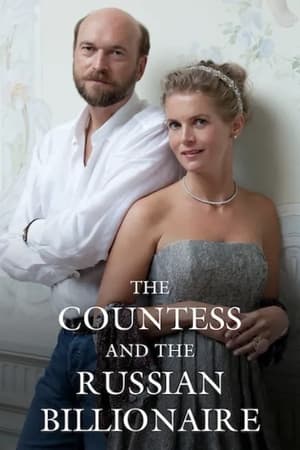
Inside the secret world of Sergei Pugachev, a Russian oligarch, and his British partner Countess Alexandra Tolstoy, mother to their three children.
In 1928, as the talkies threw the film industry and film language into turmoil, Chaplin decided that his Tramp character would not be heard. City Lights would not be a talking picture, but it would have a soundtrack. Chaplin personally composed a musical score and sound effects for the picture. With Peter Lord, the famous co-creator of Chicken Run and Wallace & Gromit, we see how Chaplin became the king of slapstick comedy and the superstar of the movies.
A brash and precocious ten-year-old comes to Paris for a whirlwind weekend with her rakish uncle.
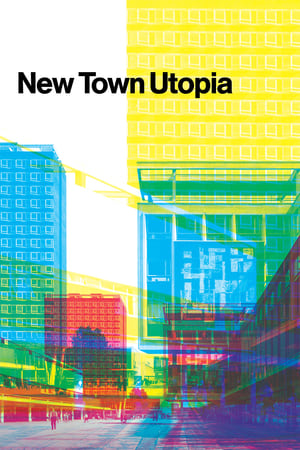
Since the end of World War II, one of kind of urban residential development has dominate how cities in North America have grown, the suburbs. In these artificial neighborhoods, there is a sense of careless sprawl in an car dominated culture that ineffectually tries to create the more organically grown older communities. Interspersed with the comments of various experts about the nature of suburbia
Khodorkovsky, the richest Russian, challenges President Putin. A fight of the titans begins. Putin warns him. But Khodorkovsky comes back to Russia knowing that he will be imprisoned, once he returns. When I heard about it, I asked myself: why didn't he stay in exile with a couple of billions? Why did he do that? A personal journey to Khodorkovsky.
The Impossible Beskov
A film about "the father" of Malmö Eric Svenning and how the city has developed during his time.
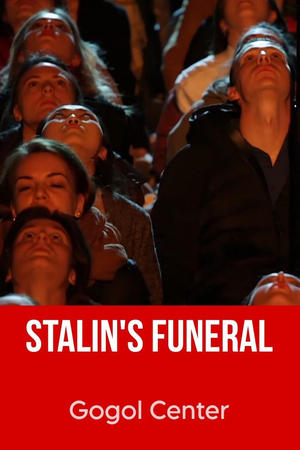
On the same day that Stalin was buried, Sergei Prokofiev's funeral took place completely unnoticed. And if the farewell to the composer quietly went against the backdrop of the farewell to the dictator that swept the whole country, then in the play everything is the opposite - Prokofiev's music is in the center, and it is interrupted by the stories of those people who would probably ignore Stalin's funeral and went to say goodbye to the great composer.
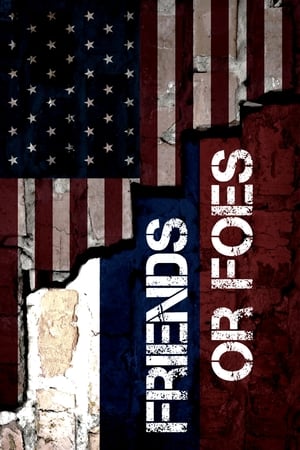
Russian President Vladimir Putin was one of the first politicians to congratulate Donald Trump on his election as president of the United States in 2016, but over time the relationship between the two heads of state has had its ups and downs. Are they friends or enemies? Has their mutual admiration turned into mutual distrust?
Russia is a highly developed, wired, and educated nation, but endures third-world levels of corruption and a repressive, autocratic government. Many Russians explain this paradox by citing the Russian soul, a unique national mindset, born out of their turbulent history that wants dictatorship. Is that possible, or are free speech and democracy universal values?
The film "Nights full moon" shows the tendency of moral decay in society. The main character is torn apart by internal contradictions, leading him to the path of Evil. Bans on self-identification - philosophical, existential, sexual, and then permissiveness spawn a monster that is not aware of its true nature and genuine desires. Throughout the film-trilogy, the protagonist goes through a series of temptations that ruin his soul and lead, after all, to a madhouse. In a general sense, the film allegorically shows the tragic path of the Russian lumpen intellectual, lost between the past and the present, not finding the strength to accept and comprehend the unexpected changes that happened in our country twenty years ago. In the global sense - the tragic circle of Russian history.
The epic story of the Russian Civil War (1918-21): the White Terror, the counterrevolutionary uprisings, the guerrilla war, the Kolchak front, the Wrangel front and the Kronstadt rebellion. Chaos and violence, devastation and death.
La Cité oubliée de Ramsès II
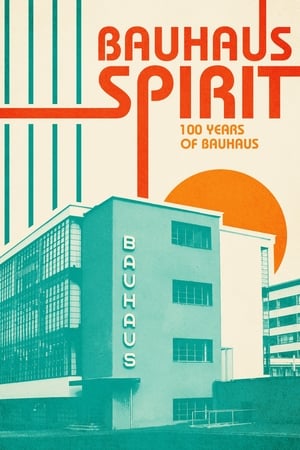
Founded in 1919 by Walter Gropius, Bauhaus was supposed to unite sculpture, painting, design and architecture into a single combined constructive discipline. It is a synthesis of liberated imagination and stringent structure; cross-medial concepts that embellish and enrich our existence, illumination and clarity, order and playfulness. But Bauhaus was never just an artistic experiment. Confronted with the social conditions of that particular time, as well as the experience of WWI, the movement concerned itself with the political and social connotations of design from the very outset. Hence, Bauhaus history is not just the history of art, but also the history of an era that stretches from the early 20th century to the modern day.
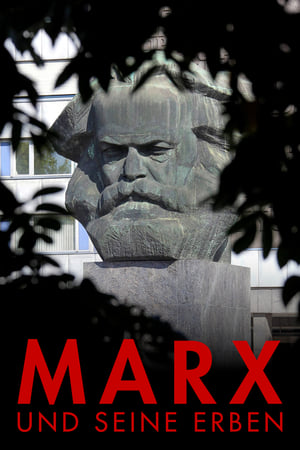
Over the past hundred years, dramatic social upheavals have taken place in the name of Karl Marx's theories. In Western Europe, the student movement of 1968 and the Eurocommunists were inspired. And in recent times, the thinker has experienced a renaissance.
A documentary film about the Karelo-Finnish SSR.
Based on investigations by independent journalists, the film documents the origins of Russian President Vladimir Putin’s private wealth and subsequent rise to power, demonstrating his ascension to the Russian presidency after an alliance built in the early 1990s between himself, certain friends from Leningrad’s KGB, and mafia groups.
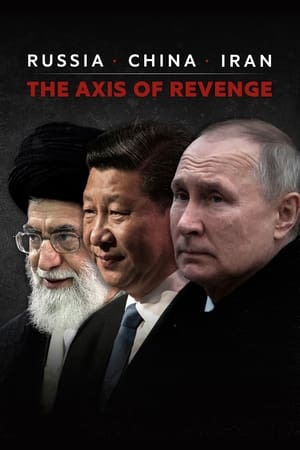
Russia, China and Iran: three former empires are determined to take their revenge and reassert their power after centuries of humiliation. Since the start of the war in Ukraine, they have never been so aligned on the international stage. Their common goal: to put an end to Western hegemony, restore their zone of influence and propose a new model of society. To achieve this, they are waging a hybrid war against the democracies: military, technological, economic, informational and ideological. Are they on the verge of joining forces to create a new world order?