With a maddening sensuality, the unforgettable actress of the film "A Special Day" embodies the golden age of Italian cinema. From the suburbs of Naples to Hollywood, this biographical documentary looks back at the flamboyant career and destiny of Sophia Loren.
The personal life and professional career of music superstar Gordon Matthew Thomas Sumner, universally known as Sting, who became passionate about music at a very early age and founded the trio The Police in 1977 with Stewart Copeland and Andy Summers, achieving an immediate success.
Sur les traces d'Henry de Monfreid - Écrivain et pirate de la mer Rouge
1941, dernier bateau pour l'exil
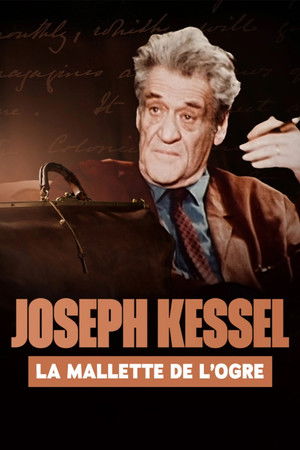
To tell the story of Joseph Kessel is to tell the story of the entire 20th century. He lived a thousand lives in one: reporter, novelist, exile, resistance fighter, screenwriter, adventurer, gambler, poet, alcoholic, cabaret lover, seducer, and inveterate globetrotter. Through archival footage and Kessel's colorful language, this film traces the journey of a man who turned reporting into an epic and reality into the stuff of novels.
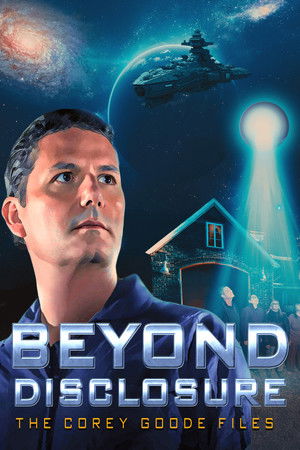
After claiming he served 20 years in a secret space program, Corey Goode became a UFO icon - then a lightning rod. This documentary follows his rise and the strange intersection of memory, myth, and media in the age of disclosure.
L'énigme Céline Dion
Twiggy takes a comprehensive look at the life story of UK model and cultural icon Twiggy, real name Lesley Lawson, whose career kickstarted in the 1960s. It features interviews with Twiggy and her husband Leigh Lawson, as well as commentary from Erin O’Connor, Paul McCartney, Lulu, Poppy Delavigne, Brooke Shields, Pattie Boyd and Zandra Rhodes.
9/11 was perhaps the defining historical event of the postwar era. Broadcast live around the world like horrifying theatre, it was a moment in history imprinted onto people's memories. But what was it like to actually live through, and how easy is it to move on from a day that society wants to go on remembering? Twenty years on, this film brings together 13 ordinary people who were caught in an event they weren't able to fully comprehend at the time and which they are still working through.
Paul Weller's musical rebirth unfolds as he records the solo album Wild Wood in 1992-93, embracing analog sound and revisiting his roots, captured through new interviews with Weller, band members, producer, and collaborators.
From his childhood in a modest family in the Pyrénées to his unexpected career as a porn actor in the 1970s, the film traces the life of Claude Loir, who set out to fully embrace life. His homosexuality and curiosity guide him through encounters that lead into the shadowy, liberated circles of a pre-AIDS era, caught between conservatism and sexual freedom. Loves and lovers, flamboyance and fragility… the film offers a striking portrait of a fearless, hedonistic man navigating desire, identity, and society’s constraints.
Albert Camus died at 46 years old on January 4, 1960, two years after his Nobel Prize in literature. Author of “L'Etranger”, one of the most widely read novels in the world, philosopher of the absurd and of revolt, resistant, journalist, playwright, Albert Camus had an extraordinary destiny. Child of the poor districts of Algiers, tuberculosis patient, orphan of father, son of an illiterate and deaf mother, he tore himself away from his condition thanks to his teacher. French from Algeria, he never ceased to fight for equality with the Arabs and the Kabyle, while fearing the Independence of the FLN. Founded on restored and colorized archives, and first-hand accounts, this documentary attempts to paint the portrait of Camus as he was.
Balavoine, enquête sur un destin tragique
Featuring interviews with his accomplices and victims alike, this deep dive explores how a master con man scammed French elites out of millions of euros.
The Irreversible Odyssey is a retrospective documentary featuring interviews with Gaspar Noé, actors Monica Bellucci, Vincent Cassel and Albert Dupontel.
When Danish filmmaker Lea Glob first portrayed Apolonia Sokol in 2009, she appeared to be leading a storybook life. The talented Apolonia was born in an underground theater in Paris and grew up in an artists’ community—the ultimate bohemian existence. In her 20s, she studied at the Beaux-Arts de Paris, one of the most prestigious art academies in Europe. Over the years, Lea Glob kept returning to film the charismatic Apolonia and a special bond developed between the two young women.
World-renowned director Martin Scorsese narrates this journey through his favorites in Italian cinema.
A conversation with Sirvan Khosravi, Xaniar Khosravi, their band, and crew, about diverse topics such as Monologue album's live performance, creativity, popular music, plagiarism, helipads, and Sirvan's future projects.
The former French colonies in Central and West Africa have been independent since 1960, but most of these countries still use the currency of the former oppressor: the CFA franc. It was linked to the French franc when it was introduced, so the national bank in Paris controlled monetary policy. Now the currency has a fixed exchange rate with the euro. The link with the European currency strongly influences the monetary policy of CFA countries. And that means the value of the CFA franc is defined by political decisions taken elsewhere, rather than by the domestic economy.
It was one of the great crimes of the Second World War: from 1941 to 1944, a total of 872 days, the siege and starvation of Leningrad by the German Wehrmacht on Hitler's orders lasted. Over a million people fell victim to the blockade, most of them dying of hunger. Countless of these starving people wrote diaries with the last of their strength, and cameramen filmed in the paralyzed city. Evidence from the hell of the siege, many of the film recordings, but above all the written memories on which this documentary on the occasion of the 80th anniversary of the liberation is based, remained under lock and key after the war. The voices of those who had suffered through this terrible time should not be heard by anyone, because they did not fit the pathos of the Leningrad heroic song that was officially sung. Most of the recordings come from women. The writers feared neither the enemy nor the Communist Party or Stalin, who often proved incompetent in providing for the population.