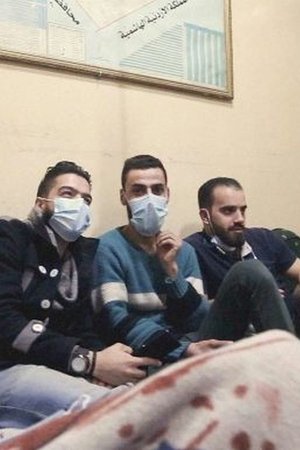
Chronicle of the Occupation.
A discussion with her family brings a daughter an occasion to ponder the past. Presence and absence lead to an immersion into memories, and ultimately, to the future.
While his aide continuously turns the handle of the bellows, keeping hot a small furnace in front of him, a farrier prepares a horse's hoof to receive a new shoe.
Men working at the shipyards of La Ciotat.
A travelogue of Los Angeles area vernacular architecture and Hollywood's self-promotion as the land of make-believe.
Commissioned by the U.S. Treasury Department, the film follows an inspector conducting surprise inspections. Note: As of now, the film is considered lost and no known copies are publicly available.
Animated figure Talkie gets a visit from his friend Mutie in search for a job. Talkie takes him to the Western Electric sound lab...
A short, avant-garde movie, starring twelve-year-old ballet student Gwen Thomas, Nymphlight is a lovely blend of fact and fiction, using Bryant Park at the New York Public Library as a stage set for the fantasy inclusion of a certain nymph. A meditation on an ephemeral day in the the life of a park shared by birds, the young and the old.
City lights contrasted with total darkness in this experimental short film.
The film was produced as a compilation film. Blum reported in “Film-Kurier“ (5.11.1928): "It will be assembled from excerpts of partly unpublished Ukrainian films. […] Some American footage has also been used. To get material as impressive as possible, a number of films, 0-60, have been viewed." Based on ideas by Dziga Vertov, and largely assembled from the last reel of his film 'The Eleventh Year', this compilation presents an explicit critique of the very technology that Vertov sought to praise, stressing the dark side of industrialization—hands mangled in workplace accidents, train wrecks, coffins—and connects to a particularly German concern with the negative effects of technology stretching from the Romantics to Heidegger, Horkheimer, and Adorno in the twentieth century.
100 seconds-long six-scene footage consisting of selected coronation ceremonies of the Russian Tsar (Emperor) Nicholas II. Shows distinguished guests entering a carriage, parade of troops and carriages, Nicholas II and his wife empress Alexandra Feodorovna descending the Kremlin Red Staircase, procession of the newly crowned Emperor and his wife under the baldacchino, guests from the Asian parts of the Russian Empire.
A train arrives at Perrache station. We see the view from aboard the train.
A trains arrives at Perrache station and people disembark.
Most likely made for the large Neapolitan immigrant population in the States, Roberto Leone Roberti’s love poem to Naples more than captures the heartache of the countless émigrés who were forced by economic circumstances to leave their homeland.
Documentary that tells the story of Vianney Trejo, a young woman who struggles every day despite her disability. We go through her daily routine, as well as her passion, swimming, where she has consistently achieved triumphs and has been considered for international competitions.
A unique documentary that interlaces archival interviews with author Philip K. Dick with chats featuring cast and crew. Discussed are the origins of the story, parallels the cast and crew sees to the goings-on in today's world, and adapting the story for film, modern audiences, and its unique look.
A woman walks, loves, eats and washes herself, dances. It all takes place in a bedroom. At times flashbacks, or visualizations of previous or following scenes. Unless her life in the bedroom becomes an obsession, she lives through the other scenes.
One of the very few films made by Etienne O'Leary, all of which emerged from the French underground circa 1968 and can be very loosely designated 'diary films.' Like the contemporaneous films by O'Leary's more famous friend Pierre Clementi, they trippily document the drug-drenched hedonism of that era's dandies. O'Leary worked with an intoxicating style that foregrounded rapid and even subliminal cutting, dense layering of superimposed images and a spontaneous notebook type shooting style. Yet even if much of O'Leary's material was initially 'diaristic,' depicting the friends, lovers, and places that he encountered in his private life, the metamorphoses it underwent during editing transformed it into a series of ambiguously fictionalized, sometimes darkly sexual fantasias. - Experimental Film Club
Jamila reads aloud a stack of printed emails written to individuals and organisations delaying, postponing, or cancelling work due to illness from her sickbed.
Denise, Hannah and Leticia are three ordinary women with extraordinary stories to tell. As transgender people, they talk about the challenges of finding their true identities within an intolerant and prejudiced society.