Sepp Holzer explains some of the innovative, labour-saving agricultural techniques he applies at his farm in the Eastern Alps of Salzburg, Austria.
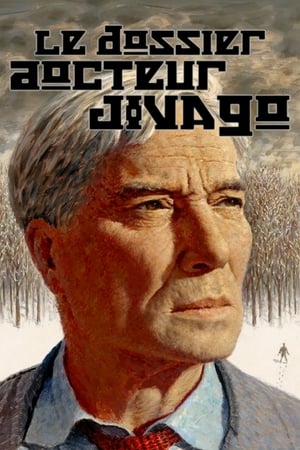
Jaroslav Seifert
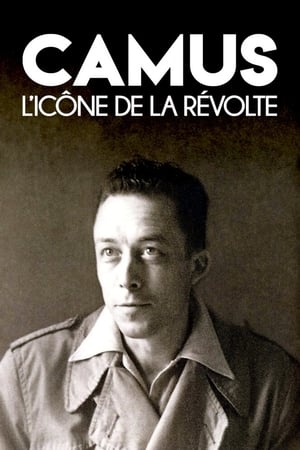
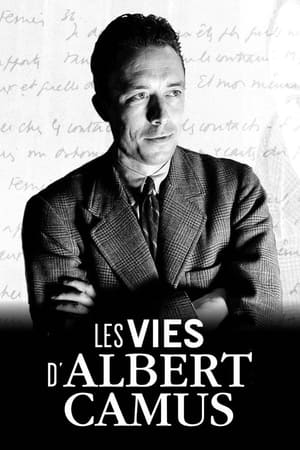
Albert Camus, who died 60 years ago, continues to inspire defenders of freedom and human rights activists around the world today. The Nobel Prize winner for literature is one of the most widely read French-language writers in the world. He continues to embody the rebellious man who opposes all forms of oppression and tyranny while refusing to compromise his human values.
Oskar Kokoschka : Portraits européens
To historians, physicist Lise Meitner deserves to be placed on a par with Einstein, Heisenberg and Otto Hahn. In the 1930s on the verge of World War II, she led a small group of scientists who discovered that splitting the atomic nucleus of uranium releases enormous energy. This extraordinary film tells the story of a woman who was far ahead of her time as a scientist and a pioneer of feminism.
Albert Camus died at 46 years old on January 4, 1960, two years after his Nobel Prize in literature. Author of “L'Etranger”, one of the most widely read novels in the world, philosopher of the absurd and of revolt, resistant, journalist, playwright, Albert Camus had an extraordinary destiny. Child of the poor districts of Algiers, tuberculosis patient, orphan of father, son of an illiterate and deaf mother, he tore himself away from his condition thanks to his teacher. French from Algeria, he never ceased to fight for equality with the Arabs and the Kabyle, while fearing the Independence of the FLN. Founded on restored and colorized archives, and first-hand accounts, this documentary attempts to paint the portrait of Camus as he was.
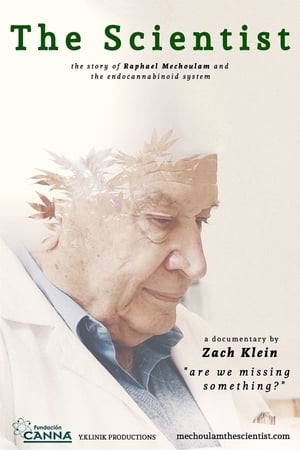
The story of Nobel prize nominee Dr Mechoulam from his early days as a child of the Holocaust in Bulgaria, through his immigration to Israel, and his career as the chief investigator into the chemistry and biology of the world's most misunderstood plant. Dr. Mechoulam ascertained that THC interacts with the largest receptor system in the human body, the endocannabinoid system.
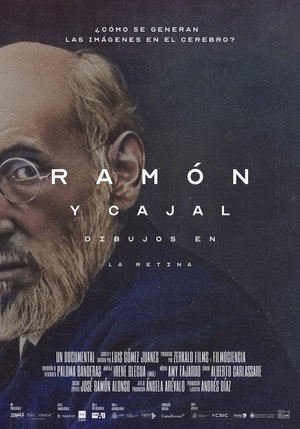
"In Search of Memory" is a very personal portrait of Eric Kandel, the "rock star" of neuroscience and the most important brain researcher of the 20th century. A fascinating documentary about the exciting mystery of the brain which arouses a curiosity in life and learning.
Astrophysicists show how black holes might hold answers to how the universe evolved, leading to life on Earth and, ultimately, the human race.
This John Nesbitt's Passing Parade short tells the story of Alfred Nobel, who invented dynamite, and later established the Nobel Prize.
How would natural habitats develop without human interference? In this documentary we follow an international team of scientists and explorers on an extraordinary mission in Mozambique to reach a forest that no human has set foot in. The team aims to collect data from the forest to help our understanding of how climate change is affecting our planet. But the forest sits atop a mountain, and to reach it, the team must first climb a sheer 100m wall of rock.
Focuses on 1992 Nobel Peace Prize winner, Rigoberta Menchu, as she discusses the lack of human rights for the indigenous people of Guatemala and her commitment to the struggle for a more egalitarian society.
The core of the video is a pedagogical workshop on the Theory of Special Relativity as part of the educational process conducted by our youth leadership. Not for the sake of understanding the theory itself, but using Einstein's particular discovery as a case study to demonstrate and walk people through real human thinking, as being something above sense perceptions or opinions. We end with reflecting on the principle of relativity in terms of social relations and individual identities or thought processes, asking the question - how was Einstein able to make his breakthrough?
About the Portuguese author José Saramago, based on a long interview with the writer at his home on the island of Lanzarote, in which he analyzes his work and shares his reflection on some aspects of his personal life.
Anita Conti, l'appel du large
The extraordinary story of Swedish writer Selma Lagerlöf (1858-1940), creator of Nils Holgersson, a memorable and legendary literary character, and the first female storyteller to win the Nobel Prize for Literature (1909); a woman as pioneering in her life as in her remarkable work.
One Peace at a Time is a film by Turk and Christy Pipkin. It was produced by The Nobelity Project and was premiered to a sold out audience at the Paramount Theatre in Austin, Texas, USA, on April 14, 2009. It is the sequel to the film Nobelity. It has been shown all across the United States and in multiple countries across the world
The Kiss by Gustav Klimt is one of the most recognised and reproduced paintings in the world. It is perhaps the most popular poster on student dorm walls from Beijing to Boston. Painted in Vienna around 1908, the evocative image of an unknown embracing couple has captivated viewers with its mystery, sensuality and dazzling materials ever since it was created. But just what lies behind the appeal of the painting – and just who was the artist that created it? Delving into the details of real gold, decorative designs, symbolism and simmering erotica, a close study of the painting takes us to the remarkable turn of the century Vienna when a new world was battling with the old.
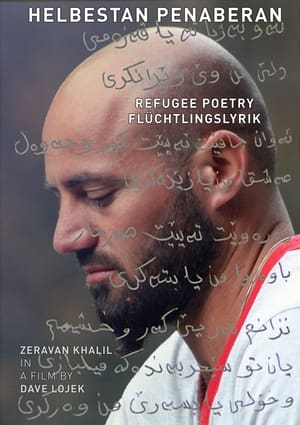
The Kurdish Iraqi poet and actor Zeravan Khalil travels with his dog through an Alpine gorge after fleeing from IS war and genocide. As he remembers the abomination, he writes a poem with the title “You drive me mad” in Kurmanji Kurdish. In his home country, Yazidic Kurds are forbidden to work in his profession. Then he eats his apple and wanders through Europe’s middle with more hope.
In the sixties, Peter Handke was one of the first to show how the business works: the writer as angry young man and pop star of the literary scene. As soon as he was on the bestseller lists, he turned his back on the hype. For many years, he has lived and worked in his house in a Parisian suburb, more quietly and more hospitably. Peter Handke's precise, free gaze becomes perceptible in his texts, his conversations, the cosmos of his notebooks.