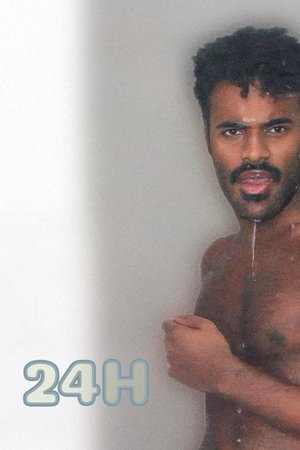
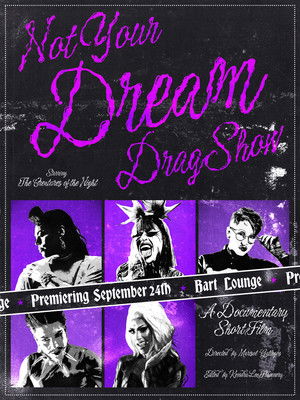
Al is a young drag king dealing with his transgender identity daily. He tries to express it through his shows and share with us his story, feeling and thoughts about it.
Mandela’s legend is built on his absence, during his 27- year incarceration. In 1990, when Nelson Mandela is released, South Africa is waiting for their Messiah. But he doesn’t know it yet, he is the most famous political prisoner of the Planet. Will he be up to the challenge?
Rare documents and details of the film's story. From its initial option to its critical reception and legacy. Director David Weisman, who also produced "Kiss of the Spider Woman", comes off as rightful creative force behind the production, as it was his true passion. Very detailed comments from all the participants, from the author of the book to the lawyer for the production company, the actors, director, writers, producer, and crew members.
In the summer of 2008, Enzo travels to Berlin to work on a creative documentary and find a former lover.
This film contains interview material and archival footage presented all on one film. It begins with very rare black and white Australian documentary from the 60s with Jagger looking like the rebel, and Keith, looking somewhat wasted, talking about Brian Jones in some depth. Also featured are press conferences, a classic interview with Mick, Ronnie and a hung over Charlie Watts, the Life Time Achievements awards, Bill Wyman interview, Keith on why he loves the Stones, Charlie speaking about touring etc, and a long Australian interview to finish.
A walk through the incredible personal and artistic history of legendary actor, race car driver and cultural icon Steve McQueen (1930-80).
From transvestites to transformers, we will follow the trail that will lead us in different and famous Parisian music-halls, such as the mythical Alcazar of Paris, La Grande Eugène. Whether they are below or beyond their character, often these men who are looking for themselves look at life with the humor of despair. Why this need to "transform" themselves? Why is it always the men who cross-dress and not the women? Why did the public flock to these shows in the 1970s and 1980s? Interpretations of famous characters such as Diana Ross, Josephine Baker, Billie Holiday, the Peter Sisters, the Andrew Sisters, Zizi Jeanmaire, Judy Garland, Sarah Bernhardt, among others, contribute to making this musical document an essential testimony of this era.
Born in Harlem between the '70s and' 80s, Voguing is a dance inspired by the models that appeared on Vogue magazine. At the time of its birth, young homosexuals, transgender and drag queen were Afro-American and Latino and they would confront themselves in improvised parades, to which Madonna and other popular singer-songwriters would later refer to. In the Paris of the years 2000s, Lasseindra Ninja is one of the most popular dancers, having learned in her youth all the tricks from the historic New York House of Ninja crew. Together with Stéphane Mizrahi the two initiate a new generation of drag queen and Parisian trans into Voguing.
Johanna Dohnal, whose political career spans three decades, was one of the very first explicitly feminist politicians in Europe. As a member of the Austrian socialist government and the first Austrian minister for Women’s Affairs from 1990 to 1994, Dohnal was responsible for founding Austria’s first women’s refuge as well as criminalizing of marital rape. Yet her legacy remains yet to be discovered and re-examined. DIE DOHNAL makes a first step, and it makes Dohnal come alive.
This film addresses issues related to black gay men, inside and outside the LGBTQ+ movement. Hypersexualization of black bodies, loneliness, racism and homophobia are examples of the topics covered. Thus, we seek to discuss, at different times, the experiences of these subjects and their characteristics.
The Death of 'Superman Lives': What Happened? feature film documents the process of development of the ill fated "Superman Lives" movie, that was to be directed by Tim Burton and star Nicolas Cage as the man of steel himself, Superman. The project went through years of development before the plug was pulled, and this documentary interviews the major filmmakers: Kevin Smith, Tim Burton, Jon Peters, Dan Gilroy, Colleen Atwood, Lorenzo di Bonaventura and many many more.
Inspired by Steven Blush's book "American Hardcore: A tribal history" Paul Rachman's feature documentary debut is a chronicle of the underground hardcore punk years from 1979 to 1986. Interviews and rare live footage from artists such as Black Flag, Bad Brains, Minor Threat, SS Decontrol and the Dead Kennedys.
A choral story of women who worked as prostitutes and the feminist debate on abolitionism and regulation, through their life stories, desires and convictions.
A young girl who lives with her poor father has to get her driver's license for a new part-time job. Because she doesn't have enough money, she has to pay for the lessons in a different, irregular way. And she does that with no other than the intriguing driving instructor Roy, but how is this going to end?
In a brand-new documentary, the actress who portrayed the unforgettable Émilie Bordeleau revisits her memories of filming and analyzes the cultural legacy of this cult saga. By exploring the timeless power of its characters, she testifies to the major impact this work has had on the collective imagination and on the history of Québec television.
Gente de mesón
A documentary on Queercore, the cultural and social movement that began as an offshoot of punk and was distinguished by its discontent with society's disapproval of the gay, bisexual, lesbian and transgender communities.
This highly controversial documentary, aired as part of the CBS Reports series, ostensibly covers the growing influence of the LGBT community in San Francisco circa 1979. Critics have rebuked the program for its characterization of the sexual practices of gay men, while organizations such as the Moral Majority referenced it in campaigns against gay rights ordinances.
He is a sensitive boy who represses his true personality. After experiencing traumatic experiences, our protagonist begins to open to the world on a journey that made him the person who is. This is not the complete story, but shows a trajectory of overcoming and change.
As a gay man, filmmaker Arshad Khan examines his troubled relationship with his devout, Muslim father Abu. Using family archives and movies, Khan explores his struggle with his identity and compares it to his parents attempts to fit into Canada.