Offshore wind farms are a major player in the move away from fossil fuels, especially in the North Sea, and they are increasing in number. But their impact on the environment is not yet clear: We take a look at ongoing research in Europe that is measuring the impact of wind turbines and their harm, or benefit, to biodiversity in our seas.
Bacteria, viruses, but also fungi, algae, pollen, and even insects: micro-organisms thrive and circulate constantly in our sky. How can so many living beings find their way into the air and circulate? How do they survive? And what influence do they have on our lives and the living world? Biodiversity, health, climate: it is only recently that scientists have begun to understand how this discreet aerial "plankton" affects our lives and our ecosystem. But despite their many virtues, some of these micro-organisms are now threatened by human activities. With the help of experts and 3D models, this scientific investigation plunges us into the heart of a still mysterious world, and reveals the diversity and fragility of the air we breathe.
Atlantis is filmmaker Luc Besson's celebration of the beauty and wonder of the world beneath the sea, expanding upon themes touched on in his film The Big Blue. Combining stunning underwater cinematography and a hypnotic score by Eric Serra, Besson's singular vision defies dialogue or narrative structure to explore ocean life as you've never seen it before. Following the colossal success of The Big Blue, Luc Besson crisscrossed the world's seas and oceans to film the beauty and diversity of marine life: from the giant octopuses of Vancouver to the manta rays of the Pacific (New Caledonia), and the grey sharks of Tahiti. A film with no actors or sets other than the underwater world. A breathtaking view of marine species: sharks, dolphins, manatees, octopuses. An exploration of the seabed in the Bahamas, the Galapagos, Vancouver, and Tahiti.
Never-before-seen footage shows how our living in lockdown opened the door for nature to bounce back and thrive. Across the seas, skies, and lands, Earth found its rhythm when we came to a stop.
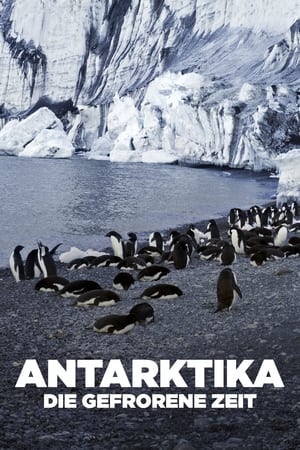
The bleakness of Antarctica is a fallacy. The ice continent is full of life and offers a biodiversity of which only about two percent are known. Much of it is under water and could determine the future of human beings. When the northern lights cover the ice landscape in summer, the animals in the Antarctic are in a paradisiacal state. Whales blow their fountains in the sky, penguins fly like small rockets into the water, seals dive for crabs under the glittering ice floes. From the bay of the Ross Sea to the ice shelf, from the huge penguin colonies to steaming volcanoes, a life in rhythm with the ice. But the consequences of climate change are slowly becoming apparent here too. While some species are dying, others are spreading. They could bring new viruses and bacteria with them, and new dangers for humans too. The structure of nature has gotten off course. How many generations will still be able to experience the magic of Antarctica?
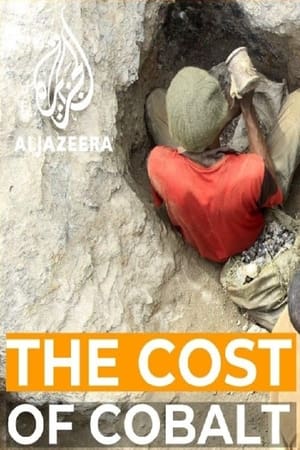
In the cobalt mining areas of Katanga in the Democratic Republic of the Congo (DRC), babies are being born with horrific birth defects. Scientists and doctors are finding increasing evidence of environmental pollution from industrial mining which, they believe, may be the cause of a range of malformations from cleft palate to some so serious the baby is stillborn. More than 60% of the world’s reserves of cobalt are in the DRC and this mineral is essential for the production of electric car batteries, which may be the key to reducing carbon emissions and to slowing climate change. In The Cost of Cobalt we meet the doctors treating the children affected and the scientists who are measuring the pollution. Cobalt may be part of the global solution to climate change, but is it right that Congo’s next generation pay the price with their health? Many are hoping that the more the world understands their plight, the more pressure will be put on the industry here to clean up its act.
For six years, Melati, 18, has been fighting the plastic pollution that is ravaging her country, Indonesia. Like her, a generation is rising up to fix the world. Everywhere, teenagers and young adults are fighting for human rights, the climate, freedom of expression, social justice, access to education or food. Dignity. Alone against all odds, sometimes risking their lives and safety, they protect, denounce and care for others. The earth. And they change everything. Melati goes to meet them across the globe. At a time when everything seems to be or has been falling apart, these young people show us how to live. And what it means to be in the world today.
16-year-old Bella and Vipulan are part of a generation convinced its very future is in danger. Between climate change and the 6th mass extinction of wildlife, their world could well be inhabitable 50 years from now. They have sounded the alarm over and over, but nothing has really changed. So they’ve decided to tackle the root of the problem: our relationship with the living world. Over the course of an extraordinary journey, they come to realize just how deeply humans are tied to all other living species. And that by saving them… we’re also saving ourselves. Humans thought they could distance themselves from nature, but humans are part and parcel of nature. For man is, after all, an Animal.
The story of a brilliant ecologist with a plan to save the world by restoring the planet's forests. His original work was hijacked by corporations and politicians with disastrous effect. Now he's using science to fight back.
In the lush fields of northern Belgium, as winter tightens its grip, the sheep of Eddy, Jeroen, and Johny become silent witnesses of a hidden drama when a wolf is driven to the edges of human lands in search of sustenance. With the three human protagonists doing anything within their power to patronize their rights of existence, this film stands up for the least heard voice in Belgium’s brand new wolf territory: that of the bleating sheep.
Joe Lycett investigates the mind-boggling quantities of untreated sewage discharged into our waterways every day, and takes the fight to the water companies in the most Joe Lycett way possible.
The White Planet or in French, La Planète Blanche, is a 2006 documentary about the wildlife of the Arctic. It shows interactions between marine animals, birds and land animals, especially the polar bear, over a one year period. The fragility of the Arctic is hinted at as a reason to prevent climate change. It was nominated for the Documentary category in the 27th Genie Awards in 2007.
Les Mégafeux, la nouvelle guerre du feu
Invisible Revolutions
The Guelph Outdoor School challenges modern education by providing children the freedom to connect with the natural world and themselves.
A Glimpse Through The Bennington Lens follows Will and Ana, two journalist theater students at Bennington, as they interview faculty and administration members to get to the bottom of some uncanny events
In Tacony Creek Park, home to one of Philadelphia's lesser-known watersheds, Julie Slavet and Malcolm Bundy reflect on their involvement with and love for the park, made bittersweet by the continuous and increasing amount of pollution that flows into its river. Combined wastewater and stormwater sewage outfalls have affected Philadelphia's rivers for years, but as one innovative program mitigates this for the Schuylkill and Delaware, Tacony gets left behind. Scientist Laura Toran educates the audience on green infrastructure and its potential positive impacts, while Slavet and Bundy discuss how they're still waiting—not without hope—for those impacts to reach their community.
In Lopera (Jaén), the ecological transition has turned into a nightmare: centuries-old olive groves are being uprooted to make way for massive photovoltaic plants, in an unfair battle between powerful corporations and the local community. Through firsthand testimonies, striking visuals, and an analysis of the current energy model, Forced Renewables reveals how progress, when poorly planned and disconnected from rural life, can lead to an unprecedented ecological, social, and economic disaster.
“Let nature be nature” is the philosophy of the Bavarian Forest National Park. Despite massive resistance, this vision has become a groundbreaking showcase project. Because humans do not interfere with nature, the former commercial forests grow into a primeval forest, a unique ecosystem and a refuge for biodiversity. People from all over the world come here. They are looking for answers to the question of why we need more wild nature and what we can learn from it to preserve forests for future generations in times of climate change.
Recent studies show that insects are in decline across the globe and there may be a direct connection between the current climate crisis and these declining populations. DESYNCHRONIZED focuses on Pope Canyon Queens, a beekeeping and queen breeding company in Northern California. Pope Canyon Queens is currently trying to rebuild after the 2020 LNU Lightning Complex fires destroyed their farm, shop, and half of their hives. Their crucial work to breed honey bee queens with stronger genes fortifies beekeepers' hives across the country while they face the effects of climate change and unregulated industries. Dr. Nicholas Teets, PhD Entomology, explains how shifts in phenology are predicted to cause bigger issues. Howard Goldstein, Senior Forest Ecologist at the Prospect Park Alliance explores how community gardens and green spaces in large metropolitan areas may help insect populations recover from loss of habitat and food scarcity.