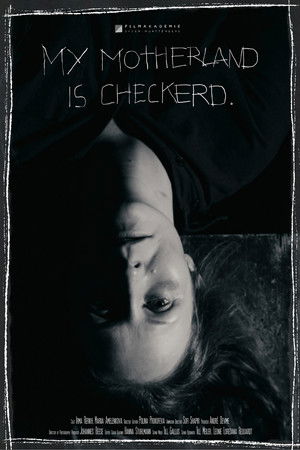
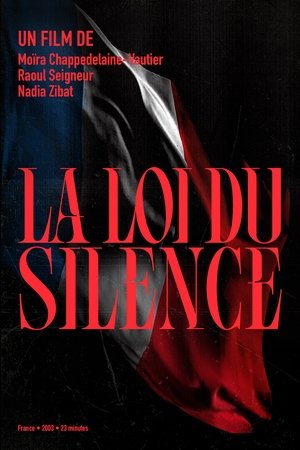
Is Korea a democratic republic or a prosecution republic? Can you be confident that the blade of the prosecution is not aiming at you? Their hunt has begun. Following the coordinates thrown by the prosecution, the media gathers, and rumors circulate. Prosecutors wield a sword before the angry public. Who is the one being chased over there? Are you confident that you are not the one?
A story of the LGBT struggle from the 1960s to the present, after the Stonewall riot sparked the militant action in New York that was to spread around the world. From San Francisco to Paris via Amsterdam, between the first Gay Pride, the election of Harvey Milk, the French "decriminalization", the AIDS epidemic and the first homosexual marriages, these few decades of struggle are embodied through numerous testimonies of actors and actresses of this revolution rainbow.
Of Ravens and Children
COINTELPRO 101 exposes illegal surveillance, disruption, and outright murder committed by the US government in the 1950s, 60s, and 70s. “COINTELPRO” refers to the official FBI COunter INTELigence PROgram carried out to surveil, imprison, and eliminate leaders of social justice movements and to disrupt, divide, and destroy the movements as well. Many of the government's crimes are still unknown. Through interviews with activists who experienced these abuses first-hand, with rare historical footage, the film provides an educational introduction to a period of intense repression and draws relevant lessons for the present and future.
ARCTIC SUMMER is a poetic meditation on Tuktoyaktuk, an Indigenous community in the Arctic. The film captures Tuk during one of the last summers before climate change forced Tuk's coastal population to relocate to more habitable land.
Through interviews with Inuit across Nunavut, and documentation of a three-year community hearing process during the COVID pandemic, award-winning filmmaker Zacharias Kunuk explores what meaningful consultation in the 21st century means within the context of a large-scale mining expansion on Baffin Island.
A paralysingly beautiful documentary with a global vision—an odyssey through landscape and time—that attempts to capture the essence of life.
Pakatakan (route des portages)
It’s the last dictatorship of Europe, caught in a Soviet time-warp, where the secret police is still called the KGB and the president rules by fear. Disappearances, political assassinations, waves of repression and mass arrests are all regular occurances. But while half of Belarus moves closer to Russia, the other half is trying to resist…
Still photographs and narration give an overview of the history of the American Indian.
Actor Rawiri Paratene was 16 years old when he joined Māori activist group Ngā Tamatoa (Young Warriors) in the early 1970s. "Those years helped shape the rest of my life," says Paratene in this 2012 Māori TV documentary, directed by Kim Webby. The programme is richly woven with news archive from the 1970s, showing protests about land rights and the Treaty of Waitangi, and a campaign for te reo to be taught in schools. Several ex Ngā Tamatoa members — including Hone Harawira, Tame Iti and Larry Parr— are interviewed by Paratene, who also presents the documentary.
Noemí, an Ayuukjä'äy woman reflects on the loss of her native tongue with a voice that blends into day to day life in Cerro Costoche community located in the Mixe mountain rage of Oaxaca.
A documentary on the road that tracks the journey by Georgina, an elderly transgender woman forced to cross the sandy peninsula Guajira, on foot, to obtain the thing she has desired for almost half a century: a document that will hand her the right to be what she has always felt she was, and will allow her, at long last, to vote.
Anastasia Trofimova, a Russian-Canadian filmmaker, gains unprecedented access to follow a Russian Army battalion in Ukraine. Without any official clearance or permits, she earns the trust of foot soldiers and embeds herself over the span of a year with one battalion as it makes its way across Eastern Ukraine. What she discovers is far from the propaganda and labels pushed by the East or West: an army in disarray, soldiers disillusioned and often struggling to understand what they are fighting for.
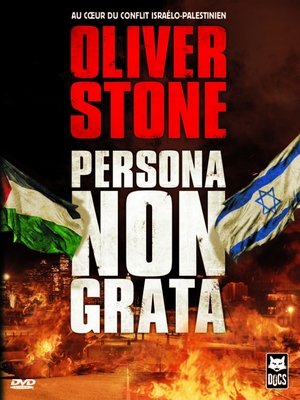
Archival film maestro Göran Hugo Olsson has assembled—from a vast catalogue of footage in the vaults of Sweden’s national television service SVT—accounts of the Israeli-Palestinian conflict as witnessed and represented by Swedish journalists. Stories of the beginning of the Israeli state interwoven with the Palestinian struggle for independence. News coverage with Yasser Arafat and interviews with Israeli foreign minister Abba Eban during a visit to Sweden unseen since first broadcast. From the tenth anniversary of Israel’s founding to the First Intifada, perspectives and encounters with statesmen, civilians, revolutionaries, and intellectuals tell the story from myriad angles of an evolving media landscape, revivifying a history of the ongoing conflict.
We follow a team of scientists on a gruelling expedition into a remote rainforest in Mozambique. They're hoping to prove that Mount Mabu's animals and insects are unique and in need of official protection.
This film follows the aftermath of the Oka crisis, which brought Indigenous rights into sharp focus. After the barricades came down, the Royal Commission on Aboriginal Peoples was created, and travelled to more than 100 communities and heard from more than 1,000 representatives. For two-and-a-half years, teams of Indigenous filmmakers followed the Commission on its journey.
In the film “The Wall fell on our heads”, five women of color from East and West Germany talk about their memories of the fall of the Berlin Wall.
Brazil is one of the most dangerous countries for environmentalists. The rural community of Belisário holds the country's second largest bauxite reserve, right below one of the most bio-diverse areas in the world: the Atlantic Forest. The small community was shaken when the beloved Gilberto, a Franciscan Friar, received a death threat followed by the lines: "you've been talking against mining way too much". PT: O Brasil é um dos países mais perigosos do mundo para defensores do meio ambiente. Em Minas Gerais, a comunidade rural de Belisário abriga a segunda maior reserva de bauxita do país, em uma das áreas de maior biodiversidade do mundo: a Mata Atlântica. A tranquilidade do pequeno vilarejo foi abalada quando Frei Gilberto, um franciscano que dedica sua vida à preservação da natureza, recebeu uma ameaça de morte com o seguinte aviso: "você tem falado demais contra a mineração".
Atlantis is filmmaker Luc Besson's celebration of the beauty and wonder of the world beneath the sea, expanding upon themes touched on in his film The Big Blue. Combining stunning underwater cinematography and a hypnotic score by Eric Serra, Besson's singular vision defies dialogue or narrative structure to explore ocean life as you've never seen it before. Following the colossal success of The Big Blue, Luc Besson crisscrossed the world's seas and oceans to film the beauty and diversity of marine life: from the giant octopuses of Vancouver to the manta rays of the Pacific (New Caledonia), and the grey sharks of Tahiti. A film with no actors or sets other than the underwater world. A breathtaking view of marine species: sharks, dolphins, manatees, octopuses. An exploration of the seabed in the Bahamas, the Galapagos, Vancouver, and Tahiti.