Gabriel Drolet-Maguire, a designer living in Montreal, takes us into their artistic world to discuss their HIV diagnosis. This is a timely and hopeful look at past and present day HIV/AIDS activism in Quebec.
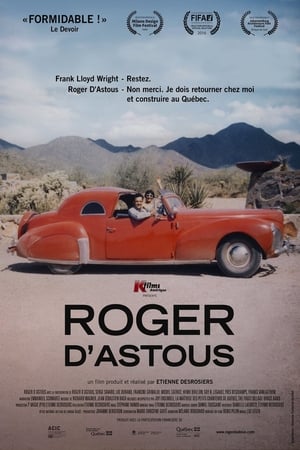
This documentary let us to relive the challenge of the men behind the 1967 Universal Exposition in Montréal, Canada. By searching trough 80,000 archival documents at the national Archives, they managed to bring light on one of the biggest logistical and political challenges that were faced by organizers during the "Révolution Tranquille" in the Québec sixties. Includes the accounts of the Chief of Advertising Yves Jasmin, and businessman Philippe de Gaspé Beaubien.
BREAKING POINT brings viewers back to those tense, critical moments when Canada's future as a country was at stake.
It's a sensitive, moving doc chronicling the life of Tétrault's brother Philip , a Montreal poet, musician and diagnosed paranoid schizophrenic. A promising athlete as a child, Philip began experiencing mood swings in his early 20s. His extended family, including his daughter, share their conflicted feelings love, guilt, shame, anger with the camera. They want to make sure he's safe, but how much can they take?
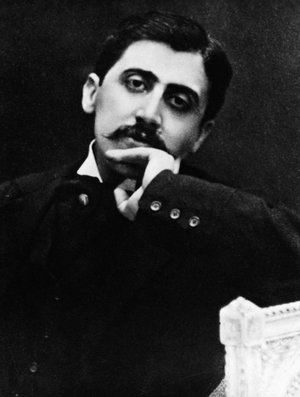
Katja Mann: A Life with Thomas Mann
Montreal — one of the few remaining affordable cities in North America — is now in the midst of an unprecedented housing crisis. An intimate portrait of socio-political resistance, this multilayered film explores the human impact of real estate speculation on the cities of tomorrow.
Dorothy Johnson was a Western writer ahead of her time. Women saved men, heroes died unwept and unsung, whites lived with Indians and benefited from the experience. Three of her stories were made into films and many critics consider "The Man Who Shot Liberty Valance" to be the cornerstone of the modern western. This documentary looks back on Dorothy's life, and her place in history.
Does privacy still exist in 2019? In less than a generation, the internet has become a mass surveillance machine based on one simple mindset: If it's free, you're the product. Our information is captured, stored and made accessible to corporations and governments across the world. To the hacker community, Big Brother is real and only a technological battle can defeat him.
While it may be universally acknowledged that she’s one of the great English writers, Giles Coren breaks down his many reasons for hating Jane Austen.
Documentary tracing the extreme life of outlaw writer, performance artist and punk icon, Kathy Acker. Through animation, archival footage, interviews and dramatic reenactments, director Barbara Caspar explores Acker's colorful history, from her well-heeled upbringing to her role as the scribe of society's fringe.
In the slum of Cité Soleil, President Aristide's most loyal supporters were ruling as kings. The five major gang leaders were controlling heavily armed young men; the Chiméres. The Secret army of President Jean-Bertrand Aristide. "Ghosts of Cité Soleil" is a film about Billy and Haitian 2pac. Two brothers. Gang Leaders of the Chiméres.
Today it is the city of Montreal, but 3 centuries ago the tiny band of missionary founders called it Ville-Marie, the holy city of Mary. This film goes back to its beginning and those who felt called to plant an oasis of Christianity in the North American wilderness. In an imaginative, at times almost surrealistic, way the film recalls the highborn company from France, and shows what survives of Ville-Marie in the Montreal of today.
Biography and in-depth look of Beckett and his work.
Living Memories is a documentary film that traces the history of the director’s neighborhood and native country, Haiti, through a personal and engaged perspective. Brick by brick, through encounters and wanderings throughout Port-au-Prince’s neighborhoods, archival photos, graffiti, and animations, the filmmaker introduces us to architect Léon Mathon and the residential architecture of the early 20th century. Over the ruins of her family home, Dominique, the director's mother, an architect like her father and grandfather before her, searches through her memories and significant places for traces of the past and the history of her country. Many of her landmarks are no longer there. From this tragedy arises a quest — a need to reconnect memory and history to understand the present better. The filmmaker follows her mother during her journey, capturing her reflections and conversations and documenting them to bring memories back to life.
In this artistic exploration of the life and work of writer Henry Miller, filmmaker Joe Kishton skillfully weaves clips of films and interviews of Miller with the music of Laurie Anderson. From Miller himself we hear of his difficult relationship with his parents, and of his need to create, even (or especially) when his message abrades social mores.
Every day, on the streets of Canada's cities, we pass them on our way to work or school. Bums, beggars, winos, bag people we call them. But who is the person at the end of that outstretched arm? What is life on the street really like? Is there a way off the street? For six years, director Daniel Cross followed the lives of three homeless men who spent much of their time in and around a Montreal subway station. Filmed in a cinema verité style, the film is unique: it humanizes the homeless, breaking down the barrier between us and them, neither moralizing nor offering easy answers. This is a gritty, compelling look at life on the streets that moves beyond the media stereotypes to show both the humanity of the homeless and the street-toughened aspects of their existence.
The elusive author of Waiting for Godot cooperated in the production of this portrait, which traces Beckett’s artistic life through his prose, plays, and poetry. Billie Whitelaw, Jack McGowran, and Patrick Magee—Beckett’s great dramatic interpreters—appear in selected extracts from the plays; Beckett specialist David Warrilow narrates a variety of texts.
One hundred years after the Haitian Revolution, the people of Haiti find themselves once again having to defend their liberty, this time against a powerful neighbor, the United States.
Follows the defiance of two art institutions in the Caribbean: one closed but squatted by artists, the other fighting to stay open. Against the backdrop of political strife, Haitian and Guadeloupean artists grapple with the concept of freedom in their battle to preserve their spaces.
In an effort to understand where she came from, Fabiola asked a question that became the central phrase of the film: what would my life have been like if I'd stayed in Haiti? Taking as her starting point her biological mother's precarious economic situation, she had no choice but to entrust her daughter to her care. Fabiola could have ended up restavek, or in a loving foster family, or on the streets abandoned to her fate, or adopted abroad.