A documentary that reveals the underbelly of the global aid and investment industry. It's a complex web of interests that span the earth from powerful nations and multinational corporations to tribal and village leaders. This documentary offers unique insights into a multi-billion dollar world by investigating how aid dollars are spent.
Director Michèle Stephenson’s new documentary follows families of those affected by the 2013 legislation stripping citizenship from Dominicans of Haitian descent, uncovering the complex history and present-day politics of Haiti and the Dominican Republic through the grassroots electoral campaign of a young attorney named Rosa Iris.
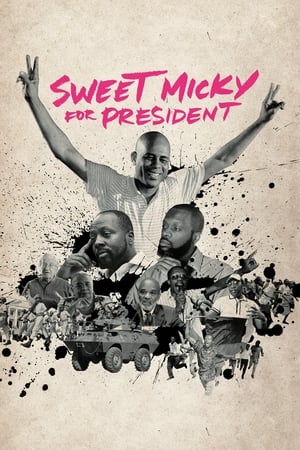
Music and politics collide when international music star, Pras Michel of the Fugees, returns to his homeland of Haiti following the devastating earthquake of 2010 to mobilize a presidential campaign for Haiti's most controversial musician: Michel Martelly aka Sweet Micky. The politically inexperienced pair set out against a corrupted government, civil unrest, and a fixed election. When Pras's former bandmate, superstar Wyclef Jean, also enters the presidential race, their chances seem further doomed. But with the help of a few friends, including Ben Stiller and former president Bill Clinton, they never give up on their honest dream of changing the course of Haiti's future forever
Follows the defiance of two art institutions in the Caribbean: one closed but squatted by artists, the other fighting to stay open. Against the backdrop of political strife, Haitian and Guadeloupean artists grapple with the concept of freedom in their battle to preserve their spaces.
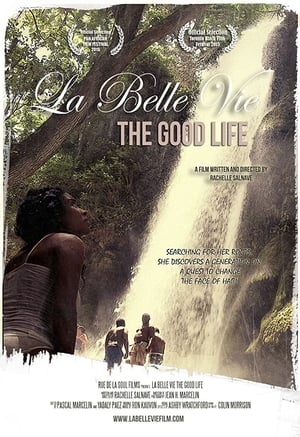
La Belle Vie: The Good Life takes a look into a filmmaker's journey to discover her Haitian roots by examining the complexities of the Haitian society but also chronicles her voyage to find hope in this nation on the brink of a new Haiti.
Living Memories is a documentary film that traces the history of the director’s neighborhood and native country, Haiti, through a personal and engaged perspective. Brick by brick, through encounters and wanderings throughout Port-au-Prince’s neighborhoods, archival photos, graffiti, and animations, the filmmaker introduces us to architect Léon Mathon and the residential architecture of the early 20th century. Over the ruins of her family home, Dominique, the director's mother, an architect like her father and grandfather before her, searches through her memories and significant places for traces of the past and the history of her country. Many of her landmarks are no longer there. From this tragedy arises a quest — a need to reconnect memory and history to understand the present better. The filmmaker follows her mother during her journey, capturing her reflections and conversations and documenting them to bring memories back to life.
John is a Haitian migrant who fled his country due to political instability and death threats. After a long journey, he managed to be recognized as a refugee in Mexico, allowing him to start a new chapter in a new land. However, for John, this story is far from over as his wife and baby remain stranded in Chile. Every day, John takes steps towards family reunification, longing to embrace those who are his true refuge.
As a Cholera epidemic rages in Haiti, the United Nations denies it is responsible for introducing the disease despite glaring evidence suggesting Nepalese peacekeepers are to blame. Baseball in the Time of Cholera is the story of a young Haitian boy who plays in Haiti's first little league baseball team and the Haitian Lawyer seeking justice against the UN. As the epidemic spreads, the two stories intersect in the struggle for survival and justice.
In 1937, tens of thousands of Haitians and Dominicans of Haitian descent were exterminated by the Dominican army, on the basis of anti-black racism. Fast-forward to 2013, the Dominican Republic's Supreme Court stripped the citizenship of anyone with Haitian parents, retroactive to 1929, rendering more than 200,000 people stateless. Elena, the young protagonist of the film, and her family stand to lose their legal residency in the Dominican Republic if they don't manage to get their documents in time. Negotiating a mountain of opaque bureaucratic processes and a racist, hostile society around, Elena becomes the face of the struggle to remain in a country built on the labor of her father and forefathers.
About the extraordinary doctors and activists—including Paul Farmer, Jim Yong Kim, and Ophelia Dahl—whose work 30 years ago to save lives in a rural Haitian village grew into a global battle in the halls of power for the right to health for all.
Le Fils
A travelogue of Port-au-Prince, Haiti concentrating on the daily life and rhythm of tropical island life.
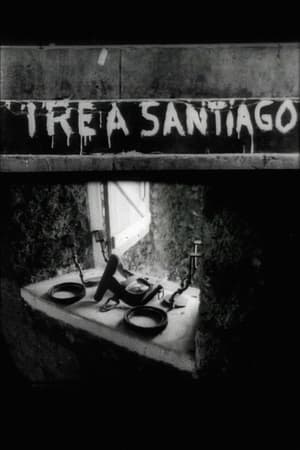
This black-and-white film is a loving portrait of Santiago de Cuba and its people. It provides a view of Cuba as a picturesque country, the product of an earthy mix of black and criollo cultures. The film uses historical images which portray the end of the eighteenth century when Haitian slave owners fled with their slaves to Cuba after the Haitian Revolution.
An acting ensemble rehearses for an upcoming theater festival. They rig up stage scenery and practice dialogue and set pieces in the middle of a residential area. But this is no ordinary theater setting, as evidenced by the armed guards at the entrance. Festival 4 Chemins is taking place in Port-au-Prince, the capital of Haiti. Gangs are active in the city; you can hear machine-gun fire in the distance.
The Heroes of the Massacre River is a powerful documentary that chronicles the stories of the pioneers behind the construction of the historic Canal of Ouanaminthe, a project that united Haitians across the nation and the diaspora. This film celebrates the groundbreaking efforts of key figures, centering on Dr. Bertrhude Albert, Dr. Naismy-Mary Fleurant, architect Wideline Pierre, economist Etzer Emile as well as dedicated canal workers Milourie Sylfrard, Theodore Johnson and Joseph Pressoir — all guided by the investigative journey of Max Angie Clervil. It also serves as a commentary on the complexity of colonialism and borders, tracing the role that the Massacre River continues to play in the history of Ayiti.
Writer and cineast Jørgen Leth is the fascinated observer of a country where reality often seems surreal and resembles fiction. Haïti’s history is written in blood. Voodoo plays an important role in politics. Death and horror are part of Haïti’s everyday life. Over five years Leth and his small crew witnessed dramatic events, but he also captured moments of sensuality and beauty in his epic and very personal documentary.
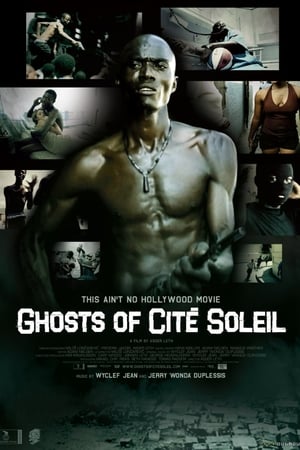
In the slum of Cité Soleil, President Aristide's most loyal supporters were ruling as kings. The five major gang leaders were controlling heavily armed young men; the Chiméres. The Secret army of President Jean-Bertrand Aristide. "Ghosts of Cité Soleil" is a film about Billy and Haitian 2pac. Two brothers. Gang Leaders of the Chiméres.
Alternating interview segments, shots of Martinique landscapes and scenes from Aimé Césaire's play La Tragédie du roi Christophe (1963), Sarah Maldoror portrays her friend as a politician, a poet, and a founder of the Négritude movement.
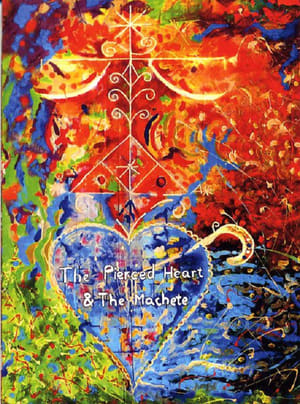
The Pierced Heart & The Machete is a vivid, unflinching exploration of two annual Vodou pilgrimages in Haiti. The first is for Èzili Danto, goddess of love, art and passion; worshipers from all over the world descend on the southwestern town of Ville-Bonheur to bathe in the sacred waterfall where Dantò resides. The second pilgrimage is for Dantòs' husband Ogoun, god of war, iron and healing. It takes place at the end of July in the northern town of Plaine du Nord, where practitioners bathe in a mud pool and make flamboyant sacrifices. This beautifully shot film offers disorienting yet illuminating glimpses of the contradictory and complementary aspects of these two lwa, the electrifying rites that honor them, and the intense music that accompanies these ecstatic and bloody ceremonies.
This short film from the Perspective series highlights social and economic development in Haiti circa 1957. It depicts customs and traditions used to pass along the history of a people, and offers a look into their daily lives — lives that looks very different from their experiences today.