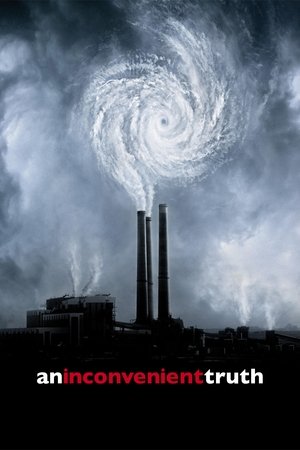
A documentary on Al Gore's campaign to make the issue of global warming a recognized problem worldwide.
A look at the state of the global environment including visionary and practical solutions for restoring the planet's ecosystems. Featuring ongoing dialogues of experts from all over the world, including former Soviet Prime Minister Mikhail Gorbachev, renowned scientist Stephen Hawking, former head of the CIA R. James Woolse
Vast, wild, yet extremely fragile. The coldest place on our planet is also one of the most affected by global warming and needs to be protected. The expedition focuses on exploring, documenting, and surfing in the South Shetland Islands and the Antarctic Peninsula, in the area known as Domain 1, which is being pushed for Marine Protected Area (MPA) status. Protected areas are very important for mitigating climate change and, in this case, also for regulating human activities such as concentrated fishing. This film helps us understand the importance of this area and the threats affecting it.
The river Yamuna, known to the locals as 'Jamna', the lifeline of Delhi, is going through a major crisis due to pollution, mismanagement and sheer ignorance. A documentary crew tries to make sense of the situation by talking to different stakeholders and Shyam - a boatman who relies on the river for his livelihood.
With unprecedented access to the nuclear industry in France, Russia, and the United States, Nuclear Now explores the possibility for the global community to overcome the challenges of climate change and energy poverty to reach a brighter future through the power of nuclear energy. Beneath our feet, Uranium atoms in the Earth’s crust hold incredibly concentrated energy. Science unlocked this energy in the mid-20th century, first for bombs and then to power submarines. The United States led the effort to generate electricity from this new source. Yet in the mid-20th century as societies began the transition to nuclear power and away from fossil fuels, a long-term PR campaign to scare the public began, funded in part by coal and oil interests.
Le jour d'après : Un retour à l'ère glaciaire est-il possible ?
Follow the shocking, yet humorous, journey of an aspiring environmentalist, as he daringly seeks to find the real solution to the most pressing environmental issues and true path to sustainability.
In the cobalt mining areas of Katanga in the Democratic Republic of the Congo (DRC), babies are being born with horrific birth defects. Scientists and doctors are finding increasing evidence of environmental pollution from industrial mining which, they believe, may be the cause of a range of malformations from cleft palate to some so serious the baby is stillborn. More than 60% of the world’s reserves of cobalt are in the DRC and this mineral is essential for the production of electric car batteries, which may be the key to reducing carbon emissions and to slowing climate change. In The Cost of Cobalt we meet the doctors treating the children affected and the scientists who are measuring the pollution. Cobalt may be part of the global solution to climate change, but is it right that Congo’s next generation pay the price with their health? Many are hoping that the more the world understands their plight, the more pressure will be put on the industry here to clean up its act.
As co-created by environmentalists Stephan Poulle and Nicolas Koutsikas, the documentary Gulf Stream and the Next Ice Age argues and provides evidence for the idea that mankind is wreaking permanent and potentially irreversible damage on the ecosystem by interfering with the natural course of the Gulf Stream. Koutsikas and Poulle suggest that this interference, in turn, will prompt a new Ice Age that virtually destroys the modern world.
Der Wind - Motor des Klimawandels
A mind-bending, thrilling journey exploring the fragility and wonder of planet Earth, one of the most peculiar, unique places in the entire universe, brought to life by the only people to have left it behind – the world’s most well known and leading astronauts. This edit combined episodes one and ten to create a new movie.
Efter floden
Yannick Bellon's documentary paints a portrait of a city torn between the problem of unsanitary housing, pollution corroding walls and statues, and the recurring and increasing floods—all consequences of human activity. Faced with job shortages and rampant speculation, the overarching question arises of how industries can coexist with the city of Venice. Allowing them to develop risks destroying it; driving them out risks turning it into a museum, causing its inhabitants, and thus its soul, to leave.
Bhutan, despite being one of the world's two carbon negative countries, suffers from a changing climate that has led to a disastrous water shortage. After his children leave him, Daw, an elderly Bhutanese villager, must fend for himself. 83 AND ALONE explores a community made empty because of water.
CHARBON depicts how Europe was built on fossil fuels over the past 100 years. And how it was torn apart by wars that were the result of these same fossil fuels. During 3 trips to Ukraine, Italy and Iraq, filmmaker Manu Riche explains how he and his French-German family are inseparably connected to the fate of the Iraqi filmmaker and refugee Hayder Helo.
Director James Nguyen will release his short documentary film, CLIMATE FIX which suggests how carbon removal technology can be used to fix climate change-global warming.
In today's climate debate, there is only one factor that cannot be calculated in climate models - humans. How can we nevertheless understand our role in the climate system and manage the crisis? Climate change is a complex global problem. Increasingly extreme weather events, rising sea levels, and more difficult living conditions - including for us humans - are already the order of the day. Global society has never faced such a complex challenge. For young people in particular, the frightening climate scenarios will be a reality in the future. For the global south, it is already today. To overcome this crisis, different perspectives are needed. "THE UNPREDICTABLE FACTOR" goes back to the origins of the German environmental movement, accompanies today's activists in the Rhineland in their fight against the coal industry and gives a voice to scientists from climate research, ethnology and psychology.
This film tries to blow the whistle on what it calls the biggest swindle in modern history: 'Man Made Global Warming'. Watch this film and make up your own mind.
Climate change has reached the indigenous Nenets people in the north of Siberia. The nomads' herds of reindeer move on thin ice. The warming in the Russian Arctic is becoming dramatically visible. Huge craters open in the thawing permafrost and expose dangerous viruses and bacteria. Forest floors dry out and the taiga catches on fire. The pack ice off the coast is melting and depriving polar bears of their habitat so that they approach human settlements in their desperation. The changes in the nature of the Arctic Circle combine with the measurements of researchers and observations of the indigenous people to form a disturbing overall picture: In the Russian Arctic, Pandora's box has been opened! The film team had the chance to shoot in regions that were been restricted areas for decades. The documentary shows in impressive and depressing images already existing effects, phenomena and ominous interlinkages of global warming.
Violent squalls, hail, waterspouts, lightning... storms put animals and plants to the test. At a time when climate change is multiplying extreme weather events, this documentary plunges into the heart of a storm, from the heavy, dry atmosphere that precedes it to the deluge that follows.