Two Bangladeshi girls born and raised in London have weddings arranged for them against their will by their family. Shahanara, the rebel of the family, banished from the family in her teens for being "too Western", has to swap her pink hot pants for a sari as she goes off to the airport to meet her new Bangladeshi husband. Her sister Hushnara is the opposite of Shahanara; a devout Muslim who agrees to marry so she doesn't upset her parents.
In this two-part Channel 4 series, Professor Richard Dawkins challenges what he describes as 'a process of non-thinking called faith'. He describes his astonishment that, at the start of the 21st century, religious faith is gaining ground in the face of rational, scientific truth. Science, based on scepticism, investigation and evidence, must continuously test its own concepts and claims. Faith, by definition, defies evidence: it is untested and unshakeable, and is therefore in direct contradiction with science. In addition, though religions preach morality, peace and hope, in fact, says Dawkins, they bring intolerance, violence and destruction. The growth of extreme fundamentalism in so many religions across the world not only endangers humanity but, he argues, is in conflict with the trend over thousands of years of history for humanity to progress to become more enlightened and more tolerant.
In 1971, Sharon witnessed a glowing cross in her Bronx apartment, sparking belief and skepticism. "The Sight Unseen" explores her memories and Melvin Tapley’s writings, investigating whether the phenomenon was divine or a hoax.
The joys of 1960s modern education - as seen at a not-exactly-typical local comp.
The plot of the film unfolds in the ancient monastery of Dokhiar on the west coast of Mount Athos, on the Aegean peninsula. This peninsula is given to the exclusive use of the monks of Eastern Christianity. Images of nature are woven into a virtually uninterrupted series of work and prayer, lining up in the rhythmic interrelation of man and nature. The central figure of the film was the monastery’s elder, Hegumen Gregory, whose long-term experience of spiritual nourishment rewarded him with a deep understanding of the human soul and her desire to return to the state characteristic of Adam’s human nature before the fall.
AMERICAN JESUS is an exploration of Christianity in every faction of American Life, from the breadline to the yoga studio, from the humble churches of snake handlers to the mega churches in the ex-urbs. Christian cowboys, bikers and musicians, comedians, surfers and cage-fighters, they are all doing it for Christ. Aram Garriga travels from his native Barcelona to the politically divided United States to chronicle the sometimes bizarre relationship between faith, materialism, politics and personal passions in this uniquely American tableaux. Populated by an array of religious and secular characters offering candid, often illuminating testimonials, AMERICAN JESUS is a vivid mosaic of personalities and conflicting points of view that emerges as a portrait of an America yearning for solace and meaning in the modern world.
How do you reconcile a commitment to non-violence when faced with violence? Why do the poor often seem happier than the rich? Must a society lose its traditions in order to move into the future? These are some of the questions posed to His Holiness the Dalai Lama by filmmaker and explorer Rick Ray. Ray examines some of the fundamental questions of our time by weaving together observations from his own journeys throughout India and the Middle East, and the wisdom of an extraordinary spiritual leader. This is his story, as told and filmed by Rick Ray during a private visit to his monastery in Dharamsala, India over the course of several months. Also included is rare historical footage as well as footage supplied by individuals who at great personal risk, filmed with hidden cameras within Tibet.
A Life Apart: Hasidism in America, is the first in-depth documentary about a distinctive, traditional Eastern European religious community. In an historic migration after World War II, Hasidism found it's most vital center in America. Both challenging and embracing American values, Hasidim seek those things which many Americans find most precious: family, community, and a close relationship to God. Integrating critical and analytical scholarship with a portrait of the daily life, beliefs, and history of contemporary Hasidic Jews in New York City, the film focuses on the conflicts, burdens, and rewards of the Hasidic way of life.
Bible expert Bill Gallatin explores biblical prophecies from the Book of Revelation that have transpired, with a discussion of whether these events signify that we are now living in the End Times preceding the return of Jesus Christ. Gallatin touches on events such as the increasingly acute difficulties in the Middle East, numerous environmental catastrophes, earthquakes and more, explaining how they connect to scriptural writings.
Infernum: O Fruto de uma Decisão
Die Menschenfischer
Documentary film about sexual abuse in the Catholic Church in Poland.
A look at the Hutterites, an Anabaptist religious community similar to the Amish or the Mennonites in rural Alberta.
Based on real near-death experiences, the afterlife is explored with the guidance of New York Times bestselling authors, medical experts, scientists and survivors who shed a light on what awaits us.
American academic Norman Finkelstein discusses foreign policy toward Israel and the Middle East.
Writing a letter to Paul B. Preciado, trans philosopher and filmmaker, as one would write to a friend. Undertake a healing process as a queer child growing up in a Spanish evangelical family. From Lausanne to New York, Lézio Schiffke-Rodriguez follows in the footsteps of revolutions that invite us to redefine our vision of binary bodies.
Documentary examining the medieval myth of the Philosopher's Stone, a Holy Grail-type relic which supposedly held the key to alchemy and immortality. Many noted alchemists and adventurers searched obsessively for the artifact hoping to learn its powerful secrets, a quest which allegedly drove some to madness and others to celestial encounters.
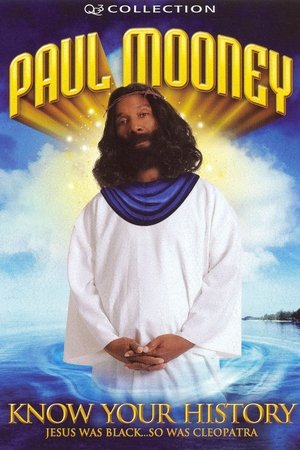
Few comedians can stir up controversy like the legendary Paul Mooney -- writer for Richard Pryor, creator of In Living Color's Homey the Clown and featured guest on Chappelle's Show. With his characteristic brutal honesty, Mooney passionately and hysterically charges into the electrified currents of racial tension. In this magnificent standup performance at Hollywood's Laugh Factory, Mooney earns a standing ovation with his relentless no-holds-barred observations on black history, stereotypes and prejudices, living in White America, celebrity divas and much, much more!
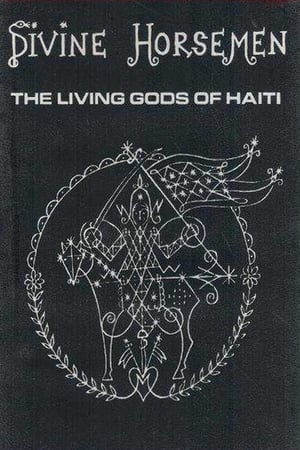
This intimate ethnographic study of Voudoun dances and rituals was shot by Maya Deren during her years in Haiti (1947-1951); she never edited the footage, so this “finished” version was made by Teiji Ito and Cherel Ito after Deren’s death.
A top executive who can't bear to regard himself as a loser, even after nearly dying in the New York marathon; a woman unable to cope with the loss of her wealthy status after her divorce; and an ambitious financial couple confronted with their unresolved family matters. Every Sunday, in their upper class Bloemendaal church, the cutting sermons of reverend Ad van Nieuwpoort shake their faith and existence to the core. What drives people to be crushed by the weight of their ambitions?