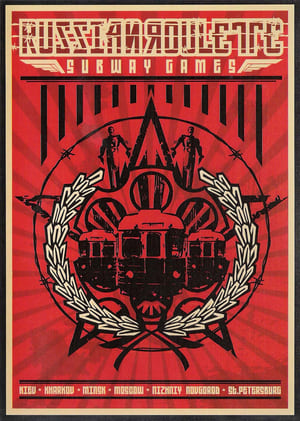
In 1375, China was in chaos between Yuan Dynasty and Ming Dynasty. Coryo (an ancient kingdom of Korea then) sent a delegation of many diplomats, soldiers and a silent slave to make peace with the new Chinese government. However, this delegation got charged as spies and sent in exile to a remote desert.
Joe Brainard (1941-1994) was an artist particularly noted for his work in collage and comics. Brainard’s artistic career took off during his teenaged years in Tulsa, Oklahoma where, along with Ron Padgett and Dick Gallup, he produced The White Dove Review, an art and culture magazine. Both Brainard and Padgett serendipitously moved together to New York City, where Brainard was a prolific artist whose work was showcased in varied spaces such as the Museum of Modern Art and the Whitney Museum. He also frequently collaborated with members of the New York School of Poets, supplying book and cover art and bringing to life visual representations of poetry. Brainard’s writing also received acclaim, particularly his 1975 memoir I Remember.
Kina & Yuk are two Arctic foxes, ready to start a family. But the climate is warmer, and the food is more and more rare. Kina & Yuk are obliged to venture far and far away.
Every year, thousands of Antarctica's emperor penguins make an astonishing journey to breed their young. They walk, marching day and night in single file 70 miles into the darkest, driest and coldest continent on Earth. This amazing, true-life tale is touched with humour and alive with thrills. Breathtaking photography captures the transcendent beauty and staggering drama of devoted parent penguins who, in the fierce polar winter, take turns guarding their egg and trekking to the ocean in search of food. Predators hunt them, storms lash them. But the safety of their adorable chicks makes it all worthwhile. So follow the leader... to adventure!!
Zèbre, une vie haute en couleur
A Stalinist assassin tracks exiled revolutionary Leon Trotsky to Mexico in 1940.
Ron Padgett (1942- ) is a poet and editor whose artistic career took off during his teenaged years in Tulsa, Oklahoma. There, along with Joe Brainard and Dick Gallup, he produced The White Dove Review, an art and culture magazine. Both Padgett and Brainard serendipitously moved together to New York City, where Padgett studied at Columbia University under the tutelage of Kenneth Koch and interacted with various Beat poets. He has taught poetry at various schools in the City, edited volumes such as the Full Court Press and Teachers & Writers Magazine and written volumes of poetry including 2013’s Collected Poems which won the Los Angeles Times Book Prize. He also wrote “memoirs” of both Brainard and fellow Tulsan Ted Berrigan.
With a pair of scissors and some paper, he turned his art into a weapon the Nazis feared. A look back at the eventful career of satirist John Heartfield (1891-1968), pioneer of photomontage and modern graphic design.
Zakarya Diouf, winner of the San Francisco Foundation 2005 Community Leadership Awards (Helen Crocker Russell Award) - for his vision in unifying the African cultural arts community, for serving as a mentor and educator of young artists, and for his artistic contributions to the development of African-based performing arts.
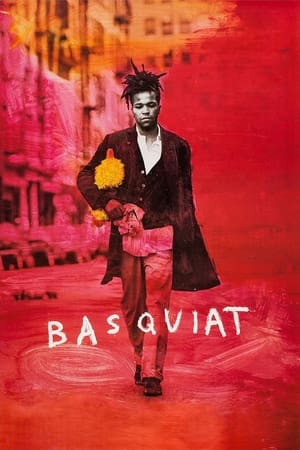
The brief life of Jean Michel Basquiat, a world renowned New York street artist struggling with fame, drugs and his identity.
A dramatized account of a great Russian naval mutiny and a resultant public demonstration, showing support, which brought on a police massacre.
After leaving his family's sheep farm in the Australian outback, a young man joins his countrymen on the western front of World War I with hopes of helping expedite an end to the bloody conflict. But as war rages on, he is forced to grapple with the brutal realities of trench warfare, including a near-constant battle to keep himself alive—without leaving another man behind. Inspired by the real-life diary entries of local ANZACs, the feature film details the untold story of some of Australia’s greatest military victories.
This excellent and breathtaking documentary is the result of a long study on the Gulag to try to understand why more than 60 million Soviet citizens were sent to the camps from 1918 to 1956, how such a massive confinement could take place during two generations. From the Solovki in the north-west to the Kolima in Siberia, from Lenine to Kroutchev, a polar geography is erected into the Gulag system. One does not escape from camps. After ten years of imprisonment, one dies. Some survived, some left traces; they witness: organisation, work and discipline, but also resistance, repression and revolt.
The Colegio de Arquitectos de Catalunya commissioned Pere Portabella to make this film for the Joan Miró retrospective exhibit in 1969. There were heated discussions on whether it would be prudent to screen the film during the exhibit. Portabella took the following stance: "either both films are screened or they don't screen any" and, finally, both Miro l'Altre and Aidez l'Espagne were shown. The film was made by combining newsreels and film material from the Spanish Civil War with prints by Miró from the series "Barcelona" (1939-1944). The film ends with the painter's "pochoir" known as Aidez l'Espagne.
The film tells the story of Larisa Savitskaya, who survived after falling from a height of more than 5,000 meters as a result of a plane crash in 1981.
Nelson Mandela, au nom de la liberté
Cagnat, le dessin sinon rien
Grandir en pleine nature
In a time of war and disease, a young officer gallantly tries to help a young woman find her husband.