British documentarian Nick Broomfield creates a follow-up piece to his 1992 documentary of the serial killer Aileen Wuornos, a highway prostitute who was convicted of killing six men in Florida between 1989 and 1990. Interviewing an increasingly mentally unstable Wuornos, Broomfield captures the distorted mind of a murderer whom the state of Florida deems of sound mind -- and therefore fit to execute. Throughout the film, Broomfield includes footage of his testimony at Wuornos' trial.
ME: A Journey Within
Thomas Haemmerli is about to celebrate his fortieth birthday when he learns of his mother's death. A further shock follows when he and his brother Erik discover her apartment, which is filthy and full to bursting with junk. It takes the brothers an entire month to clean out the place. Among the chaos, they find films going back to the 1930s, photos and other memorabilia.
In Uganda, AIDS-infected mothers have begun writing what they call Memory Books for their children. Aware of the illness, it is a way for the family to come to terms with the inevitable death that it faces. Hopelessness and desperation are confronted through the collaborative effort of remembering and recording, a process that inspires unexpected strength and even solace in the face of death.
Is there a mental health crisis in agriculture in Colorado? Farming and ranching has become increasingly difficult over the years. An industry that is typically viewed as romantic, hardworking, and "salt-of-the earth" is actually a job full of tremendous stress outside of anyone's control. Combine that with the enormous generational pressure to continue the family farm, and you have a large group of people that are suffering silently. How do we take care of those that are taking care of us?
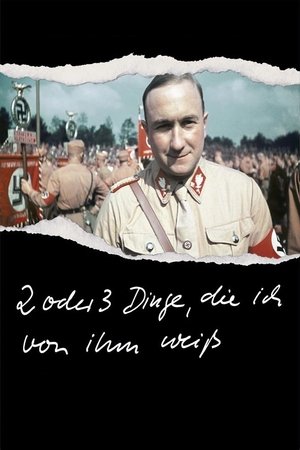
What would your family reminiscences about dad sound like if he had been an early supporter of Hitler’s, a leader of the notorious SA and the Third Reich’s minister in charge of Slovakia, including its Final Solution? Executed as a war criminal in 1947, Hanns Ludin left behind a grieving widow and six young children, the youngest of whom became a filmmaker. It's a fascinating, maddening, sometimes even humorous look at what the director calls "a typical German story." (Film Forum)
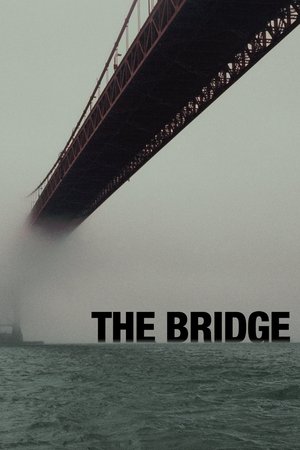
The Bridge is a controversial documentary that shows people jumping to their death from the Golden Gate Bridge in San Francisco - the world's most popular suicide destination. Interviews with the victims' loved ones describe their lives and mental health.
In the table that symbolizes the value of traditional women, a woman who wants to break free from her family must face her daughter.
This one-of-a-kind comedy special showcases the comedian's riotous stand-up performance, exploring everything from the Disability experience to her Italian-Catholic upbringing to body image issues and more.
In Fear, documentary filmmaker Michiel van Erp creates a collage of inhabitants of the city of Amsterdam who struggle with various anxiety disorders. Today, more patients with anxiety disorders seek professional help than those who suffer from depression, making anxiety the number one mental illness in the Netherlands. This film will show how a small number of those patients attempt to overcome their fears, in order to get on with their lives in the crowded cosmopolitan city that Amsterdam is today.
A portrayal of the life of one of the most important samba musicians in Brazil, Bahian sambista Oscar da Penha, popularly known as Batatinha (1924 -1997). Through memories of their father, his nine children share their perspectives, as well as interviews with family, friends and musicians, to tell the story of Batatinha’s life, history and work.
Fühlen Wie Ein Ozean
Nearly a decade in the making, The House We Lived In is a strikingly candid portrait of a family transformed by a father’s brain injury. In 2011, 61-year-old Tod O’Donnell awoke from a coma with a case of total amnesia that doctors assured his wife and children was temporary. But when it proved permanent, and for no discernible reason, the O’Donnell’s were left to themselves to untangle the mystery — a struggle for answers that would only raise more questions as they came to realize, painfully, that the real mystery was Tod himself.
Jason Momoa's story of fatherhood, craftsmanship, and the legacy he'll leave behind.
What “living on the autism spectrum” means for those affected and their environment. To find out, the camera team accompanied autistic people into their world. The documentary shows the challenges they face in their everyday lives and lets them tell their personal stories. It is accompanied by two renowned autism researchers, Tony Attwood and Professor Ludger Tebartz van Elst, and dispels the clichés that most people have about autistic people. Because autism is very diverse. The documentary takes an exclusive look at the current state of autism research in Professor Jürgen Knoblich's gene laboratory in Vienna.
In the underground world of diffing, a community finds solace in their passion, as they navigate personal struggles and challenges both on and off the road.
Child abuse, mental illness, and forbidden love converge in this mystery involving a mother and daughter who were thought to be living a fairy tale life that turned out to be a living nightmare.
In the vast expanse of desert East of Atlas Mountains in Morocco, seasonal rain and snow once supported livestock, but now the drought seems to never end. Hardly a blade of grass can be seen, and families travel miles on foot to get water from a muddy hole in the ground. Yet the children willingly ride donkeys and bicycles or walk for miles across rocks to a "school of hope" built of clay. Following both the students and the teachers in the Oulad Boukais Tribe's community school for over three years, SCHOOL OF HOPE shows students Mohamed, Miloud, Fatima, and their classmates, responding with childish glee to the school's altruistic young teacher, Mohamed. Each child faces individual obstacles - supporting their aging parents; avoiding restrictions from relatives based on traditional gender roles - while their young teacher makes do in a house with no electricity or water.
By means of objects, photos, tapes and films, director Angelika Levi, half-German, half-Jewish, examines the story of her family. The film deals with trauma and the way history is produced, filed away, turned into discourse and ordered on macro and micro levels.
In a very hot summer in the middle of Portugal, a girl is dealing with her recent nose operation, while her mother's lack of attention seems to give her more pain.