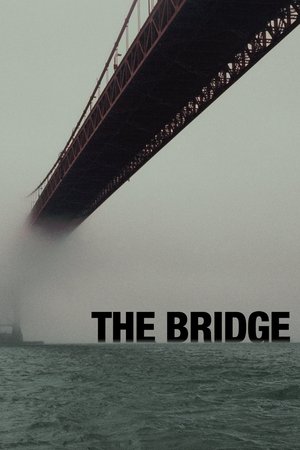
The Bridge is a controversial documentary that shows people jumping to their death from the Golden Gate Bridge in San Francisco - the world's most popular suicide destination. Interviews with the victims' loved ones describe their lives and mental health.
Four voices intertwine in a testimonial journey through the Santiago subway, confronting what society prefers to keep underground in its stations. A journey of reconstruction — from memory and experience — that explores the invisible trace these events have left on their lives.
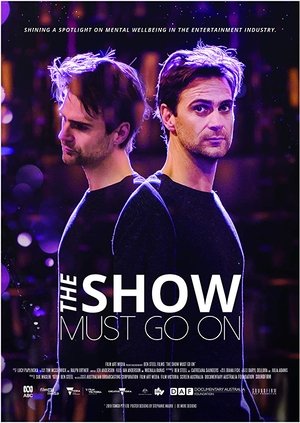
Filmmaker Stephen Hosier takes a journey with Richard Csanyi, his childhood friend, as he investigates the life and death of his twin brother Attila, who was found dead on a rooftop in 2020.
Today in France, one in five young people suffers from severe depressive symptoms, and the number of minors visiting psychiatric emergency rooms has tripled in the last five years. Despite the political will that has been demonstrated, child psychiatry is nevertheless faced with a severe lack of resources. The interminable waiting times for treatment are causing a surge in prescriptions for psychotropic drugs.
Women's college basketball player Chamique Holdsclaw battles mental illness.
Animated short documentary following a young woman's diagnosis of bipolar: a journey of self-acceptance to challenge everyday stigma. In "Trust Me", a genre-bending short documentary, a young woman uses humour and compassion to share her moving and deeply personal story of coming to terms with her mental health condition. When she starts exhibiting atypical and extreme behaviour, her loved ones trick her into hospitalisation against her will. She is diagnosed with bipolar disorder which starts her challenging journey of self-acceptance, confronting internalised and societal stigma, and learning to trust herself and others again.
Ronnie O’Sullivan hasn’t had the most harmonious relationship with the media over the years, but his attempt to win the Snooker World Championship for a record 7th time in 2021 apparently proved too good an opportunity to pass up.
David Harewood had a psychotic breakdown and was sectioned in his 20s. David traces his steps, meeting young people living with psychosis and the NHS professionals who treat them.
Alastair Campbell candidly talks about his experience living with depression and explores if radical new treatments can make a difference.
From breathtaking highs — a World Cup win, an astonishing last stand in the Ashes, and an inspiring England captaincy — to the lows — a trial for affray, personal tragedy, and mental health challenges, which saw him take time away from the game — the documentary follows Ben Stokes in an honest film about the man behind the extraordinary cricketer.
Four-time Emmy winner John Kastner was granted unprecedented access to the Brockville facility for 18 months, allowing 46 patients and 75 staff to share their experiences with stunning frankness. The result is two remarkable documentaries: the first, NCR: Not Criminally Responsible, premiered at Hot Docs in the spring of 2013 and follows the story of a violent patient released into the community. The second film, Out of Mind, Out of Sight, returns to the Brockville Mental Health Centre to profile four patients, two men and two women, as they struggle to gain control over their lives so they can return to a society that often fears and demonizes them.
Roman Kemp: Our Silent Emergency is a deeply personal and candid film following Roman as he explores the mental health and suicide crisis affecting young men in the UK.
Divergente
A lonely individual embarks on a scenic drive up a mountain, seeking fresh air and a renewed perspective. At the summit, they wander through serene surroundings, allowing the natural landscape to provide a mental reset and offer clarity—a deliberate retreat to refresh both mind and spirit.
In just sixty years, South Korea went from being one of the poorest countries on the Asian continent to having the 12th largest economy in the entire world. Every year, it is measured that Korean students have some of the highest test scores and a higher rate of acceptance into Ivy League schools compared to all other nations. But on the flip side, South Korea also has one of the highest suicide rates in the developed world, the highest gender pay gap of all developed countries, and the highest plastic surgery rate per capita. Always expected to receive top scores and constantly bombarded by media and messages that seem to demand nothing short of visual “perfection,” how do these individuals come to accept and learn to love themselves as they are?
Why are men two or even three times less likely than women to be diagnosed with depression? Why are the figures reversed between the sexes in suicide statistics—some 47,000 people in Europe each year, more than three-quarters of whom are men? In men, the signs may differ from those generally identified with depression: anger rather than sadness, hyperactivity (at work or in sports) rather than asthenia, antisocial or addictive behavior, greater difficulty in asking for help due to modesty or shame, etc. But whatever form it takes, mental suffering is still often overlooked by those affected, misdiagnosed by many practitioners, and therefore generally underestimated.
Little Mix star Jesy Nelson goes on a journey of rehabilitation as she opens up about abuse she has suffered at the hands of cyberbullies and its effects on her mental health.
An up-to-date look at Youth Suicide with an examination of the warning signs, statistics and causes, along with possible ways teachers and parents can use to help their child overcome this important social issue. Also includes a look at the media and its handling of the social issue through the Netflix series "13 Reasons Why" and the Tony Award-winning Broadway musical, "Dear Evan Hansen."
Aiming to expose the extreme mental and emotional demands of being a police officer, After The Sirens is an intimate documentary that unmasks how mental health is perceived and addressed in the police force from first hand accounts. The film invites viewers to consider the mental resilience required to be an officer, with conversations surrounding trauma exposure, emotional labour, multiculturalism and personal experiences of coping. Through displaying the force’s involvement in a recent traumatic case, as well as the trauma encountered throughout their individual careers, the documentary offers the opportunity to go inside the policing mind.
Jöran has a bipolar disorder, which makes him vulnerable to depression, mania and psychosis. He can sympathize well at the moment, but that has been different in the past. Jöran delves into his dark past and talks to the people who experienced his illness up close. How do you deal with this disorder and the misunderstood behavior that comes with it? And how do you break the taboo that still exists on disease pressure?