Explorer Bruce Parry visits nomadic tribes in Borneo and the Amazon in hope to better understand humanity's changing relationship with the world around us.
Indigenous chief Juma Xipaia fights to protect tribal lands despite assassination attempts. Her struggle intensifies after learning she's pregnant, while her husband, Special Forces ranger Hugo Loss, stands by her side.
First Nations fight to end grizzly bear trophy hunting in the Great Bear Rainforest in British Columbia. The Heiltsuk, Kitasoo Xai'xais and Gitga'at First Nations enforce a ban by using Coastal Guardian Watchmen, while the Raincoast Conservation Foundation purchases trophy hunting licenses in the area to prevent a hunt from taking place. The film offers unique access to Canada's First Nations and a breathtaking view of the majestic animals inhabiting the Great Bear Rainforest, including the elusive Spirit Bear.
An undercover documentary film produced and directed by British filmmaker Dominic Brown, about the struggle of the indigenous Sahrawi people of Western Sahara. The documentary covers the current human rights and political situation of the Sahrawi. There are several interviews recorded with human rights victims including an elderly lady who had been attacked in her home the previous day by Moroccan security forces. There is also a focus given to the alleged vested interests of countries in the region, particularly France. The film states that the French Government's close relationship with Morocco, their trade deals and their use of veto over the terms of the UN mission in Western Sahara are major factors.
"The Last Dragon" is a nature mockumentary about a British scientific team that attempts to understand the unique incredible beasts that have fascinated people for ages. CGI is used to create the dragons.
A group of people bows down as a ritual for religious ceremonies. This community shares a belief named Sapta Drama, one of the native religions in Indonesia that uses bowing down as a worshiping medium.
A vision from Limbo, where the canoeist of the eternal lake floats in his boat, between sleep and wakefulness. When he sleeps, he dreams of the everyday of a parallel time. when he wakes up, the same song haunts him again and again. his boat, “ara” (time, in guarani) travels through time like a shooting star.
The people of Unamenshipu (La Romaine), an Innu community in the Côte-Nord region of Quebec, are seen but not heard in this richly detailed documentary about the rituals surrounding an Innu caribou hunt. Released in 1960, it’s one of 13 titles in Au Pays de Neufve-France, a series of poetic documentary shorts about life along the St. Lawrence River. Off-camera narration, written by Pierre Perrault, frames the Innu participants through an ethnographic lens. Co-directed by René Bonnière and Perrault, a founding figure of Quebec’s direct cinema movement.
The Shipibo-Konibo people of Peruvian Amazon decorate their pottery, jewelry, textiles, and body art with complex geometric patterns called kené. These patterns also have corresponding songs, called icaros, which are integral to the Shipibo way of life. This documentary explores these unique art forms, and one Shipibo family's efforts to safeguard the tradition.
A searing examination of the contamination that sparked an international catastrophe and the decades’ long battle with some of the world’s largest chemical companies for justice and compensation.
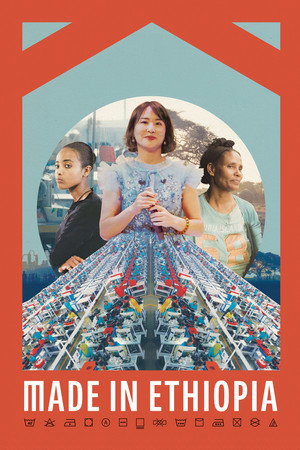
When a massive Chinese factory complex attempts a high-stakes expansion in rural Ethiopia, three women in search of prosperity have their faith in industrialization tested to the limit. Filmed over four years with singular access, Made in Ethiopia lifts the curtain on China’s historic but misunderstood impact on Africa, and explores contemporary Ethiopia at a moment of profound crisis. The film was awarded the Jury Special Mention at Tribeca Festival.
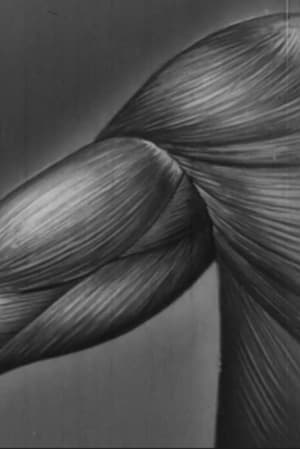
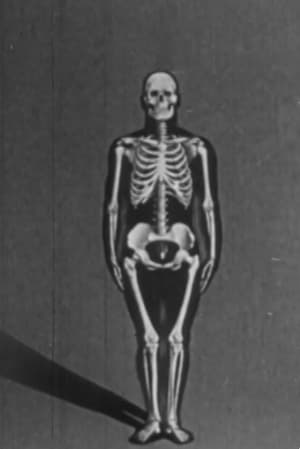
Part two of two teaching films about human anatomy which is devoted to the action of the skeletal muscles in producing movement of the bones at the joints of the human skeleton. It uses live action and animated medical illustrations as well as an actual skeleton with commentary. A man, naked to the waist, also demonstrates the relevant physical processes such as respiration.
Barry Barclay was a New Zealand/Aotearoa director of documentaries and feature films. He is regarded as one of the world's first, and very influential, Indigenous film makers. The film The Camera on The Shore is a feature length introduction to Barry, and to his film making.
A filmmaker sets out to discover the life of Joyce Vincent, who died in her bedsit in North London in 2003. Her body wasn't discovered for three years, and newspaper reports offered few details of her life - not even a photograph.
Funeral Bororo
In the rugged mountains of Oaxaca, young basketball players Bernabé, Tobías, and Aniceto battle systemic barriers to redefine their futures. Pushed by the demanding leadership of Sergio Zúñiga, they tackle every challenge head-on. With rising star Gustavo and the strategic guidance of trainer Sebastián, these determined athletes prove that grit, teamwork, and the power of dreams can transform not only their lives, but their entire community.
Men and women of the !Kung people in Ojokhoe, Namibia perform healing dances by firelight. First we see men perform the giraffe dance, and then women perform the !gwa dance.
In Peruvian Amazonia, for the first time in many years, a Shipibo–Konibo community prepare to perform the Aneshiati ceremony: a time of dance, song, festive clothing, and drink—including the sacred tea ayahuasca.
In the Bella Coola Valley, a haunting legend endures through generations as a filmmaker reckons with whether the stories of her ancestors can survive being held or if they were never meant to be captured.
In 1953 the Canadian government relocated Inuit families from Northern Québec to the High Arctic, promising an abundance of game and fish and assuring them they could return home after two years if things didn't work out. They would not see their ancestral lands for 30 years. Abandoned in flimsy tents, the Inuit were left to fend for themselves in the desolate settlements of Resolute Bay and Grise Fiord, where the sea was nearly always frozen and darkness reigned for months on end.