A reflection on the fate of humanity in the Anthropocene epoch, White Noise is a roller-coaster of a film, a whirlwind of sounds and images. The fourth feature-length work by Simon Beaulieu, this film essay plunges viewers into a subjective sensory adventure—a direct physical encounter with the information overload of daily life. White Noise transforms the imminent collapse of our civilization into a visceral aesthetic experience.
A day in the city of Berlin, which experienced an industrial boom in the 1920s, and still provides an insight into the living and working conditions at that time. Germany had just recovered a little from the worst consequences of the First World War, the great economic crisis was still a few years away and Hitler was not yet an issue at the time.
A personal city symphony where an eco-anxious soul explores the intersections of natural and artificial. The filmmaker’s internal conflicts are reflected through the contradictions of early spring. This experimental short documentary invites the viewer to take the time and truly pay attention to one’s surroundings.
A cameraman wanders around with a camera slung over his shoulder, documenting urban life with dazzling inventiveness.
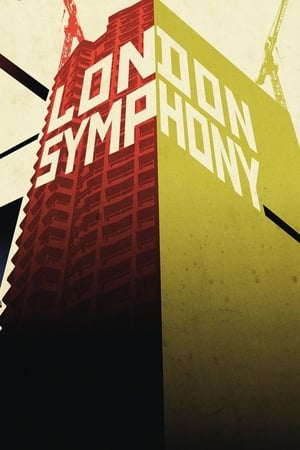
LONDON SYMPHONY is a brand new silent film - a city symphony - which offers a poetic journey through the city of London. It is an artistic snapshot of the city as it stands today, and a celebration of its culture and diversity.
This film portrait of a new kind is a deep dive into the heart of the art scene of Los Angeles. From a ride on Sunset Boulevard in a convertible car at the sunrise, going through a lunch with the art dealer Patrick Painter and a visit to Peter Shire's studio... Having a beer and a deep talk with Paul McCarthy, calling Raymond Pettibon stuck in New-York or searching for Ed Ruscha in bars.... From Ariana Papademetropoulos opening exhibition to the visit of a car wreck with Umar Raschid... From the old house of Cary Grant to the dodgy underground of Downtown passing through Eugenio Lopez's private art collection on the Hollywood hills... Through intimate conversation, 24 Hour Sunset gives us access to the thoughts, inspirations and practice of legendary artists, world famous art dealers, appraised curators and collectors, as well as the young up coming scene of artists living in Los Angeles.
Trail traces.
A la porra
Set against the vibrant spectacle of the jaripeo, a symbol of Mexican cowboy tradition and machismo, this story unveils a hidden world of queer desire and quiet rebellion. As glances and gestures disrupt the rigid norms of masculinity, the rodeo becomes a stage for our protagonists to navigate identity, community, and the search for belonging in an oppressively traditional space.
In this experimental, self-ethnographic documentary, Tom Joslin blends breathtaking, moving snapshots from the natural world, filmic cultural touchstones, and cutting (pseudo) cinéma vérité to dissect and reassemble his gay identity despite constant warnings to stay in the closet. Blackstar sees Joslin and partner Mark Massi fleshing out their enduring commitment and obvious love for one another amidst the insecurity that a self-conscious documentary lens instills. As interviews with Joslin’s mother, father, and brothers attempt to break down the legitimacy of Joslin and Massi’s romance, the pair use everything at their disposal, including inspiration from gay revolutionaries and painfully honest conversations, to hold up their “abnormality” as a point of pride rather than shame. – Shayna Warner
Tourists eating and taking photos. Tourists strolling and taking photos. Tourists bathing on the beach and taking more photos. Barcelona has become an overexploited photocall to the point of paroxysm, and this is what this film shows by turning the camera and pointing towards the visitors. A small gesture that, added to a powerful sound contrast and a caustic sense of humour, exposes without subterfuge a grotesque normality.
X-ray images were invented in 1895, the same year in which the Lumière brothers presented their respective invention in what today is considered to be the first cinema screening. Thus, both cinema and radiography fall within the scopic regime inaugurated by modernity. The use of X-rays on two sculptures from the Bilbao Fine Arts Museum generates images that reveal certain elements of them that would otherwise be invisible to our eyes. These images, despite being generally created for technical or scientific purposes, seem to produce a certain form of 'photogénie': they lend the radiographed objects a new appearance that lies somewhere between the material and the ethereal, endowing them with a vaporous and spectral quality. It is not by chance that physics and phantasmagoria share the term 'spectrum' in their vocabulary.
Departing from peripheral details of some paintings of the Bilbao Fine Arts Museum, a female narrator unravels several stories related to the economic, social and psychological conditions of past and current artists.
Grandma Kham, an 87 year-old-woman, lives lone and is still strong enough to burn charcoal and weed out grass. But what does she have to go through along the way? And how will she prepare for her own final moment?
The last days of summer captured on 16mm.
Based upon a habitual fidget of the filmmaker involving the tags in his clothing, Reilly Mitchell explores the feelings of his past by removing something that has always stayed so close to him and turning it into something new.
In the town of Xoco, the spirit of an old villager awakens in search of its lost home. Along its journey, the ghost discovers that the town still celebrates its most important festivities, but also learns that the construction of a new commercial complex called Mítikah will threaten the existence of both the traditions and the town itself.
Filmed throughout Ukraine just months before the full-scale Russian invasion, this vérité visual ethnography explores the overlaps of memory, hope, progress, and nostalgia at the scale of everyday life.
La nuit de tous les mots
After consolidating itself as a tourist destination in the mid-1960s, this small coastal village has become the dormitory town for the workers of a Nuclear Power Plant. With the liberal promise of prosperity and socioeconomic wellfare, many workers left their homes to move to the small city and started working at the new Nuclear Power Plant. The collective unrest and the silence, cut off by the great gusts of wind, articulate the landscape of the village that is now under the aid of the Nuclear Power Plant.