Fearing for their lives, Afshin, Alain and Patricia fled their country, without their parents, when they were only children. They had to start all over here in Canada in the hope of a better life. Combining real shooting and animated cinema, "Alone" bears the imprint of hope: how does a child manage to rebuild himself in a new country, when he has left everything behind?
A computer screen, images from the four corners of the world. We cross borders in one-click while another trip’s story reach us in bits, through text messages, chats, phone conversations, and an immigration office’s questionnaire. It’s the journey of Shahin, a 20-year-old Iranian boy who, fleeing his country alone, lands in Greece, then winds his way to England where he claims asylum.
Sur les pas de Robespierre
Oldemors reise
Artistic director of the National Theater Eric de Vroedt writes and directs a performance about his own mother Winnie, who passed away in 2020. This piece, titled The Century of My Mother, is a family story about the migration from the Dutch East Indies to the Netherlands. It is De Vroedt's way of examining the relationship with his mother and not having to say goodbye to her yet: 'I can let her live on stage, but when the curtain falls, when the play is completely finished, then she is really dead'.
A documentary from 1987 featuring the life of early Chinese immigrants to the island of Newfoundland.
A documentary picture about Finnish Americans. A husband, wife, and a daughter are travelling in the "Wonderland of the West" meeting many Finnish immigrants.
Shere Hite’s 1976 bestselling book, The Hite Report, liberated the female orgasm by revealing the most private experiences of thousands of anonymous survey respondents. Her findings rocked the American establishment and presaged current conversations about gender, sexuality, and bodily autonomy. So how did Shere Hite disappear?
Fashion revolutionary Bethann Hardison looks back on her journey as a pioneering Black model, modeling agent, and activist, shining a light on an untold chapter in the fight for racial diversity.
While navigating daily discrimination, a filmmaker who inhabits and loves her unusual body searches the world for another person like her, and explores what it takes to love oneself fiercely despite the pervasiveness of ableism.
Alanis Obomsawin, a North American Indian who earns her living by singing and making films, is the mother of an adopted child. She talks about her life, her people, and her responsibilities as a single parent. Her observations shake some of our cultural assumptions.
With more than 70 films and 160 million cumulative tickets in France, Jean-Paul Belmondo is one of the essential stars of French cinema.
Is the solution to Switzerland's future to integrate Germany into the confederation? After all, like Michael Ringier, CEO of the Ringier media group, says, blithely ignoring all minorities, we're very close in culture and language. Oskar Freysinger takes out his guitar and sings his answer. Politicians from French-speaking Switzerland and Ticino think expanding will help the country survive. The former German foreign minister thinks the two countries' traditions are too different. The banker Oswald Grübel is worried about Germany's debts, although he'd be prepared to take over its assets. With serious interviews interspersed with gags (boat people on Lake Constance, the last Habsburger as a peasant), Giaccobbo gathers off-the-cuff reactions which reveal a lot about the different mentalities. The movie laughs at preconceived notions, redefines neutrality and reflects on what designates a nation. Switzerland, which loves to teach the world a lesson, will soon helvetize the planet, oder?
Johnny par Laeticia
Stop for Bud is Jørgen Leth's first film and the first in his long collaboration with Ole John. […] they wanted to "blow up cinematic conventions and invent cinematic language from scratch". The jazz pianist Bud Powell moves around Copenhagen -- through King's Garden, along the quay at Kalkbrænderihavnen, across a waste dump. […] Bud is alone, accompanied only by his music. […] Image and sound are two different things -- that's Leth's and John's principle. Dexter Gordon, the narrator, tells stories about Powell's famous left hand. In an obituary for Powell, dated 3 August 1966, Leth wrote: "He quite willingly, or better still, unresistingly, mechanically, let himself be directed. The film attempts to depict his strange duality about his surroundings. His touch on the keys was like he was burning his fingers -- that's what it looked like, and that's how it sounded. But outside his playing, and often right in the middle of it, too, he was simply gone, not there."
From the “integration model” to the “Islamist fanatic”, France fantasizes about these children of immigrants who grew up with it. Like every month “What I’m Meddling With!” presents portraits, the result of an in-depth investigation, to give a face to today's questions. The program, broadcast in the thematic evening of the Franco-German channel Arte, is made up of 2 ambivalent documentaries: "Les Lumières De La Zone" and "Les Soldats De Dieu" followed by debates.
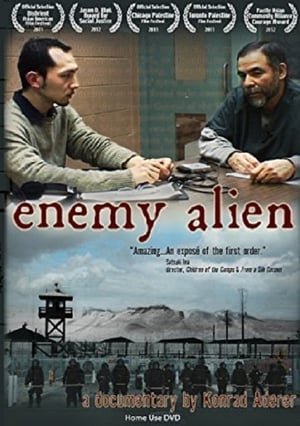
"Take my love" is a documentary film about "Las Patronas", a group of women who daily cook, pack and throw food to the migrants riding the "Beast" train.
A man tells the story of his three cats.
Mémé
His signature roles were the edgy North German characters: Jan Fedder was one of the most popular actors in the North. He was one of the most popular actors, a real guy with rough edges and a lot of heart: Jan Fedder. He was already on stage as a child and had his first acting lessons at the age of 13. He knew early on what he wanted: to become an actor. Antje Althoff's film traces his life and career, showing his incorrigible nature, an endearing symbiosis of a big mouth and a similarly big heart.