Ten years ago, Volodymyr Zelensky was just one of the many faces on Ukrainian television screens. He became a star thanks to the 2015 satirical series Servant of the People, in which he played a history teacher who becomes president. Four years later, what began as fiction became a reality. This French documentary follows the transformation of a popular TV comedian into a statesman on the front lines of the Russian invasion. Archival footage, family photos, television appearances, and interviews with Zelensky and those closest to him create a multi-layered portrait of a man who always longed for a large audience. At the same time, the film places his personal development in the broader context of post-Soviet Ukraine, which is also searching for its own identity.
For the first time, cloistered sisters agree to be filmed for one year in all aspects of their lives. The nuns of Berthierville, the only Francophone community of Dominican nuns in North America for nearly a century, engage in a rare and unique documentary in which exceptional testimonies and archives intermingle.
Even though her program was only seen in four Midwestern cities, Ruth Lyons presided over America's highest-rated daytime TV talk show for nearly two decades! This documentary draws upon rare and previously undiscovered footage, along with comments from associates and admirers to create a portrait of an outspoken, multi-talented woman who became one of the most beloved and influential figures in TV history. Featuring the Recollections Of: Carol Channing, John Davidson, Phyllis Diller, Phil Donahue, David Letterman, Johnny Mathis, Peter Nero, Bonnie Lou, Nick Clooney, Oscar Robertson and many others, along with archival audio and video of Ruth Lyons' 50-50 Club.
Take a breathtaking train a ride through Nothern Quebec and Labrador on Canada’s first First Nations-owned railway. Come for the celebration of the power of independence, the crucial importance of aboriginal owned businesses and stay for the beauty of the northern landscape.
Bob Ross brought joy to millions as the world's most famous art instructor. But a battle for his business empire cast a shadow over his happy trees.
Part documentary, part drama, this film presents the life and work of Jack Kerouac, an American writer with Québec roots who became one of the most important spokesmen for his generation. Intercut with archival footage, photographs and interviews, this film takes apart the heroic myth and even returns to the childhood of the author whose life and work contributed greatly to the cultural, sexual and social revolution of the 1960s.
Michael Strahan sits down with host Alex Trebek in a candid interview. Trebek talks about his life, his cancer battle and the upcoming "Jeopardy!" host episode where the show's greatest competitors face off.
This short documentary film is a fascinating portrait of urban and rural Quebec in the late 1960s, as the province entered modernity. The collective work produced for the Quebec Ministry of Industry and Commerce calls on several major Quebec figures.
The story of the Quebec Mosque Shooting—the first ever mass shooting in a mosque in the West—is known around the world, but the story of the community that survived the attack is all but unknown. The Mosque: A Community's Struggle is an intimate portrait of the resilient Muslim community of Ste-Foy, Québec, as they struggle to survive and shift the narrative of what it means to be a Muslim, one year after the devastating attack that took the lives of six of their members. As the world moves on, this small mosque and its community fights Islamophobia, harassment and hate speech. How will the community heal and how will they stop the rhetoric that threatens to precipitate further violence?
For more than thirty years, and through his television program, Fred Rogers (1928-2003), host, producer, writer and pianist, accompanied by his puppets and his many friends, spoke directly to young children about some of life's most important issues.
Two well-known Quebec artists (filmmaker Jacques Godbout and playwright René-Daniel Dubois) look at the Battle of the Plains of Abraham. Whose version of this historic event should prevail? Is history best served by documentary or fiction? We also meet Baron Georges Savarin de Marestan and Andrew Wolfe-Burroughs, direct descendants of Montcalm and Wolfe, both of whom died in the battle that would give birth to Canada and to the province of Quebec.
75e, elles se souviennent
A cinematic and introspective look at the residents of a Quebec town—once the site of the world's largest asbestos mine—as they grapple with their community's industrial past. Striving to honour their heritage while reconciling with their history and forging a new path forward, the miners delve into the intricacies of progress and healing.
From unlikely origins in northern Québec at the height of the Cold War, Voïvod’s post-apocalyptic sci-fi aesthetic, fuelled by a youthful obsession with their instruments, took them from underground success to sharing dates and tours with Iron Maiden, Rush, and Metallica. Despite adversity, and perhaps by cosmic intervention or just serendipity, Voïvod found guitarist Daniel “Chewy” Mongrain; subsequently, the band re-ignited their engines and laid a course back to Morgöth via numerous live shows around the world, a comeback album in Target Earth, singles, EPs, and finally, the late-career triumph, The Wake. In 2019, Voïvod were recognized by the Canadian Academy of Recording Arts and Sciences with a Juno Award for best hard rock/metal album of the year for The Wake.
Atik, gardien du territoire
On the eve of the publication of a biography of Claude Jutra, one of the most famous and celebrated filmmakers in Quebec and Canada, a leak leaked to the press reveals that the book contains anonymous allegations of pedophile acts committed by the filmmaker. The rumor spread like lightning, suddenly igniting the entirety of Quebec society. By finding today some of the main witnesses propelled overnight into the heart of an unparalleled media tornado, the documentary reconstructs with archive images and other previously unpublished images, the sequence of events which led to a rewriting of the story.
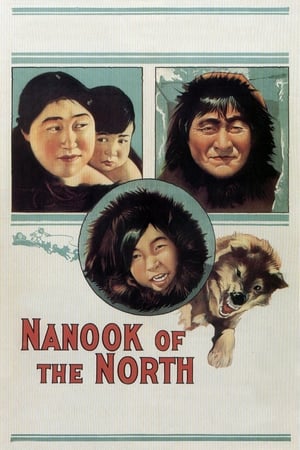
This pioneering documentary film depicts the lives of the indigenous Inuit people of Canada's northern Quebec region. Although the production contains some fictional elements, it vividly shows how its resourceful subjects survive in such a harsh climate, revealing how they construct their igloo homes and find food by hunting and fishing. The film also captures the beautiful, if unforgiving, frozen landscape of the Great White North, far removed from conventional civilization.
Quais-Blues
Ma traversée is a personal quest, filmed over 20 years, recounting the racial issues and privileges that have punctuated the filmmaker’s life in three French-speaking societies: Guadeloupe, France and Quebec. From her own story emerges the broader narrative of colonization, colorism, assimilation, integration and the social benefits of “race” and their impact even today. Brutalized by police officers in Montreal in December 2017 in front of witnesses, the filmmaker takes a step back to understand this gesture, which speaks to the social interpretation of skin color.
Let's sing now