Images from 2000s music videos are transferred onto the film strip, torn and abstracted until the visuals convulse and shift—a tactile, poetic exploration of materiality, memory, and medium.
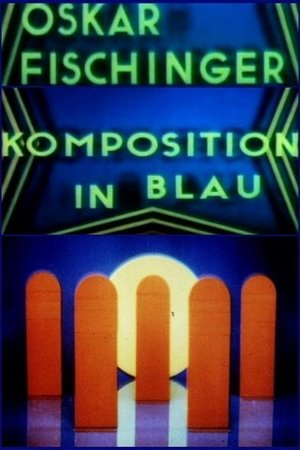
An experimental short from Oskar Fischinger
This short film is an animated interpretation of the Suite No. 4 by the music ensemble Bayon, which was founded in East Germany in 1971. Bayon’s music is a unique combination of Khmer pentatonic music with elements of classical, jazz and rock.
A factory worker in a dark, gray world assembles devices that promise happiness. In his spare time he tinkers to create something better, and finally succeeds in perfecting his invention, which allows people to see life through rose-colored glasses, but he has to pay a price for his success.
The muted despair and confusion of Rob Ford or something like that.
A previously lost political satire animation about Arturo Alessandri, the recently elect president of Chile at that time.
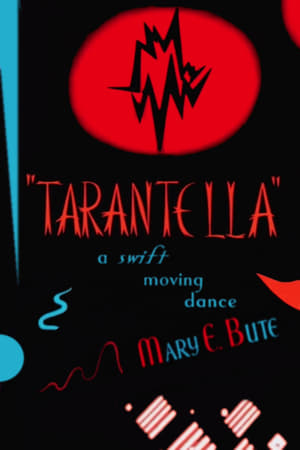
A pioneer of visual music and electronic art, Mary Ellen Bute produced over a dozen short abstract animations between the 1930s and the 1950s. Set to classical music by the likes of Bach, Saint-Saëns, and Shoshtakovich, and replete with rapidly mutating geometries, Bute’s filmmaking is at once formally rigorous and energetically high-spirited, like a marriage of high modernism and Merrie Melodies. In the late 1940s, Lewis Jacobs observed that Bute’s films were “composed upon mathematical formulae depicting in ever-changing lights and shadows, growing lines and forms, deepening colors and tones, the tumbling, racing impressions evoked by the musical accompaniment.” Bute herself wrote that she sought to “bring to the eyes a combination of visual forms unfolding along with the thematic development and rhythmic cadences of music.”
A play of colours, shapes and music: colourful dots, lines and surfaces move to the rhythm of the music. A short film by Hans Fischinger, the younger brother of experimental film pioneer Oskar Fischinger.
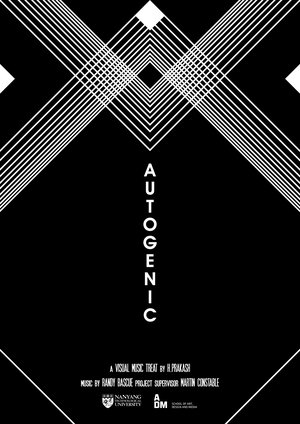
From the void of space, a cube structure comes to life in this experimental visual music film.
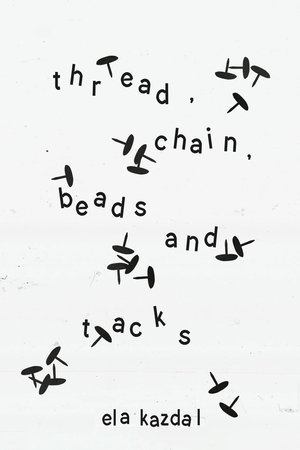
Made with thread, chain, beads, tacks, hex nuts, bolts, steel eye pins, hooks, clasps, tracing paper, prints, IKEA paper measure, bobby pins, 35mm photographic film strip, 16mm film strips, nail polish, screenprint, mesh fabric and lace.
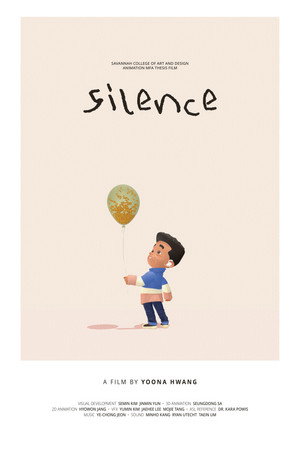
A child born deaf enjoys a musical concert through vibrations and a hearing aid, imagining visuals based on what he hears.
Here the artist creates a world of color, form, movement and sound in which the elements are in a state of controllable flux, the two materials (visual and aural) are subject to any conceivable interrelation and modification.
An abstract film in which every motion of coloured shapes is in strict synchronization with music. Preserved by the Academy Film Archive in 2000.
To the toccata portion of Bach's "Toccata and fugue in D minor," we watch a play of sorts. Blue smoke forms a background; a grid of black lines is the foreground. Behind the lines, a triangle appears, then patterns of multiple triangles. Their movements reflect the music's rhythm. Behind the barrier of the black lines, the triangle moves, jumps, and takes on multiple shapes. In contrast with the blue and the black, the triangles are warm: orange, red, yellow. The black lines bend, swirl into a vortex, then disappear. The triangle pulsates and a set of many of them rises.
In 1967, Beulah struck Reynosa. Family survives through images from memory circling the wreck. Rituals of celebration and violence like hurricane, shift between dancing, cyanotypes, blue fire and lost family archive. We have come to see the damage that was done and the treasures that prevail. Thus invent colors that burn the eyelid like 火藥.
Experimental film featuring emulsion scratches set to music.
Los Funerales del Presidente Montt
Celebrations at Cousiño Park
Made primarily using 35mm black & white stills film, which was developed and scanned at home, the film explores themes of memories, nostalgia, and our relationship to still and moving image and how those two mediums differ in regards to how we process the passing of time.
Albert has spent his whole life wanting to travel but he has been stuck at home, living in a small town making enamel signs. He has saved up everything he has and reluctantly sells his home and livelihood to embark on this trip, a lifelong dream that will honor a deceased friend. But the journey he will embark on is not what he has anticipated.