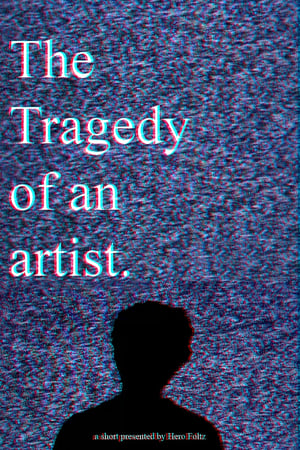
The Tragedy of an Artist, is an experimental short shot over the course of a week. This film is meant to illustrate who Hero Foltz is as a person and his struggles with self identity
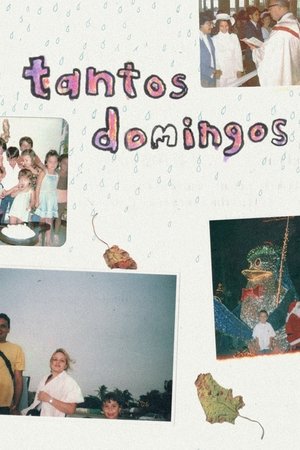
A staged birthday celebration and a visit to the director’s father’s home. From the interplay of memory and imagination, the film explores how family archives shape fictions of the past.
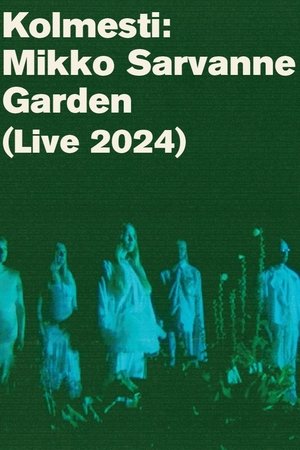
Did you look at the sun for too long, until the shapes of the surrounding world stretched and the colors became distorted? In this music documentary, the band Mikko Sarvanne Garden performscompositions set to contemporary poetry: Heräämisen valkea myrsky, Valo jota pöly juo, and Hiljainen kuin metsä.
In 7 episodes, a subject traverses through various phases of existence. He fully explores different facets of the human condition— a calm birth, a stifled growth, an outrage against injustice, a cumulation of scars, and the return to innocence.
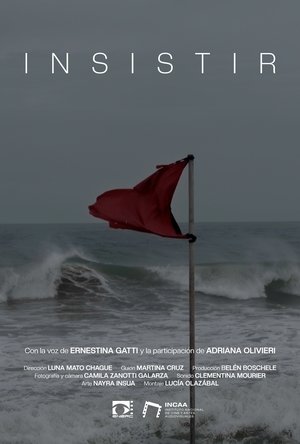
A documentary about the sea and memory. Its movement is its form. Its strength.
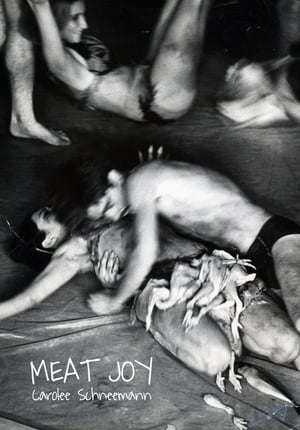
"Meat Joy is an erotic rite — excessive, indulgent, a celebration of flesh as material: raw fish, chicken, sausages, wet paint, transparent plastic, ropes, brushes, paper scrap. Its propulsion is towards the ecstatic — shifting and turning among tenderness, wildness, precision, abandon; qualities that could at any moment be sensual, comic, joyous, repellent. Physical equivalences are enacted as a psychic imagistic stream, in which the layered elements mesh and gain intensity by the energy complement of the audience. The original performances became notorious and introduced a vision of the 'sacred erotic.' This video was converted from original film footage of three 1964 performances of Meat Joy at its first staged performance at the Festival de la Libre Expression, Paris, Dennison Hall, London, and Judson Church, New York City."
In the summer of 1900, the first film camera was purchased by Mozaffar ad-Din Shah Qajar for Iran, and immediately the first Iranian moving images were captured by this camera. These images, in an obsessive manner, have embodied the mesmerized gaze of people. In the span of 79 years since the purchase of this camera, Iran has undergone two revolutions and two coups, and throughout all these moments, the camera has been present as the recorder of people's mesmerized gazes. These mesmerized gazes are in a way as if they are the ones looking at us, not the other way around. It seems like these gazes are trying to convey something, but what? No one knows. Now, we gaze at those who have gazed at us from a distant time.
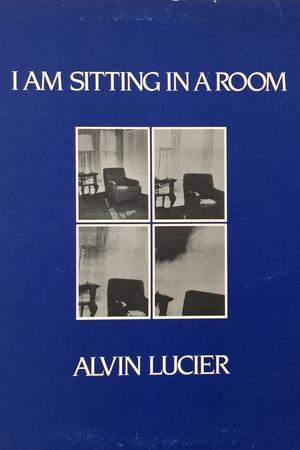
I am sitting in a room is a sound art piece by American composer and sound artist Alvin Lucier composed in 1969. The first performance of the work was in 1970 at the Guggenheim Museum in New York. In collaboration with his partner Mary Lucier. The piece features Lucier recording himself narrating a text, and then playing the tape recording back into the room while re-recording it. The new recording is then played back and re-recorded, and this process is repeated. Due to the room's particular size and geometry, certain resonant frequencies are emphasized while others are attenuated. Eventually the words become unintelligible, replaced by the characteristic resonance of the room.
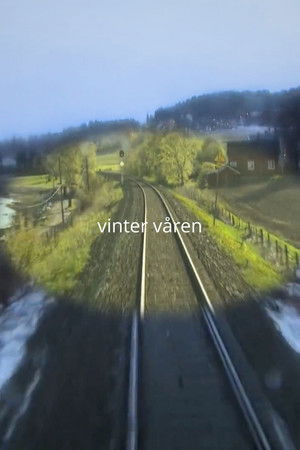
A train moves through winter as a superimposed image of the same route in spring gradually emerges. Both moments coexist within a single frame, revealing two seasons happening at once.
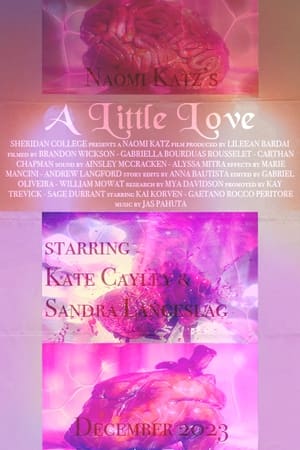
Through interspersed conversation and prose, this experimental documentary follows a poet and a neuroscientist as they explore the definition of love, what it means, and why it matters.
A sock puppet explores a family history told from the perspective of a mother and father.
Two filmmakers juxtapose field recordings and documented moving images as an attempt to reconcile with their place in their desensitized semi-urban hometown in India.
Produced for the NFB by Crawley Films Ltd. for the Canadian Department of Industry Trade and Commerce. This film provides a showcase for products manufactured in Canada, from aircraft designed for special duties, to pre-cast bathrooms that can be installed in one simple operation. There is heavy-duty machinery developed for the special needs of Canadian industry. There are women's fashions of universal appeal. All bear the 'Made in Canada' label and can be viewed in this film in colour and at close range.
Sprout. In the vacant lots against the hammering of buildings always under construction, between walls of granite, cement and sheet metal with rust, moss and cats; on the hillside between the train and the river, next to the traffic on the highway, facing the subway, vegetable gardens sprout. In this city, the choreography of ancient gestures of cultivating the land is repeated day after day, without fail. Sowing, digging, harvesting, watering, eating, talking, resting and returning the next day. The longest day of the year brings S. João and nobody goes to bed, but when the sun rises, the discreet gestures of resistance will restart.
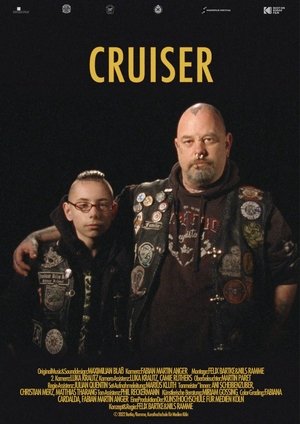
Jan receives the group patch at the campfire, Herkules brews up some tea in the workshop and Sidney gets a mohawk haircut done by his father. The film shows fragments from an Oberhausen subculture in which symbols and practices of the outlaw motorbiker scene are transferred to cycling.
an experimental short shot completely in black and white and attempts a new technique.
Through an imagined dialogue with Jean Paul Riopelle, this experimental film updates the painter's legacy by seeking to build bridges with today's generation. Part homage, part self-portrait, this short film is above all an intimate reflection on the courage to be oneself.
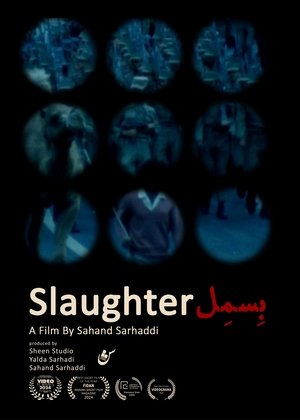
"Slaughter" is an experimental short film that delves into the archival and historical footage of the Iranian Revolution in 1979, depicting a symbolic narrative surrounding the ritualistic act of animal sacrifice, known as "Besmel." It serves as an allegorical representation of a nation's sacrifice amidst the backdrop of political transformations.
A humanoid film robot spews its stream of consciousness throughout its allocated screen time.
A film of and through the trees. Leaves catch, consume and resist the light through the seasons.