A damning documentary exposing the reactionary ideology and practices of Zionism and the State of Israel.
What drives a young, well-educated Westerner to volunteer as a “peace activist” in the Middle East? Caiomhe Butterly is one of a growing number of volunteers who risk their own safety to intervene in the long-running and bloody conflict between Israel and Palestine. Several internationals, including her, have now been injured. Some have died. In this film, she describes witnessing the aftermath of the attack on Jenin in April 2002. The film follows her work, the main emphasis being “the accompaniment of communities at risk”. Despite being threatened, shot in the leg and deported later that year, she is determined to go back.
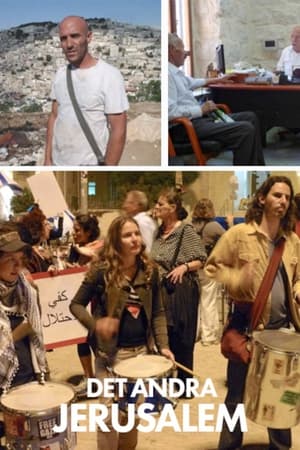
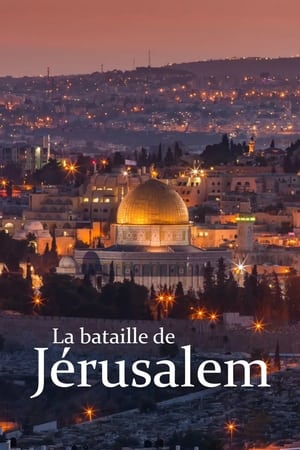
Archaeological gardens and tunnels are built. Khaled and other Palestinians lose their homes. Lawyer Ziad gets angry new clients every day. Arieh and other Israeli settlers move in. PeÅ Holmqvist and Suzanne Khardalian follow a turbulent Jerusalem, 50 years after Israel took full control.
Over the past few years, Israel's ongoing military occupation of Palestinian territory and repeated invasions of the Gaza strip have triggered a fierce backlash against Israeli policies virtually everywhere in the world—except the United States. This documentary takes an eye-opening look at this critical exception, zeroing in on pro-Israel public relations efforts within the U.S.
A thought-provoking documentary on the current and historical causes of the Israeli-Palestinian conflict and U.S. political involvement.
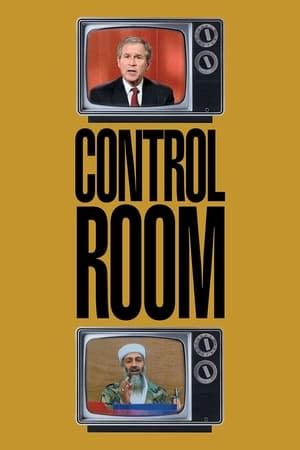
In Iraq 2003 Corporal Martin Webster filmed fellow soldiers beating Iraqi youths during rioting in Al Amara. Two years later, a British newspaper obtained his footage. The story that ran led to outrage across the world.
A chronicle which provides a rare window into the international perception of the Iraq War, courtesy of Al Jazeera, the Arab world's most popular news outlet. Roundly criticized by Cabinet members and Pentagon officials for reporting with a pro-Iraqi bias, and strongly condemned for frequently airing civilian causalities as well as footage of American POWs, the station has revealed (and continues to show the world) everything about the Iraq War that the Bush administration did not want it to see.
In his abbreviated one and a half terms as Prime Minister of Israel, Menachem Begin faced a maelstrom of challenges and made a handful of fateful decisions that led to both creating peace and launching a hubristic war. This multi-faceted portrait merges rare archival footage shown for the first time, as well as current interviews of key figures from Begin’s time as Prime Minister.
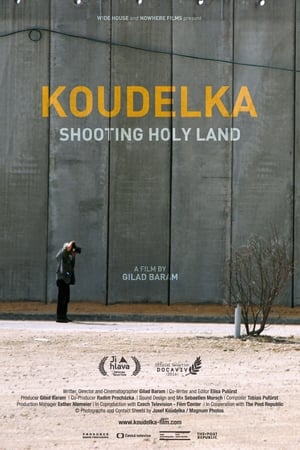
Czech Photographer Josef Koudelka grew up behind the Iron Curtain and always wanted to know "what was on the other side". Forty years after capturing the iconic images of the Soviet invasion of Prague in 1968, the legendary Magnum photographer arrives in Israel and Palestine. On first seeing the nine-meter-high wall built by Israel in the West Bank, Koudelka is deeply shaken and embarks on a four-year project in the region which will confront him once again with the harsh reality of violence and conflict. Director Gilad Baram, Koudelka's assistant at the time, follows him on his journey through the Holy Land from one enigmatic and visually spectacular location to another.
Existir es resistir
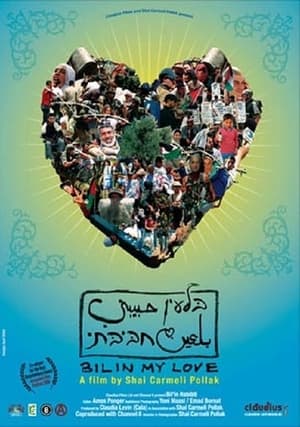
The Israeli filmmaker Shai Corneli Polak records the building of the 'security wall' through Palestinian territory at the village of Bil'in. The villagers protest mostly peacefully, while the Israeli army doesn't react peacefully. By now the Israeli High Court has ruled that the building of the wall was illegal.
An inside look at the Palestinian intifada which began in late 1987. Filmed in Jerusalem, the West Bank, and Gaza, this documentary reveals the horrors of Palestinians living under Israeli occupation.
“A land without a people, and a people without a land” is how the relationship between Palestine and the Jewish people was described by Christian writers in the 1800s. And the 20th-century history of the Middle East has largely been written through these eyes. But this film from Al Jazeera Arabic looks at Palestine from a different angle. It hears from historians and witness accounts, and features archive documents that show Palestine as a thriving province of Greater Syria and the Ottoman Empire at the dawn of the 20th century. The evidence suggests that its cities had a developing trade and commercial sector, growing infrastructure, and embryonic culture that would enable it to meet the challenges of the decades ahead. This film is the other side of the Palestinian story.
In the fall of 2002, it was announced that Benjamin Netanyahu would deliver a speech at Concordia University in Montreal, and reaction from the student body was swift and sudden.
Al Jazeera investigates the shocking truth behind a deadly Israeli attack on a US naval vessel during the 1967 Arab-Israeli Six-Day War. The unprovoked action against the surveillance vessel USS Liberty, in which 34 were killed and 171 wounded, is recounted by those who were there and those who investigated it. Was it a case of mistaken identity?
A documentary by Dror Dayan and Susann Witt-Stahl, Germany 2021
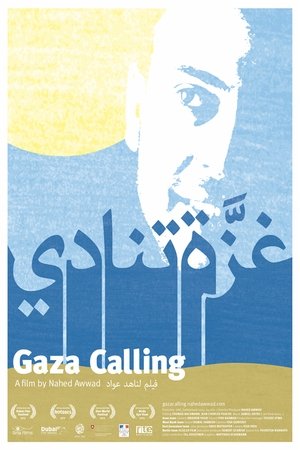
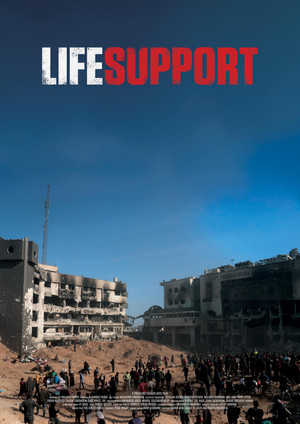
A feature-length documentary film by Carol Mansour and Muna Khalidi. After 43 horrific days working round the clock under constant bombardment in the emergency rooms of Gaza’s Al Shifa and Al Ahli hospitals, British-Palestinian reconstructive surgeon, Dr. Ghassan Abu Sittah, emerged to find himself as a face of Palestinian resistance.
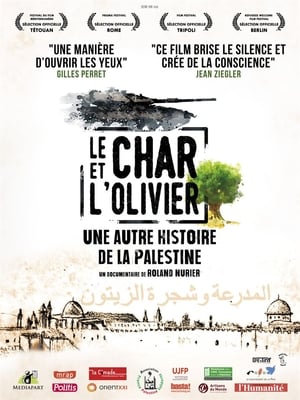
The Tank and The Olive Tree recalls a certain number of forgotten fundamentals and sheds new light on the history of Palestine. By combining geopolitical analysis, interviews with international personalities who are experts on the subject and testimonies from Palestinian and French citizens, this documentary offers the keys to understanding what the media call the Israeli-Palestinian conflict. Enough to rid people's minds of clichés and prejudices! If The Chariot and the Olivier is intended to be educational, it speaks above all of a magnificent territory, and of a people who constantly affirm that “to live is already to resist”...
Some 40 years after setting foot in Israel for the first time, journalist Pierre Nadeau felt the desire to return there to take stock of the Israeli-Palestinian conflict.
Director Yigal Bursztyn’s made-for-TV road movie takes viewers on a contemporary journey in which he traces the gospel and teachings of Jewish philosopher, Maimonides (aka the Rambam). Burszstyn goes from the Spanish city of Cordoba to Fes in Morocco, then onwards to Egypt and finally, Israel. In the course of this physical, geographical journey, Bursztyn also does a deep dive into Maimonides’s 12th century canonical work, The Guide for the Perplexed, which he uses as a tool to interpret present-day events and the conflicts between faith and rationale, and between religion, culture, and gender.