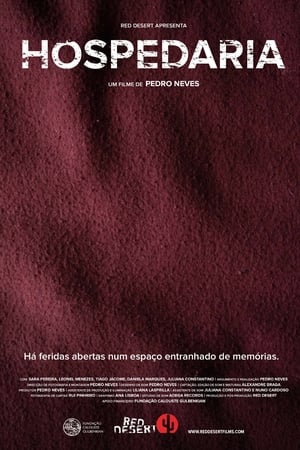
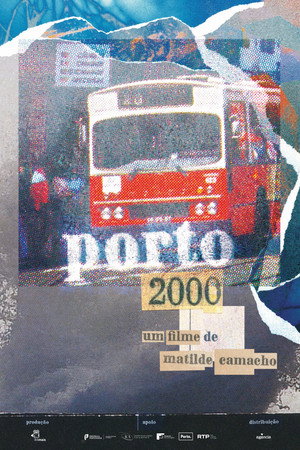
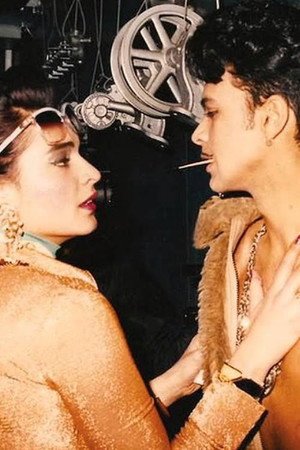
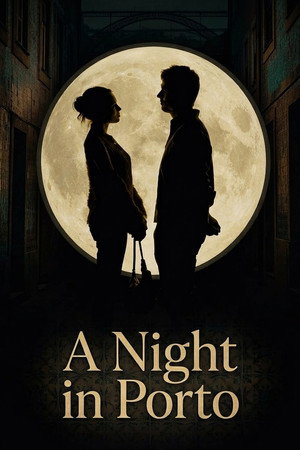
An old hostel, located in the center of Porto, served for many years as a hostel for people with few possessions, prostitutes and people passing through who made that place a more or less prolonged residence.
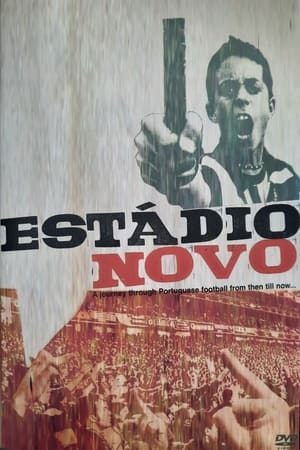
"Estadio Novo is about Portugal, its football and its fans. As hordes of supporters descend on the ten brand new stadiums for Euro 2004, this lively and informative documentary takes a look at their impact. Examining the role of football in Portugal before and the revolution of 1974 it asks... what's really going on?"
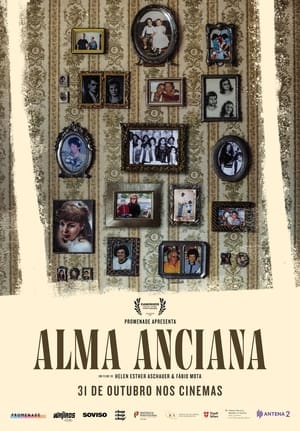
Three juxtaposing stories taking place in Portugal, Austria and Cuba create an intimate and poetic portrait of the daily lives and struggles of the elderly in an unstable world, seen through the eyes of their grandchildren.
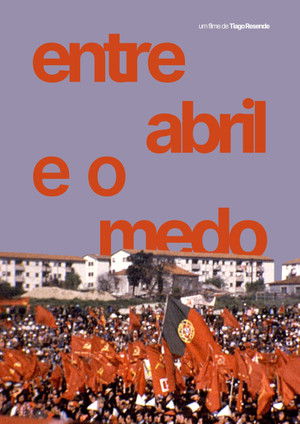
Entre Abril e o Medo
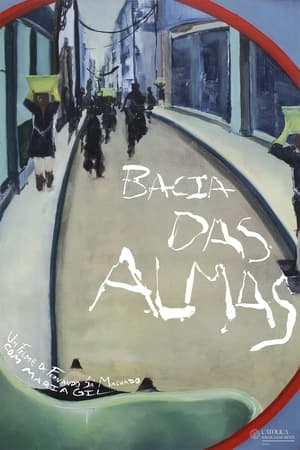
Rua de Santa Catarina, a street that was formerly home to dozens of local businesses and hundreds of Porto residents, now sees a crowd of tourists attracted by the cheap, disposable amenities that are popping up everywhere at once. Gentrification has decontextualized Portuguese culture, rendering the landscape uncanny. The Basin Woman, a symbol of the female workers of the historic Bolhão Market, is chased down by seagulls in the midst of this transcendent chaos.
Deus me livre te amar
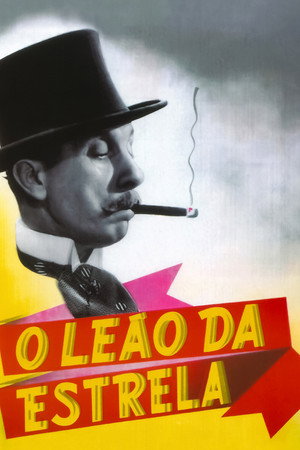
Anastácio lives in Lisbon and is fanatic for Sporting CP, one of the city's football teams. When the team travels to face Porto, he follows it with the family, staying in house of his friend, Mr. Barata, pretending to be rich.
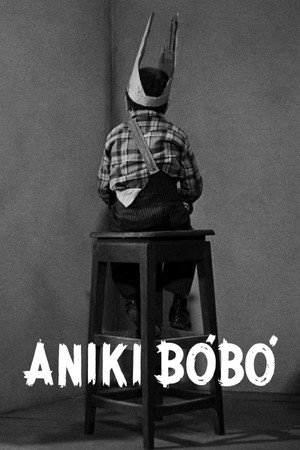
Two schoolboys, Carlitos and Eduardo, fight for the affection of a girl, Teresinha.
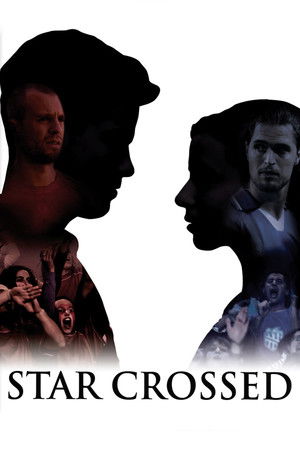
Follows the fictional rivalry between two of Portugal's most prominent football teams - Invicta e Castelo and how their mutual disdain has spread further than the pitch.
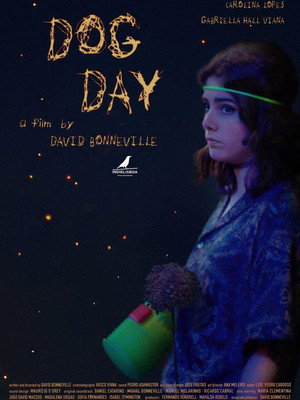
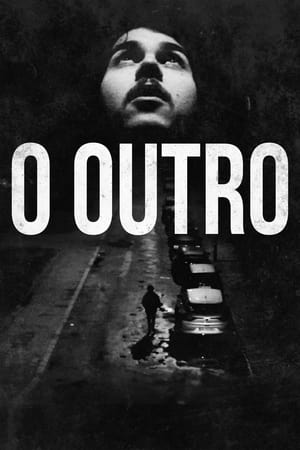
On the outskirts, residents feel marginalized from society, as if they had no identity, and this is reflected in the surrounding buildings, anonymous in their neglect. The first character is one of these residents, who, while wandering around the city, finds a wallet lying on the ground. The moral duty to return the wallet conflicts with the vision of a new future, far from the shadow of the suburbs, through the assumption of a new identity.
1907. The Porto Chamber has just been won by the Republicans, in full monarchy, three years away from the revolution. Republican ideas are taking hold and monarchical institutions are beginning to be shaken. However, the Sociedade Gastronómica de Lisboa resists and apparently is one of the strongest bastions of the monarchy. But winds of change blow within the walls of the traditional and conservative Society. A young member, Dr. Duarte Rodrigues, decides to run for president, held by the mysterious Prositt, who made his fortune in Africa. Duarte, stating that he does not want to betray the illustrious president, but as he is somewhat worn out and hopelessly dazzled by the leadership, he is able to artfully convince others to convince him, Duarte, to move forward, serving them for this. , in a dinner of taking power, a dish of unexpected excellence and very original.
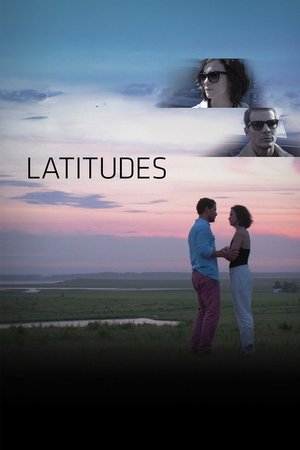
Olívia, a fashion executive, and José, a photographer, gets together in Paris, having casual sex and talking a little about relationships. And, in some days, they meet again in another city. And another one. And another... Latitudes is a trip around the world, the love and the poem of living.
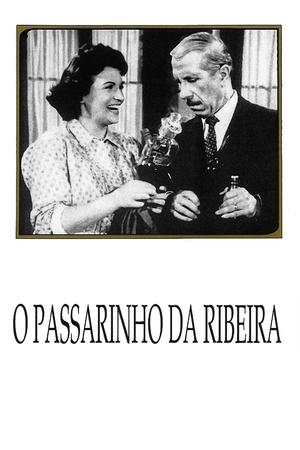
Popular in the riverside area of Porto, Micas raised her daughter, Madalena, at the cost of sacrifice, as her father emigrated to Brazil. With a happy voice, Madalena works on unloading the coal, seeing her loves thwarted by her humble condition. Barata, another typical figure who makes a living from expedients, helps Madalena's father - meanwhile returned, to "register" her - in a kidnapping plan capable of facilitating her reconciliation with Micas, who is reluctant... Things get complicated, but happiness ends up triumphing.
Maria spends her daytime sewing and cleaning, while at night she works as a prostitute in Oporto's streets. Years ago her path crossed with José, a married man who became her most faithful client but who couldn't help her to escape the hard life. Today this old prostitute continues showing off her body through the long city's nights, though the clients are almost gone. José is still there, but he failed at what she desired the most: a son. In a very intimate and raw portray of a woman, MARIA disclosures how love and getting older can feels like.
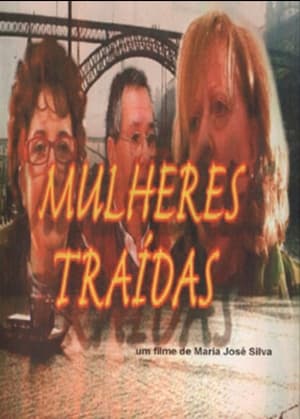
Two married people fall in love and everything else breaks apart. A infidelities story told in a female voice.
Os Azeitonas ao Vivo no Coliseu do Porto
An exploration of the daily life, streets, and interiors of Santa Iria de Azóia, the Lisbon suburb where the director was born and raised.
In 1988 it was exactly one hundred years ago that the Nicaraguan writer Ruben Dario published his first work. Azul was the first publication of modern poetry in the Spanish language. Legiarda-Laura has given the same title to his film, because he wanted to show the Nicaraguan poetic inheritance. 24 poems are read, interspersed with interviews and discussions. Thus, the cultural soul of Nicaragua is mapped out.
Lydia - filmed in the late 1970s and written down in diary sketches in 1992, the movie tells the story of the lives of Lydia and Wolfgang B. over two decades. She, translator of French literature, he, Romance studies professor. Between life crisis and "joie de vivre", full of passion and disciplined work, driven by convictions and doubts and the fear of a fatal second tumor, their film recordings and Wolfgang's diary texts fragmentary report about the beauty and the adversity of a symbiotic marriage and yet at the same time about a whole life.
A wide-ranging, definitive look at Hawk’s life and iconic career, and his relationship with the sport with which he’s been synonymous for decades, featuring unprecedented access, never-before-seen footage, and interviews with Hawk and prominent figures in the sport including Stacy Peralta, Rodney Mullen, Mike McGill, Lance Mountain, Steve Caballero, Neil Blender, Andy MacDonald, Duane Peters, Sean Mortimer, and Christian Hosoi.