A day in the city of Berlin, which experienced an industrial boom in the 1920s, and still provides an insight into the living and working conditions at that time. Germany had just recovered a little from the worst consequences of the First World War, the great economic crisis was still a few years away and Hitler was not yet an issue at the time.
An anthology of one-minute films created by 51 international filmmakers on the theme of the death of cinema. Intended as an ode to 35mm, the film was screened one time only on a purpose-built 20x12 meter public cinema screen in the Port of Tallinn, Estonia, on 22 December 2011. A special projector was constructed for the event which allowed the actual filmstrip to be burnt at the same time as the film was shown.
In the 1920s, Man Ray directed four films which, although largely unknown by the general public, made him into a major figure in avant-garde cinema. His films were to be as radical as his images or objects. Included: Le Retour à la Raison, Les Mystères du Château du Dé, Emak-Bakia, L'étoile de Mer and collected shorts.
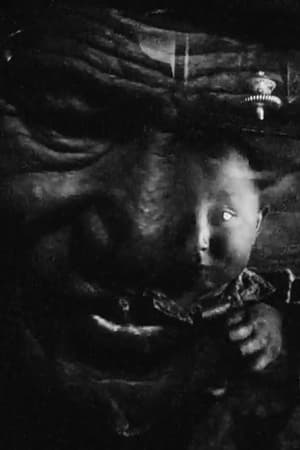
In 17th-century Tuscany, a church play is performed for the benefit of young aristocrat Cosimo. In the play, a grotesque old woman gives birth to a beautiful baby boy. The child's older sister is quick to exploit the situation, selling blessings from the baby, and even claiming she's the true mother by virgin birth. However, when she attempts to seduce the bishop's son, the Church exacts a terrible revenge.
The Alchemist assembles together a group of people from all walks of life to represent the planets in the solar system. The occult adept's intention is to put his recruits through strange mystical rites and divest them of their worldly baggage before embarking on a trip to Lotus Island. There they ascend the Holy Mountain to displace the immortal gods who secretly rule the universe.
Five lonesome cowboys get all hot and bothered at home on the range after confronting Ramona Alvarez and her nurse.
A young bride flees the ceremony with a stranger and, together, they set off on an epic journey though increasingly bizarre lands. They encounter talking animals and mournful exhibitionists, converse with a discoursing rock, journey through a surrealist's psychedelic hotel, instigate a prison riot, escape from naked cannibals living in a tree, and battle a wind-up midget dictator!
CREMASTER 2 is rendered as a gothic Western that introduces conflict into the system. On the biological level it corresponds to the phase of fetal development during which sexual division begins. In Matthew Barney's abstraction of this process, the system resists partition and tries to remain in the state of equilibrium imagined in Cremaster 1.
CREMASTER 3 (2002) is set in New York City and narrates the construction of the Chrysler Building, which is in itself a character - host to inner, antagonistic forces at play for access to the process of (spiritual) transcendence. These factions find form in the struggle between Hiram Abiff or the Architect ...
Luz, a young cabdriver, drags herself into the brightly lit entrance of a run-down police station. A demonic entity follows her, determined to finally be close to the woman it loves.
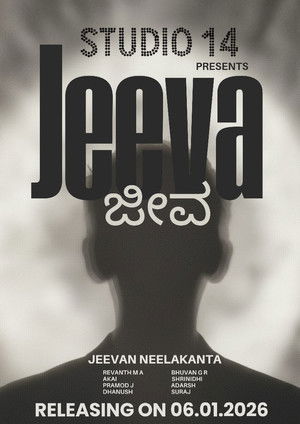
Two friends try to re-unite by going on a road-trip to the forests and mountains. Their attempt to reconcile does not go easy due to the secrets they hold, and a shocking revelation ends their journey.
For the first time I am animating hand-painted engraved cut-outs on a full-color background. The film is mood-filled: A duel scene in a snowy forest, obviously the morning after a masquerade ball. Harlequin lies dying, while Red Indian walks away with the wings of victory. The woman between them appears, cat-masked. The mask dissolves away. Her spirit passes into the face of the sun upon the sun upon the sun flower. But Harlequin cannot escape death. The blue world engulfs him.
Short experimental 16mm film.
Halloween, New York City, 1981 Live at The Palladium with Ray White, Steve Vai, Bobby Martin, Tommy Mars, Ed Mann, Scott Thunes, Chad Wackerman
Global Groove was a collaborative piece by Nam June Paik and John Godfrey. Paik, amongst other artists who shared the same vision in the 1960s, saw the potential in the television beyond it being a one-sided medium to present programs and commercials. Instead, he saw it more as a place to facilitate a free flow of information exchange. He wanted to strip away the limitations from copyright system and network restrictions and bring in a new TV culture where information could be accessed inexpensively and conveniently. The full length of the piece ran 28 minutes and was first broadcasted in January 30, 1974 on WNET.
Filmed in 2003 while staying in a Brooklyn Heights apartment, the work centers on a small Greek statue revealed in shifting morning and afternoon light. Beavers weaves these images with views of the East River and Manhattan Bridge, later completing the film in 2010 as a meditative elegy for his friend Jacques Dehornois.
A collection of interwoven images are threaded together by a string of unspecified women who roam their dreamscape which they are unable to escape. They are displaced, belonging to no particular point in time or place, and a disoriented sense of self pervades. Together, the film becomes a quietly throbbing organism of reality and unreality, and the gaps between an impending present and a perpetual past are frail.
Presenting a woman, a female statue, a breathing tree, and a fish out of water, an unorthodox love story unfolds with the growth of limbs and expressive gestures. Accompanied by desire discovered and lost, erotic femininity disfigured in a domestic space, and physical forms fragmented, two women steep in their reticent intimacy.
A study of ruins of a fortified castle placed in the village of Seyssuel during two days of shooting and understanding of the moving light
Described as 'a fairytale with its roots in the worlds of dadaism and surrealism'.