Made refugees by the war in Ukraine, Olga and her granddaughter Milana travel to a summer camp in the Austrian Alps to test the limits of their own bravery, and to strengthen their growing bond.
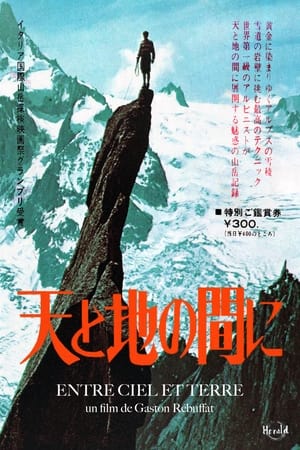
This is Gaston Rebuffat's fourth film, in which, with several close friends, he discovers the sublime landscapes of the Alps. “Mont-Blanc is beautiful. I climbed it several times depending on the time, the color of the sky and the shape of the cornices and ridges. Because of the weather and also because of this feeling of altitude, Mont-Blanc provides great pleasure. For the guide, Mont Blanc is his garden, but the garden becomes more beautiful when shown to a friend. Personally, I really like the bivouacs; only there one penetrates a little the mystery of the altitude. That's why I immediately accepted when Tazieff expressed the desire to spend the night at the top of Mont Blanc in an igloo. The film won the Grand Prix at the Trento Film Festival in 1961.
PURE is 19 extraordinary climbers in six countries on three continents; Nalle Hukkataival: This young climber from Finland spent his time on the World Cup circuit and now focuses on climbing some of the toughest rocks on the planet. Kevin Jorgeson: Exclusive footage of his first solo ascents in California. A unique perspective on the mental control needed to solo and the re-education needed when making a mistake. Kilian Fischhuber: Winner of the 2008 Men's Bouldering World Cup. Anna Stoehr: Aged 20, she won the 2008 Women's Bouldering World Cup. Fred Nicole: The legend of bouldering, author of achievements in hardest boulders in the world. The leader and grandmaster of the sport. Cody Roth: Enthusiastic about climbing just about anything, he achieves breathtaking first ascents here from Rocklands to Europe.
The Alps – wild mountains, extreme lives, but also a magical world. This majestic mountain range connects eight countries and reaches heights of up to 4,000 metres above sea level. At a length of 1,200 kilometres, the Alps form both a connecting bridge between western and eastern Europe and a high barrier between southern and central Europe. The mountains act as a mighty water reservoir and continental watershed, feeding innumerable rivers that flow into three different oceans. Their highest peak, Mont Blanc, is surrounded by long, soaring mountains with ice-covered slopes. These great summits are just one reason the so-called “Roof of Europe” continues to fascinate – across the continent and around the world. The incredible diversity of landscapes, flora and fauna makes the Alps a unique natural treasure at the heart of Europe.
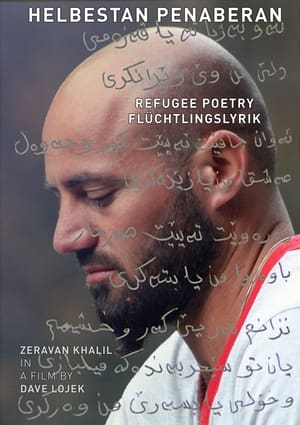
The Kurdish Iraqi poet and actor Zeravan Khalil travels with his dog through an Alpine gorge after fleeing from IS war and genocide. As he remembers the abomination, he writes a poem with the title “You drive me mad” in Kurmanji Kurdish. In his home country, Yazidic Kurds are forbidden to work in his profession. Then he eats his apple and wanders through Europe’s middle with more hope.
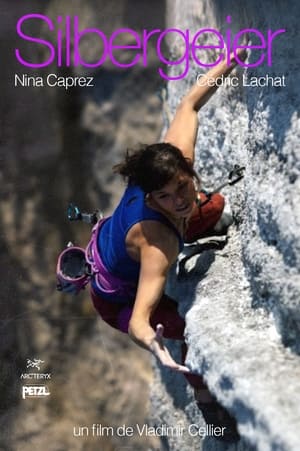
Silbergeier is a long pitch route (8b+ max) built by Pietro del Pra in 1993 and organized by Beat Kammerlander. In this film, Nina Caprez achieves the first female ascent with her then partner Cédric Lachat. A beautiful production by Vladimir Cellier, carried by essential music.
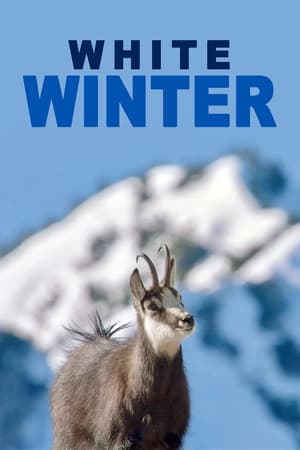
In southern Germany, winter can still be admired in all its glory every year. With its white coat of snow and icicles and myriads of small crystals that look like geometric works of art. In the valleys and on the slopes the snow is still so thick every year that the alpine huts are snowed in up to the windows. Cows and dairymen are safe in their farms at lower altitudes. But not the wild creatures of the mountains! They need strategies to survive the cold season and to defy snow masses, cold and ice. And some seem to do it so easily that they even raise their young in the middle of winter. But how do animals, plants and fungi cope with the annually recurring ice age, which from our perspective is a time of need? The many adaptations in nature prove that winter is an integral part of the natural cycle of the year and the living environment of species. They are adapted to cold and frost. That is why the animals and plants at the edge of the Alps suffer particularly from climate change!
On september 28th, 1903, the Urban Mountaineering Expedition, headed by Frank Ormiston-Smith, left Zermatt to attempt the conquest of the Matterhorn. On the 29th, the conquest was completed by the filming of the panorama from the actual summit of the mountain. The film consists of 20 scenes and illustrates the whole ascent from Zermatt through the Hornli Ridge. A copy of the film was found in Zermatt in 1953 and was was erroneously attributed to Frederick Burlingham and dated 1901. Since then, the film has been widely publicized as the first mountain film under the title of 'Cervino 1901', but this is incorrect.
The most important mountain range in Europe is more than a holiday destination for sports and relaxation. The Alps are not just an unpredictable force of nature against which humans have to assert themselves again and again, or an area steeped in history, but also a landscape that enchants. The documentary takes a foray through the history and geography of the Alps.
Born in 1944 in South Tyrol, Reinhold Messner was introduced to climbing peaks by his father as a child. He has since climbed the fourteen mountains of the world culminating at more than 8,000 meters, and notably has to his credit the first ascent of Everest alone and without oxygen in 1980. This portrait is made up of the story given by mountaineer of his journey as well as testimonies from his loved ones and traveling companions. The interviews are interspersed with reconstructed scenes and extracts from archive films recounting his exploits. But there is no question here of becoming hagiographic, because Messner also draws his strength from his failures. When he's not climbing or roaming the desert, this troublemaker devotes his energy to various causes. In his Juval castle, located in his native South Tyrol, he exhibits the equipment of his expeditions as well as various objects, notably Tibetan. He has also written around fifty works to date.
A fascinating chronology of 100 years of mountain film history in the Alps. This documentary focuses primarily on films shot on the Matterhorn, the Eiger, and the Grandes Jorasses, considered until the 1930s as the "last problems of the Alps," and shows the evolution of mountain filmmaking through numerous excerpts from documentaries and feature films – notably on the Matterhorn in 1901. The genre, appropriated as a means of mass exaltation by "fascist" regimes during the Second World War, was reinvented in the 1950s by Gaston Rebuffat, Marcel Ichac, and Lionel Terray in the Mont Blanc massif, avant-garde figures of French mountain cinema, who reintroduced, beyond performance, the values of the mountains – and in color – poetry, humor, and sharing among people from all walks of life.
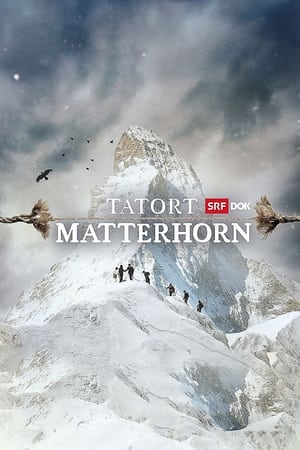
The first ascent of the Matterhorn was made on July 14, 1865 by Edward Whymper, Francis Douglas, Charles Hudson, Douglas Hadow, Michel Croz and two guides from Zermatt, Peter Taugwalder father and son. Douglas, Hudson, Hadow and Croz are killed on the descent after Hadow slips and drags the other three men down the north face. Whymper and the two Taugwalders, who survive, are later accused of having cut the rope that connected them to the rest of the group so as not to be dragged into the fall, but the ensuing investigation finds no evidence of their guilt and they are acquitted. The Matterhorn is the last great peak in the Alps to be conquered and its ascent marks the end of the golden age of mountaineering. One hundred and fifty years later, a team undertakes the same expedition in order to unravel the mystery.
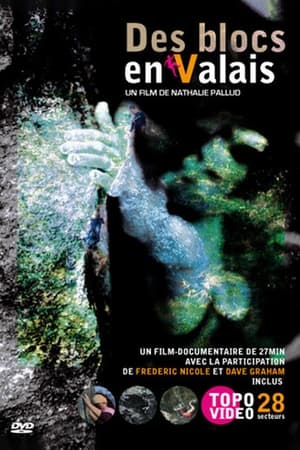
Boulders in Valais presents the canton of Valais in Switzerland, its bouldering climbing spots and some of its historical and current actors and driving forces including Lucien Abbet, Benoît Dorsaz, Fred Nicole, Dave Graham... Frédéric and François Nicole gives us spectacular demonstrations of this sport, showing us routes like "Radja", the world's first 8b+. A topo-video part contains 28 climbing sites with a geographical map, and more than 160 video sequences for as many chosen blocks... more than 2h30 of climbing.
Mont Blanc, the highest peak in the Alps, rises to 4,810 m and was first climbed on August 8, 1786. Chamonix natives Jacques Balmat and Michel Paccard set out on the afternoon of August 7 and returned victorious on the morning of the 9th, after two nights spent outdoors. This film is a staging that reconstructs this great event with all the problems it created and resolved, thus contributing to the emergence of the modern concept of mountaineering. Denis Ducroz, guide and filmmaker, immerses us in the minds and times of these two men, 224 years later.
On | Solace – Running the Alps in 30 days – Karel Sabbe's Via Alpina FKT In the summer of 2021, ultrarunner Karel Sabbe ran the Via Alpina trail in just 30 days. Averaging two marathons on a daily basis, he navigated the route 14 days faster than anybody else. As well as the Alps, Karel overcame sleep deprivation, illness and extreme weather. And he did it all with a camera crew in tow, documenting every step.
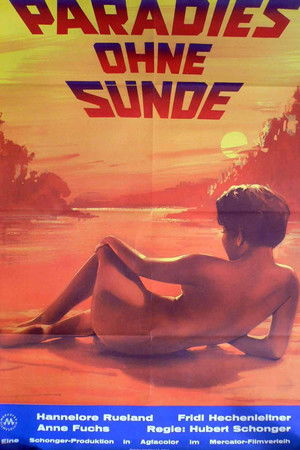
Documentary about the plants, animals and nude women of the alps.
The Tyrolean David Lama has climbed an 8a route already at the age of ten, and he has become several times Youth World Champion and European Youth Champion in bouldering and lead climbing. In 2010, at the age of 20 years, David decided to leave the indoor climbing and competition world behind him. Since then, he is focusing on Alpinism, the most difficult routes and first ascents in the Alps, but as well in India and America. This documentary portrays David Lama from his first climbing attempts as a little boy to his big adventures in present time. We see famous locations, such as the climbing paradise on Lake Garda, the notorious Sagwand Face in the Zillertal Alps, and the 7.821m high Masherbrum in the Karakorum with its still untouched north east face.
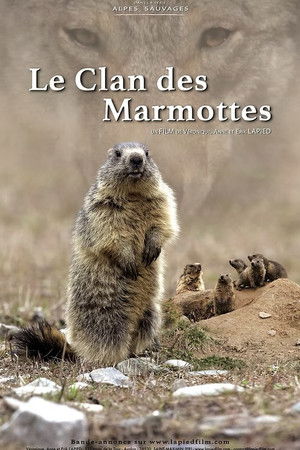
A wildlife documentary about marmot.
The first filmed winter ascent of the north face of the Matterhorn. To set the scene, the tragic story of Edward Whymper's first ascent is skillfully pieced together. The modern expedition, a team of three British climbers, is also plagued with epics: Eric Jones is hit by an avalanche and can only come to a dangerous stop at the edge of a 1000 foot drop. Then the worst storm ever recorded in Zermatt hits the Matterhorn. With time and weather against them, the team is forced to climb in the dark as thunderstorms rumble around them. This adventure captures the skill and courage of the climbers, their agony and tension, and the beauty of the assault on this spectacular mountain. Grand Prize at the Les Diablerets festival (Switzerland) in 1976.
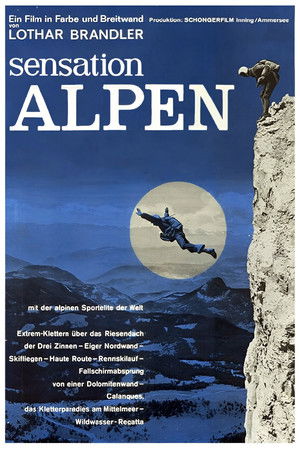
From Trento to Chamonix, via Zermatt; from the Morgiou cove to the Eiger's north face; from Planica to the Lavaredo peaks, the Alps are depicted, illustrated, and magnified in all their unique and sublime beauty, through the sports practiced there and the most typical customs and traditions of their inhabitants. A helicopter rescue and a parachute jump from the Red Wall by Wolfgang Weizenbocks are experiences not to be missed.