Filmmaker Alain Resnais documents the atrocities behind the walls of Hitler's concentration camps.
Montage of still photos with lighting effects.
The 1939 dramatic short "Angel of Mercy," about Red Cross founder Clara Barton, is reedited to relate the story to America's involvement in World War II. Edited from Angel of Mercy (1939)
A damsel in distress agrees to run away with her wealthy lover in order to escape from her abusive husband. But all is not as it seems in this 1940s film noir.
Working men and women leave through the main gate of the Lumière factory in Lyon, France. Filmed on 22 March 1895, it is often referred to as the first real motion picture ever made, although Louis Le Prince's 1888 Roundhay Garden Scene pre-dated it by seven years. Three separate versions of this film exist, which differ from one another in numerous ways. The first version features a carriage drawn by one horse, while in the second version the carriage is drawn by two horses, and there is no carriage at all in the third version. The clothing style is also different between the three versions, demonstrating the different seasons in which each was filmed. This film was made in the 35 mm format with an aspect ratio of 1.33:1, and at a speed of 16 frames per second. At that rate, the 17 meters of film length provided a duration of 46 seconds, holding a total of 800 frames.
Professor Barbenfouillis and five of his colleagues from the Academy of Astronomy travel to the Moon aboard a rocket propelled by a giant cannon. Once on the lunar surface, the bold explorers face the many perils hidden in the caves of the mysterious planet.
Les gens du Nord
Kyoto, a thousand years ago. Tokimasa, who unexpectedly visits the house of a woman he abandoned long ago, witnesses the woman's corpse, which remains uncorrupted, and an eerie light lingering in the air. Fearing the curse of the woman who died harboring resentment towards him, Tokimasa seeks out the Onmyoji (exorcist) Kamo no Tadayuki... This is a ghost story anime depicting a beautiful tragic love story of the Heian period, based on a story from the Konjaku Monogatari (Tales of Times Now Past).
"In 1904, disgusted by the aftermath of the Spanish-American War and the subsequent Philippine-American War, Mark Twain wrote a short anti-war prose poem called "The War Prayer." His family begged him not to publish it, his friends advised him to bury it, and his publisher rejected it, thinking it too inflammatory for the times. Twain agreed, but instructed that it be published after his death, saying famously: None but the dead are permitted to tell the truth."
A seventeen year old girl who has lived all her life on an island off the coast of Ireland is faced with the choice to remain there or emigrate to America.
Chris Marker and François Reichenbach document the massive anti–Vietnam War protest held in Washington, D.C., on October 21, 1967, where more than 100,000 demonstrators gathered at the Lincoln Memorial before marching on the Pentagon. Filmed amid the crowd, the short captures the tension, idealism, and growing radicalism of the American peace movement.
The Kabul National Museum, once known as the "face of Afghanistan," was destroyed in 1993. We filmed the most important cultural treasures of the still-intact museum in 1988: ancient Greco-Roman art and antiquitied of Hellenistic civilization, as well as Buddhist sculpture that was said to have mythology--the art of Gandhara, Bamiyan, and Shotorak among them. After the fall of the Democratic Republic of Afghanistan in 1992, some seventy percent of the contents of the museum was destroyed, stolen, or smuggled overseas to Japan and other countries. The movement to return these items is also touched upon. The footage in this video represents that only film documentation of the Kabul Museum ever made.
La Malédiction de la Grande Arche
Spain, 1953. Pedro Zaragoza, mayor of the city of Benidorm, in the province of Alicante, by the Mediterranean Sea, visits the Palacio del Pardo, General Franco's residence in Madrid, to ask him for help, in the hope of solving a very delicate problem.
The Fascinating History of Rumney & Llanrumney. This video sets out to trace the story of Tredelerch (Rumney) and Llanrumney from around 60AD when the Romans arrived and set up camp, to the present day where it is a busy suburb of the capital city of Caerdydd (Cardiff).
During WW2 a boy tries to save himself and his baby sister from a German soldier.
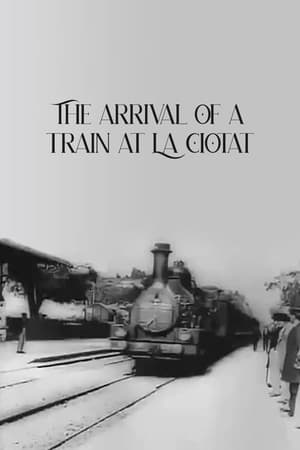
A group of people are standing along the platform of a railway station in La Ciotat, waiting for a train. One is seen coming, at some distance, and eventually stops at the platform. Doors of the railway-cars open and attendants help passengers off and on. Popular legend has it that, when this film was shown, the first-night audience fled the café in terror, fearing being run over by the "approaching" train. This legend has since been identified as promotional embellishment, though there is evidence to suggest that people were astounded at the capabilities of the Lumières' cinématographe.
Sur les pas de Marie
A disturbing chapter in Russian history is explored in this documentary. In 1933, Joseph Stalin sent 6000 "unwanted" citizens of Moscow and Leningrad to a desolate Siberian island - with no food or clothes to speak of. Decades later this documentary returns to the island.
During the Swedish invasion of Poland, the brave warrior Andrzej Kmicic, considered a traitor to the nation, fights for a country, redemption and love across the 17th-century Polish territories.