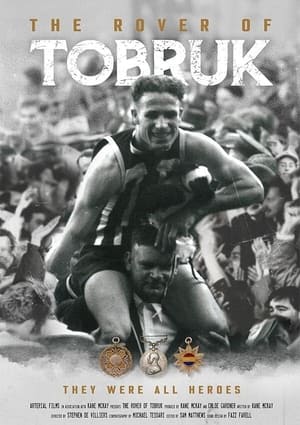
A documentary written by Kane McKay, a returned military serviceman, about Bob Quinn, a recipient of the Military Medal for his heroic actions in World War II in Tobruk, 1941, and also champion player for a number of years at the Port Adelaide Football Club.
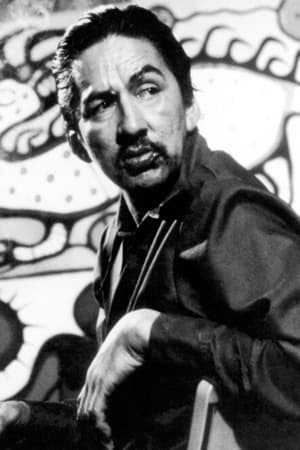
In this revealing study of Norval Morrisseau, filmed as he works among the lakes and woodlands of his ancestors, we see a remarkable Indigenous artist who emerged from a life of obscurity in the North American bush to become one of Canada's most renowned painters. Morrisseau the man is much like his paintings: vital and passionate, torn between his Ojibway heritage and the influences of the white man's world.
A young boy learns about his heart through the step-by-step construction of a simple circulatory system. He learns how his heart pumps, what blood and blood vessels do, how they do it, and some of the ways to help his heart stay healthy.
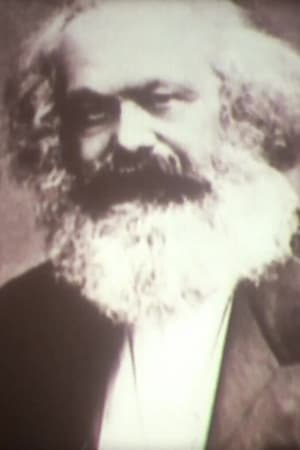
The first part of the film shows parallels between Christianity and Marxism. The second part describes the influence of both the Judeo-Christian background and that of other religious critics on Marx's position as a critic of religion. Beyond the well-known facts, this documentary not only analyzes the historical background of Karl Marx's life and work, but also deals in particular with his personal relationship to Christianity.
Filmmaker Evan W. Gerdes challenged himself to shoot and edit a short film in less than ten minutes, and chose to document the movements of a small cricket across the floor of a cafeteria.
1
Les sentiers culturels
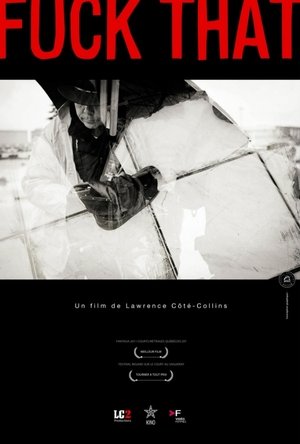
Fuck That
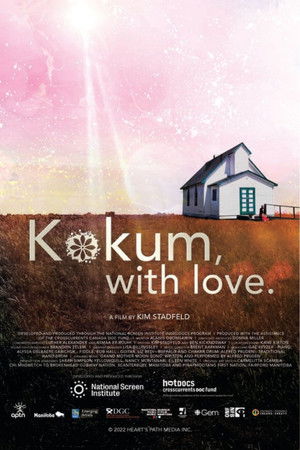
Flora Bear’s youngest granddaughter searches for truth and answers about her Indigenous grandmother’s life.
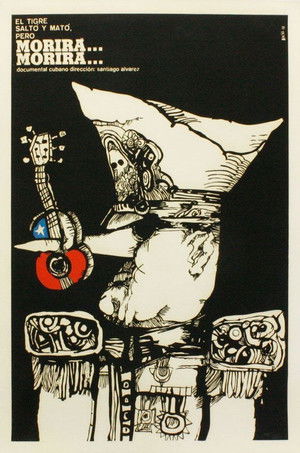
An obituary for Victor Jara, the Chilean folksinger who was murdered in a football stadium by the military junta during the days of the September 1973 coup.
Florence is a contemplative study of light and shadows, textures and planes, that makes beautiful use of the tonal qualities of black and white film. (mubi.com)
Controversial cinéma vérité analysis of Havana’s lumpenproletariat in waterfront bars and cafés shortly after the failed Bay of Pigs invasion.
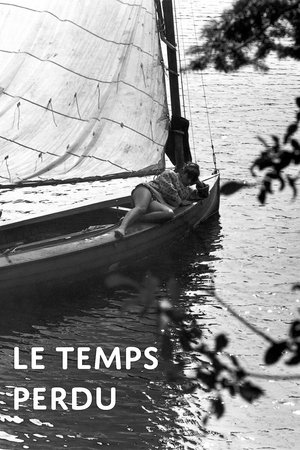
A 16 year old girl recalls the last moments of her summer vacation, spent with friends in the Laurentians north of Montreal. She reminisces about their talks on life, death, love, and God. Shot in direct cinema style, working from a script that left room for the teenagers to improvise and express their own thoughts, the film sought to capture the immediacy of the youths presence their bodies, their language, their environment.
Step back into the imaginative and frankly terrifying world of Becky & Joe with Don’t Hug Me I’m Scared. In this episode: Some things change over Time.
A contemplative, seemingly timeless record of the years Hutton spent in Southeast Asia while working as a merchant seaman. Jon Jost writes, "The film is rich with truly wonderful visions: a thick, white porcelain cup perched on a ship's rail, the tea within swaying gently in sync with the ship while the sea rushes by beyond the faces of crewmen posing awkwardly but also movingly for the camera; a cockfight on ship; scenes from a bucolic pre–Pol Pot Phnom Penh. Images has the haunting elegiac resonance of Eugène Atget's Paris, the echo of a time and place that was." - MoMA
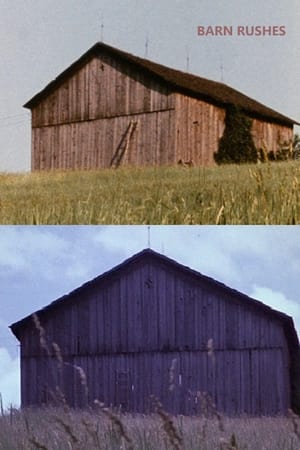
"…elegant yet rustic in its simplicity of execution; tugged gently toward different sides of the set by hints of color and motion interactions, positive and negative spaces, etc., and the unyielding delivery on one of the great apotheoses of poetic cinema at fade-out time." – Tony Conrad
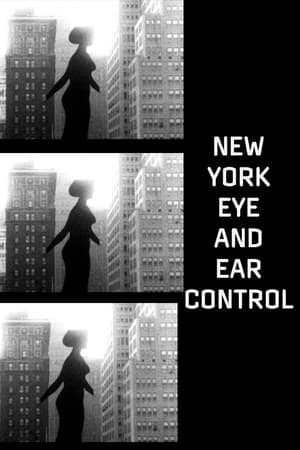
A cutout of a woman's silhouette is displayed in many locations while a free jazz soundtrack is heard. The jazz musicians later pose for the camera in a studio.
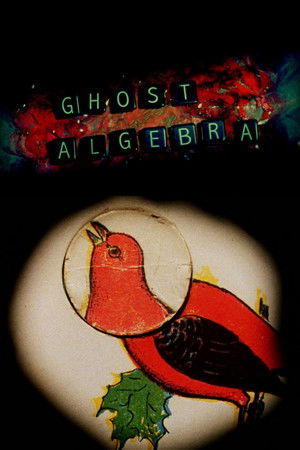
Janie Geiser takes us along on her search for the original meaning of the word 'algebra' with the help of a remarkable series of found objects, medical illustrations and a rich variety of animation techniques.
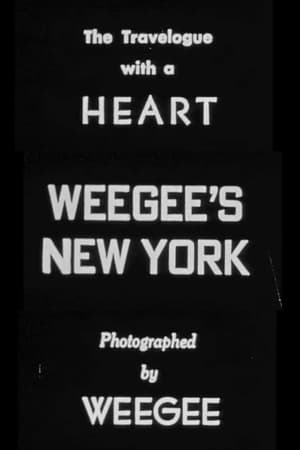
The best known, "Weegee's New York" (1948), presents a surprisingly lyrical view of the city without a hint of crime or murder. Already this film gives evidence, here very restrained, of Weegee's interest in technical tricks: blur, speeded up or slowed-down film, a lens that makes the city's streets curve as if cars are driving over a rainbow. - The New York Times
Mourning the death of his partner and collaborator Danièle Huillet, Straub finds tender mercy in music and nature. Out of the abyss, Kathleen Ferrier sings “The Farewell” from Gustav Mahler’s “The Song of the Earth”, (which the composer wrote in 1909 after the death of his daughter) and Heinrich Schütz’s Lament on the Death of His Wife. The landscape also provides solace: the mountain grove where Endymion pines for his beloved Artemis, “a wild thing, untouchable, mortal,” appears to embody the Japanese concept of ‘mono no aware’ — a wistful acceptance of the fleeting beauty of things.