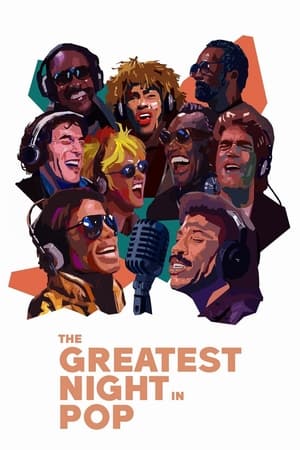
Bienvenue en…. Los Angeles! Film executive Kyle and filmmaker Arran rendez-vous for a tête à tête in this crème de la crème of Cinéma Verité.
Danielle Mitterrand, une certaine idée de la France
TGV, 30 ans de vitesse
October 2003, Alma and Lila Levy are excluded from the Lycée Henri Wallon in Aubervilliers solely because they were wearing a headscarf. What follows is a deafening political and media debate, justifying in most cases the exclusion of girls wearing head-scarves to school. February 2004, a law was eventually passed by the National Assembly. "A thinly veiled racism" is about this controversy since the affair of Creil in 1989 (where two schoolgirls were excluded for the same reasons) and attempts to "reveal" that maybe what hides behind is the desire to exclude these girls. This film gives them a voice as well as others - teachers, community activists, feminists, researchers - gathered around the group "A School for You-All" fighting for the repeal of this law they consider sexist and racist ... This movie was censured in Septembre 2004 in France.
Jean-Luc Mélenchon, l’homme qui avançait à contre-courant
In the mid-1980s, one team dominated the cycling headlines: La Vie Claire. Despite a ferocious internal power struggle between two of the sport’s biggest stars, they racked up more than 100 wins. Wearing their iconic Mondrian jersey, Bernard Hinault and Greg LeMond won two of the most infamous Tour de France victories of all time. Bankrolled by the controversial businessman, Bernard Tapie, La Vie Claire rewrote the rulebook on both bike racing and fashion. Dan Lloyd is joined by special guests Pippa York and William Fotheringham to discuss how the team turned a recipe for disaster into a period of complete dominance.
A family portrait in which the director profiles his grandmother, Odette Robert. Eustache includes in the film the conditions of its production — he is seated at the table with her, pours her some whiskey, speaks with the camera operator, manipulates the clapboard at the head and tail of the reels, and even takes a phone call. Robert, who was seventy-one, speaks rapidly and tells the story of her life, starting from her early childhood in villages in the Bordeaux region of France. A shorter version of the film ("Odette Robert") was edited in 1980 to be broadcast on television on TF1. The complete film only gained exposure in 2002, when it was salvaged by Boris Eustache, Thierry Lounas, João Bénard da Costa, Jean-Marie Straub, and Pedro Costa.
"Race d’Ep!" (which literally translates to "Breed of Faggots") was made by the “father of queer theory,” Guy Hocquenghem, in collaboration with radical queer filmmaker and provocateur Lionel Soukaz. The film traces the history of modern homosexuality through the twentieth century, from early sexology and the nudes of Baron von Gloeden to gay liberation and cruising on the streets of Paris. Influenced by the groundbreaking work of Michel Foucault on the history of sexuality and reflecting the revolutionary queer activism of its day, "Race d’Ep!" is a shockingly frank, sex-filled experimental documentary about gay culture emerging from the shadows.
TGV, la réussite française
Documentary showing one day of work of over 90 actors and filmmakers from French cinema on the same day. On 27 March 2002, 27 teams filmed actors, directors, producers and technicians at work, from Hawaii to Paris and from New York to Lisbon.
Homo Cinematographicus is a human species whose unit of measurement and point of reference is the cinema and its derivative, television. Filmed at the 1998 Cannes Film Festival, the film offers an unspecified number of statements, talking about memories and a thousand fragments of stories, titles and film scenes, the warp of a gigantic collective Chanson de geste.
An ambitious and wide-ranging documentary exploring Andre’s upbringing in France, his celebrated career in WWE, and his forays in the entertainment world.
The reality behind every child prodigy is nothing more than a child. When the creative and performative nature of children is in the hands of the grown-ups, it gets disciplined through a regime that aims only for praise and acclaim. This found footage documentary short reveals that behind all the applause, there is always just some kid.
Having left their home country for almost 20 years, a mother, her son and her daughter reminisce of their days in Armenia and reflect on how radically different their life is now. They also discuss the current political state of the country in the midst of an ongoing war.
Terre Adélie
Aptenodytes Forsteri
Images d'un été
A walk through the life and career of the legendary French photojournalist Christine Spengler, known as Moonface, one of the few female war reporters in the seventies, also a writer and surrealist painter, who worked in Chad, Northern Ireland, Vietnam, Cambodia, Afghanistan, Lebanon, Iran, Iraq and other places where unfortunately war and death prevailed for years.
There are places in the world that are forgotten by everyone, places where time seems to have stopped, where nature seems to have won the battle. These places are the playgrounds of modern-day adventurers called urbexers. They explore, discover, and photograph the most emblematic abandoned sites in France with a single leitmotif: to prevent them from falling into oblivion forever.
This documentary follows the French soccer team on their way to victory in the 1998 World Cup in France. Stéphane Meunier spent the whole time filming the players, the coach and some other important characters of this victory, giving us a very intimate and nice view of them, as if we were with them.