From the Los Angeles Times and Pulitzer Prize-finalist Rosanna Xia, OUT OF PLAIN SIGHT is a cinematic exposé of an environmental disaster lurking just off the coast of Southern California. Not far from Catalina Island, aboard one of the most-advanced research ships in the world, David Valentine discovered a corroded barrel on the seafloor that gave him chills. The full environmental horror sharpens into greater clarity once he calls Xia, who pieces together a shocking revelation: In the years after World War II, as many as half a million barrels of toxic waste had been quietly dumped into the ocean – and the consequences continue to haunt the world today.
Robert McChesney lays the blame for the US's current state of affairs squarely at the doors of the corporate boardrooms of big media, which far from delivering on their promises of more choice and more diversity, have organized a system characterized by a lack of competition, homogenization of opinion and formulaic programming.
Oil is a primary energy source in the world. Global oil consumption reached approximately 95 million barrels per day but oil fields' quality is constantly declining. A team of Russian scientists came up with more accurate, cheaper, and faster technology that can increase the oil production rate. After all, modern civilization is built in the way that 'to live well' means 'consume more oil'
The National Youth Theatre of Great Britain present an abridged version of Shakespeare's play, with explanatory links and introductions by Martin Jarvis. Following the presentation of the play, members of the company are shown in a workshop with actor-director Ron Daniels.
In this brand new featurette, directors Guillermo del Toro (The Devil's Backbone), Robert Rodriguez (From Dusk Till Dawn), and Frank Darabont (The Shawshank Redemption) explain what makes Night of the Living Dead a very special film and discuss its lasting impact on the horror genre. The featurette was produced exclusively for Criterion in 2017.
"Tetsudou" version of the series full of popular vehicles for children. Fifty kinds of trains selected from the railway active in Japan such as Shinkansen, SL (steam locomotive), limited express, etc. are recorded with powerful images. Introducing a nostalgic train that is not running now as a bonus picture.
A variety of scientific subjects, including the laboratory of a plastic surgeon in London, and his method for applying permanent makeup; a new school for kiddies employing finger paint so they can express their urge to put things on paper; Army aviation, showing the latest development in blind landing. Produced in Cinecolor.
Documentary short about the disastrous dangers of aging, ailing dams.
A behind-the-scenes journey into the creation and lasting legacy of Wishbone, the Emmy-winning PBS series that introduced a generation to classic literature through the adventures of a small dog with a big imagination.
Training film for shelter managers. Food, water, sanitation, medical, and radiation detection systems are explained.
The discovery of neuroplasticity, the fact that thoughts can change the structure and function of our brains, even into old age, is one of the most important breakthroughs in our understanding of the brain in recent times. In The Brain That Changes Itself, Dr Norman Doidge explores the profound implications of the changing brain in a way that will permanently alter the way we look at human possibility and human nature. The documentary examines a blind man who sinks a basketball; a woman with half a brain who leads a normal life; learning disorders, strokes and brain traumas that are improved and cured; and chronic pain that is alleviated. The vast expanse of the brain's possibility is still unrealized.
A scientific film essay, narrated by Phil Morrison. A set of pictures of two picnickers in a park, with the area of each frame one-tenth the size of the one before. Starting from a view of the entire known universe, the camera gradually zooms in until we are viewing the subatomic particles on a man's hand.
Intermittent fasting, autophagy, "metabolic switch": ten years after their first successful documentary on fasting, Sylvie Gilman and Thierry de Lestrade delve back into promising research on a booming practice.
Embark on a captivating journey that delves into the essence of Yucatecan Maya life in the 21st century. This feature-length documentary unfolds against the backdrop of Coba, the second largest Maya ceremonial center in the ancient world. From this archaeological marvel, the film ventures deep into the lush jungles and intimate villages, offering a poignant exploration of two indigenous families committed to preserving their rich heritage. At its core, Beyond the Ruins weaves a tapestry that illuminates the profound interconnectedness of existence, as mirrored in the ancient Maya philosophy of "in lak' ech, a lak' en" - where "I am you; you are me." The film not only resurrects a vibrant but often overlooked culture; it also invites viewers to contemplate the universal lessons embedded in Maya wisdom. Through this evocative lens, audiences discover not only a living legacy but also a source of inspiration to enhance their own quality of life.
A documentary produced in 1979 to celebrate the centenary of the birth of Albert Einstein. Narrated and hosted by Peter Ustinov and written by Nigel Calder.
The dangers of LSD are driven home to teenagers in this classroom training film, which is "narrated" by an LSD tab. The "tab" tells kids that he is "a depth charge in the mind!" and various teenagers are shwn babbling about their LSD experiences. "Experts" are presented who warn that LSD makes kids "paint themselves green" and has various other horrible side effects, the most serious of which is that it gives users a police record, and that there is "no known way of getting your fingerprints out of a police file once they're in there."
Archaeologists generally regard Mesopotamia as "the beginning of civilization" but shocking new evidence that defies comprehension clearly suggests that highly advanced civilizations existed in pre-history. With new advanced technology, archaeologists are now able to image undiscovered worlds before our own from above. The truth to mankind's true origins is being rapidly revealed to be very different than what we've been told.
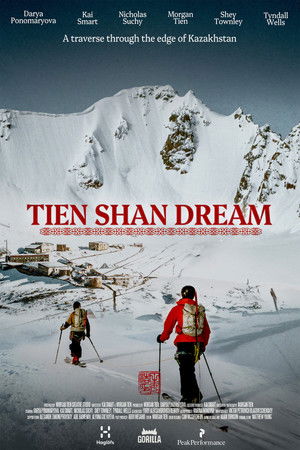
A team of international skiers embark on a two-week glacier traverse connecting two remote research stations in Kazakhstan. The Tien Shan's 4000+ meter peaks host an active scientific community, leveraging the rare environmental conditions for groundbreaking research. Established during the Soviet Union's occupation, the high-altitude research stations here are home to some of the longest-standing glacier and cosmic radiation experiments in the world - and are surrounded by deadly alpine terrain.
Vajont 9 ottobre '63
Free to Be…You and Me, a project of the Ms. Foundation for Women, is a record album, and illustrated book first released in November 1972, featuring songs and stories from many current celebrities of the day (credited as "Marlo Thomas and Friends") such as Alan Alda, Rosey Grier, Cicely Tyson, Carol Channing, Michael Jackson, and Diana Ross, among others. An ABC Afterschool Special using poetry, songs, and sketches, followed two years later in March 1974. The basic concept is to encourage a post-60's gender neutrality, while saluting values such as individuality, tolerance, and happiness with one's identity. A major thematic message is that anyone, whether a boy or a girl, can achieve anything.