World War II was not just the most destructive conflict in humanity, it was also the greatest theft in history: lives, families, communities, property, culture and heritage were all stolen. The story of Nazi Germany's plundering of Europe's great works of art during World War II and Allied efforts to minimize the damage.
Nearing 100 years old, a national treasure, Bobby Staff whimsically exposes a rare and revealing insight into the romantic life of a butch lesbian born in 1913. Accompanied by her long time friend, Sweet Baby J'ai, Bobbie takes us on a trip down a very steamy memory lane, through photographs and vivid memories of many decades living her life as an out lesbian in New York City and Los Angeles.
There remains only silence in a US military camp town and the, soon to be demolished, surrounding entertainment district in the northern part of Kyounggi province. In the town, three ex-prostitutes live with pains engraved in their minds and bodies. This film poignantly shows pieces of their memories and their figures wandering through the forgotten site, and reveals the most pathetic truth left behind.
GENTLY DOWN THE STREAM is constructed from fourteen dreams taken from eight years' worth of my journals. The text is scratched directly on to the film so that you hear your own voice as you read. The accompanying images of women, water, animals and saints were chosen for their indirect but potent correspondence to the text.
This experimental short consists of eight unedited rolls of super-8 film, each of which profiles an individual woman in real time. The women engage in everyday behaviour, such as playing pinball or reading a letter aloud.
A 3-part documentary granting a unique and privileged access into the magical world of whales and dolphins, uncovering the secrets of their intimate lives as never before. Episode 1: Giant Lives / Episode 2: Deep Thinkers / Episode 3: Voices of the Sea
Filmed at the Museum of Fine Arts, Boston and the Tate Britain, London, the exhibition reveals Sargent’s power to express distinctive personalities, power dynamics and gender identities during this fascinating period of cultural reinvention. Alongside 50 paintings by Sargent sit stunning items of clothing and accessories worn by his subjects, drawing the audience into the artist’s studio. Sargent’s sitters were often wealthy, their clothes costly, but what happens when you turn yourself over to the hands of a great artist? The manufacture of public identity is as controversial and contested today as it was at the turn of the 20th century, but somehow Sargent’s work transcends the social noise and captures an alluring truth with each brush stroke.
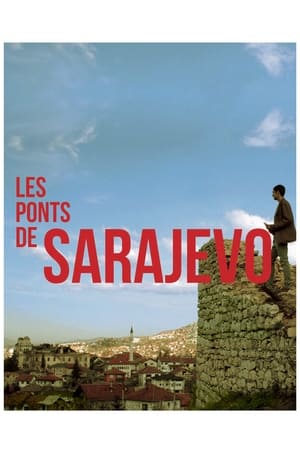
Thirteen European directors explore the theme of Sarajevo; what this city has represented in European history over the past hundred years, and what Sarajevo stands for today in Europe. These eminent filmmakers of different generations and origins offer exceptional singular styles and visions.
The film meticulously unravels the case of Norma Khouri, whose best-selling memoir about an honor killing captivated the world before her entire story began to collapse under the weight of its own fabrications. More than just a look at a spectacular con, this is a timely and unsettling exploration of media manipulation, cultural differences, and the dangerous power of a compelling narrative. Broinowski’s film is a riveting study of a pathological liar, but it also holds a mirror up to a world eager to embrace a good story, fact or fiction.
The Great Road (1927) is a Soviet silent documentary directed by Esfir Shub. Serving as the second part of her trilogy on Russian history—between The Fall of the Romanov Dynasty (1927) and Lev Tolstoy and the Russia of Nicolai II (1928)—the film chronicles the revolutionary path of the Soviet Union, assembling archival footage to depict the struggle, transformation, and aspirations of the early Soviet state.
British artist, academic, musician and activist Bob and Roberta Smith has been waging slightly odd political protests for years, in this documentary he investigates the age of activism and discovers what people are protesting about.
Activist-pranksters Andy Bichlbaum and Mike Bonnano pull the rug out from under mega-corporations, government officials and a complacent media in a series of outrageous stunts designed to draw awareness to the issue of climate change.
This short film is an ode to the women who settled the Prairies, from the days of early immigration to 1916 - when Manitobans became the first women in Canada to receive the provincial vote - and beyond. Recollections of women are complemented by a series of quotations drawn from letters, diaries, and newspapers of the day, which are spoken over re-enacted scenes and archival photographs.
In 1970, Melek Tez came to Berlin as a young worker from Turkey. A confident woman, she first countered racist resentments and remarks with irony and wit. Jokingly, she even referred to herself as a "Kümmeltürkin", a derogatory German term for Turkish migrants. Yet after fourteen humiliating years, her fighting spirit has given way to resignation: Melek Tez is returning to Turkey. Blending documentary, interviews and re-enacted scenes, director Jeanine Meerapfel chronicles Melek Tez' life experience.
A creative and personal retrospective of the renowned photographer Jindřich Štreit, accompanied by a selection of his photographs, footage from exhibitions, and encounters with those closest to him.
Las Muralistas features women muralists whose works cover the walls of San Francisco’s Mission District. The muralism movement that emerged in the 1970s in the Mission District marked the beginning of a tradition of activism, expression, and community building through public art.
Once described by the press as "one of the most controversial figures on the Australian art scene", avant-garde poet and playwright Christopher Barnett achieved a level of notoriety in the Melbourne underground theatre scene during the ‘70s and ‘80s, before self-exiling to France. He remains there today, running an experimental theatre lab working with the marginalised and underprivileged, applauded by the establishment (including former French Prime Minister Jean-Marc Ayrault) and faithful to his belief that art can change the world. These Heathen Dreams is an intimate portrait of Barnett's life and revolutionary philosophy. Combining archival footage dating back to the ‘60s with contemporary observational documentation and text from Barnett's writings, it is a poignant and inspiring study of the power of both art and political activism.
Explores the lives of Sara, Gigi and Giovanna, three Latino transvestites who for years have lived on the streets of Manhattan supporting their drug addictions through prostitution. They made their temporary home inside broken garbage trucks that the Sanitation Department keeps next to the salt deposits used in the winter to melt the snow. The three friends share the place known as "The Salt Mines".
Ricardo was once Sara, a homeless HIV positive transvestite, living in the underbelly of Manhattan. Today he is a churchgoing, married man, "saved" by a Dallas ministry. He has renounced his homosexuality, but is his conversion complete? Susana Aiken and Carlos Aparicio offer an intimate look at Ricardo's transformation.
In this heartwarming docudrama, Chilean immigrant Marilú Mallet strives to make a film about her experience of deep isolation. Her English-speaking husband, a prominent film director, criticizes her subjective approach to filmmaking; her young son, raised in Quebec, speaks only French. Interviews with Isabel Allende and other Chilean exiles reveal a deep bond in this powerful and resonant film about language and genre, exile and immigration.