Elementary Genocide is a documentary executive produced by award winning journalist/filmmaker Rahiem Shabazz. The documentary appeals to a wide general viewership by addressing the social, cultural, political and personal ramifications of how the federal government allots money to each state, to build prions based on the failure rate of 4th and 5th graders. In America, where half of the 4th grade is reading below grade level and more African-American males are in jail than are in college, Elementary Genocide serves as a striking reminder of a flawed system in need of repair.
A look at the prison breakout of Richard Matt and David Sweat from Clinton Correctional facility, as well as a look back at some of the most daring and ingenious prison breaks in American history.
As beautiful and sleek as it is deadly, 52 Blocks merits special conservation efforts as the United States' only existing native martial culture, as it is indeed, the jazz of the martial arts world. Across the African diaspora, there are manifestations of African-derived warrior-dances, capoeira in brazil, mani in Cuba, ladja in Martinique, pinge in Haiti- yet the US offshoot has remained esoteric, because it was suppressed throughout slavery, Reconstruction and Jim Crow and then obscured in the criminal justice system. The history, interviews and training of the martial arts style that created Breakdance and boxing greats like Mike Tyson.
In Paradisum relates two disturbing stories simultaneously. The female narrator tells her personal tale of imprisonment as the wife of the notorious Estonian serial killer, Andreas Hanni. Although her story is bizarre, it touches familiar themes that run throughout modern life: the desire to be loved and the fear of being alone. Pille Hanni's tale unfolds over cinema vérité images of life in several Estonian prisons. At times the images reflect in a literary way the events of the narration, yet they are representations and impressions, rather than traditional documentary style footage of the people involved. This opens the story to a more general interpretation, often with unsettling results. The parallel contents reveal, at two levels of story and social organisation, how the bizarre and inhuman can be tolerable and even addictive in the face of our fears.
The youngsters housed in the "Almafuerte" Maximum Security Juvenile Institute have their first approach to audiovisual recording. A film and documentary video workshop serves as an excuse for them to make a short film inside the prison. The camera is a rabid toy that generates fascination in them and rescues a sheltered, innocent smile that seemed forgotten under the shadows. While inside libertarian cries bounce against the walls, outside sounds fanfares of an iron fist.
Former conservative Justice Secretary Ann Widdecombe visits a Norwegian prison that has been described as the most luxurious of its kind.
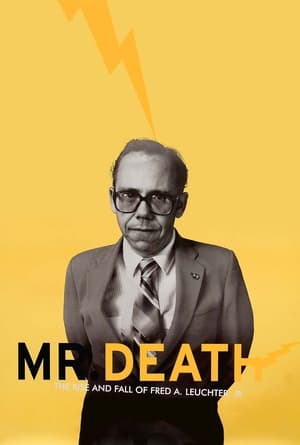
A portrait of the life and career of the infamous American execution device designer Fred A. Leuchter, Jr. Mr. Leuchter was an engineer who became an expert on execution devices and was later hired by holocaust revisionist historian Ernst Zundel to "prove" that there were no gas chambers at Auschwitz. Leuchter published a controversial report confirming Zundel's position, which ultimately ruined his own career. Most of the footage is of Leuchter, working in and around execution facilities or chipping away at the walls of Auschwitz, but Morris also interviews various historians, associates, and neighbors.
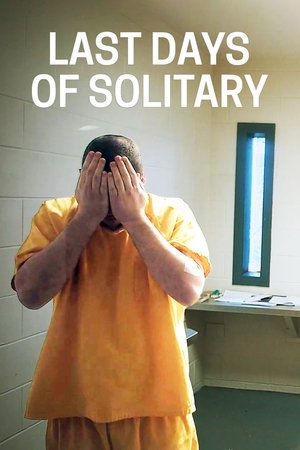
In 2011, Maine State Prison launched a pioneering reform program to scale back its use of solitary confinement. Bafta and Emmy-winning film-maker Dan Edge and his co-director Lauren Mucciolo were given unprecedented access to the solitary unit - and filmed there for more than three years. The result is an extraordinary and harrowing portrait of life in solitary - and a unique document of a radical and risky experiment to reform a prison. The US is the world leader in solitary confinement. More than 80,000 American prisoners live in isolation, some have been there for years, even decades. Solitary is proven to cause mental illness, it is expensive, and it is condemned by many as torture. And yet for decades, it has been one of the central planks of the American criminal justice system.
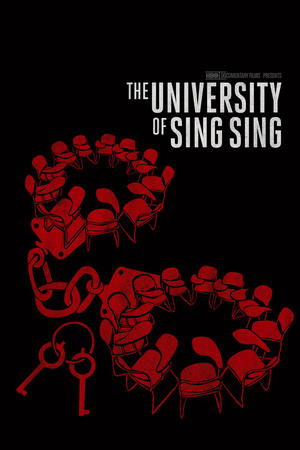
An inside look at the notorious Sing Sing Correctional Facility, where one of the U.S.’s only in-prison college programs, Hudson Link, offers long-time inmates an education – and a new lease on life.
The war on drugs has been going on for more than three decades. Today, nearly 500,000 Americans are imprisoned on drug charges. In 1980 the number was 50,000. Last year $40 billion in taxpayer dollars were spent in fighting the war on drugs. As a result of the incarceration obsession, the United States operates the largest prison system on the planet. Today, 89 percent of police departments have paramilitary units, and 46 percent have been trained by active duty armed forces. The most common use of paramilitary units is serving drug-related search warrants, which usually involve no-knock entries into private homes.
This documentary follows Pia, who is homeless. She is struggling with her drug addiction. During the day she (and many other homeless people) sells the newspaper Situation Sthlm.
Ten years after documentary filmmaker Tom Alandh started filming homeless drug addict Pia Sjögren, he makes his third and final film about her. Pia was 14 years old when she started smoking cannabis and using drugs. Then it all happened really fast. The heavier drugs, the men who beat, and years of cold nights in basements and attics. Treatment and punishment. Rehabs and prisons. Relapse. Constantly back, at the complete bottom, among shame and guilt. For ten years, Tom Alandh and photographer Björn Henriksson documented Pia's life. Two films were made, this is the third and last film, which shows how she managed to get clean against all odds.
British documentarian Nick Broomfield creates a follow-up piece to his 1992 documentary of the serial killer Aileen Wuornos, a highway prostitute who was convicted of killing six men in Florida between 1989 and 1990. Interviewing an increasingly mentally unstable Wuornos, Broomfield captures the distorted mind of a murderer whom the state of Florida deems of sound mind -- and therefore fit to execute. Throughout the film, Broomfield includes footage of his testimony at Wuornos' trial.
Join Tony Rykers as he takes us on an exclusive behind the scenes tour of an African prison in Mocuba, Mozabique. This unscripted and raw footage introduces you to the dreadful conditions many of the prisoners face each day and how, in a simple way, God is touching their lives.
Explores the realities of death-row inmates inside Huntsville (Texas) Unit, a prison with the highest number of executions in 1997. Features interviews with prisoners, guards, officials, lawyers and victims' family members.
Retrospective documentary on the making of the low-budget horror film Prison (1987)
Insein Rhythm portrays the sights, sounds and rhythms of Yangon’s Insein train station which is also a stone’s throw away from the country’s infamous Insein prison.
A shocking new 2 hour film by B.A. Brooks. This 2010 release is a follow up to "The Decline And Fall Of America" which was released in 2008. "The American Matrix - Age Of Deception" details news items that all people should be aware of such as the economic collapse of The United States and the formation of the a New World Order. See what has really been going on in America today.
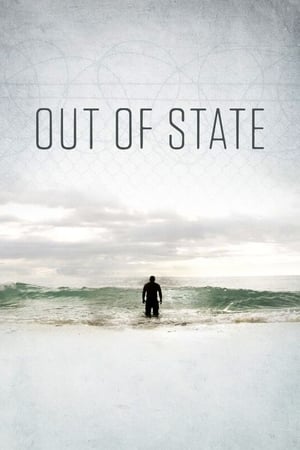
Out of State is the unlikely story of native Hawaiians men discovering their native culture as prisoners in the desert of Arizona, 3,000 miles, and across the ocean, from their island home.
The documentary, " Death and the Judge", revolves around Iran's most famous criminal judge, Azizmohammadi. He served as a criminal judge for 45 years and issued about 4500 death sentences; a record in not only Iran, but also the world. This documentary looks into his personal and professional life as he is followed within his home with his family, in the court of law, and in his retirement days. The ultimate purpose of the documentary is to deduce the role of death in the judge's life as he either takes life away from criminals or death comes to his loved ones. During his retirement, he is once again given the choice between the life and death of a person, despite no longer being a judge.