Tucumán, Argentina, 1965. Three years before George A. Romero's Night of the Living Dead was released, director Ofelio Linares Montt shot Zombies in the Sugar Cane Field, which turned out to be both a horror film and a political statement. It was a success in the US, but could not be shown in Argentina due to Juan Carlos Onganía's dictatorship, and was eventually lost. Writer and researcher Luciano Saracino embarks on the search for the origins of this cursed work.
The chronicle of the mind-blowing journey that was Hollywood during the seventies; the true and gripping story of the last golden age of American cinema, an exalted celebration of creativity and experimentation; but also of sex, drugs and rock 'n' roll: a turbulent and dark tale of ambition, envy, betrayal, hatred and self-destruction.
With Australia at war in Vietnam in 1967, suddenly Prime Minister Harold Holt disappeared without a trace—an event unparalleled in the history of western democracy. Four decades later, a coronial inquiry confirmed that Harold Holt had accidentally drowned. Some people may still believe that Holt was a spy and fled to China in a submarine. But most suspect there was more to his disappearance than has ever been revealed. Reconstructed from eyewitness accounts, this dramatised documentary tells the story of the Prime Minister's secret world in the months before he disappeared — a world of betrayal, blackmail, political treachery, a poisonous feud, mounting physical and mental strain, and near-death experiences. Featuring Normie Rowe as Harold Holt, Nicholas Hope as William McMahon and Tony Llewellyn-Jones as John McEwen, this film reveals explosive new aspects of the case.
In the fifties, when the future Democratic Republic of Congo was still a Belgian colony, an entire generation of musicians fused traditional African tunes with Afro-Cuban music to create the electrifying Congolese rumba, a style that conquered the entire continent thanks to an infectious rhythm, captivating guitar sounds and smooth vocals.
How in 1959, during the heat of the Cold War, the government of the United States decided to create a secret military base located in the far north of Greenland: Camp Century, almost a real town with roads and houses, a nuclear plant to provide power and silos to house missiles aimed at the Soviet Union.
The vivid and inspiring story of British film icon Michael Caine's personal journey through 1960s swinging London.
Il est minuit, Paris s'éveille
The career of French comic author René Goscinny was a living blend of cultures and an expression of the great importance this artist attached to the production and dissemination of sophisticated popular culture. Goscinny left behind an extremely extensive body of work: "Asterix", "Lucky Luke", "Isnogud", "Little Nick" and many more.
Fifty years after her first recording in Nashville, Sylvie Vartan decided to record the album she sings on to mark this anniversary there. In one of the songs, she says: I have forged my own path, without turning back. Leaving my mistakes behind me. I ventured into unknown territory, avoiding pitfalls, and I came back. It is on this "road," both public and personal, starting from her native Bulgaria to Paris, passing through a thousand places around the world, traversing fashions and overcoming the trials of an extraordinary life, that this film sets out to illuminate the trajectory of a shy young girl who became an international icon and a resolutely free woman.
Spain, 1968. An analysis of the political and social situation of the country, suffocated by the boot of General Franco's tyrannical regime. (Filmed clandestinely in Madrid and Barcelona during the spring of 1968.)
The life and career of the hailed Hollywood movie star and underappreciated genius inventor, Hedy Lamarr.
Sylvie Vartan has had an extraordinary life: a Bulgarian child forced into exile, who became the icon of a youth in the midst of revolution in France. After a career spanning 64 years, with nearly 50 albums recorded and 40 million records sold, she has decided to bow out. During her farewell tour, the singer chose to open up to Augustin Trapenard.
During the 1960s there was a group of writers in Buenos Aires who, influenced by the North American Beatnik movement, called themselves Opium. Anarchists, rebels with a cause, populated Buenos Aires nights in bars like El Moderno, promoting a different movement for a different time. This film addresses not only Opium, but the sixties itself, and its collateral protagonists.
A portrait of a woman recovering from cosmetic surgery in Miami.
The bleached palette and home-movie aesthetics of Super 8 footage provide the image track for this testimonial about an illegal abortion in Mexico City in the 1960s, delivered in voiceover by the filmmaker’s mother. In its account of this intimate and disorienting memory, Lesser Choices summons a time of profound uncertainty—a moment from an era without rights—and offers a warning to the present.
Chicago 1969: Activists from the Black Panthers, Young Lords, and Young Patriots united African Americans, Latinos, and poor whites to confront police brutality and unfair housing practices in one of America’s most segregated cities. A timely story of collective action, The First Rainbow Coalition tells this little-known chronicle of political struggle with insight and urgency using archival footage and interviews with those who lived it.
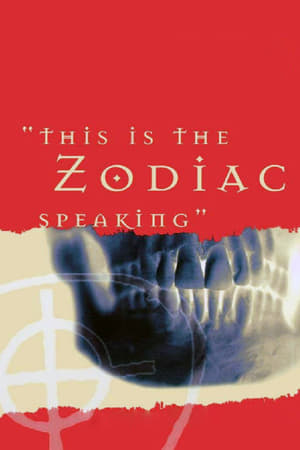
A true crime author returns to Dallas, uncovering evidence that challenges the suicide rulings of three mysterious deaths from his past.
Photographer and make-up artist François Nars reveals his visually stunning inner world in this feature-length documentary by filmmaker Lisa Immordino Vreeland. Mr. Nars takes us on a tour of the fashions, designers and models of '70s Paris, the underground of '90s New York, and the timeless world of cinema, filled with actors, actresses, and directors who have shaped his visual aesthetics.
This entertaining documentary of the World Cup Soccer tournament of 1966 follows the 15 countries competing for the sport's most coveted prize. Nigel Patrick narrates, with commentary provided by Brian Glanville. The executive producer spent $336,000 on the production and used 117 cameras to record nearly 48 hours worth of action. Four editors were employed to create the final 108-minute feature.
Germán Cipriano Gómez Valdés Castillo, a young radio announcer from Cuidad Juárez, succeeds in drawing attention to the pachuco movement through his character Tin Tan, laying the groundwork for a new form of binational and mass linguistic expression: Spanglish. He soon became a leading figure in theater and film on the American Continent. Singled out by critics as a destroyer of the language, he quickly won the approval of the public. His ability to improvise revolutionized the film industry. His talent as an actor, singer, dancer and comedian contributed to the Golden Age of Mexican Cinema. From El Hijo Desobediente to Capitán Mantarraya, from Cuidad Juárez to Havana, from mambo to rock, the legacy of Tin Tan makes him one of the great icons of Mexico today. This film tells his story as it has never been told before.