After finding themselves ensnared in a death trap, seven disillusioned castoffs must embark on a dangerous mission that will force them to confront the darkest corners of their pasts.
Since the renewed Intifada began in 2000, there have been over 75 Palestinian suicide bombings. This is the story of 0ne-the bombing of bus 32 in Jerusalem in June 2002. The film connects the stories of a group of ordinary Israelis-Jews and Arabs. Each of them holds a clue to someone who died that day.
When Harvard PhD student Jennifer Brea is struck down at 28 by a fever that leaves her bedridden, doctors tell her it’s "all in her head." Determined to live, she sets out on a virtual journey to document her story—and four other families' stories—fighting a disease medicine forgot.
Around the year 1000 AD warlike people, the so-called "tjuder", roam in northern Scandinavia. As they brutally kill a family in a remote area, including the parents and their little daughter, the family's teenage son, Aigin, observes the slaughter. He manages to flee from these killers and reaches a camp with other Sámi whose inhabitants are worried if he has been able to hide his track. Afraid of the murderous people, they decide to flee to the coast. The boy stays alone to avenge his family's murder. Unfortunately, they get him before he can do anything and force him to lead them to the other Sámi. He guides them but has a plan to destroy the barbarous people before reaching the camp.
An orphan bear cub hooks up with an adult male as they try to dodge human hunters.
“El apagón: Aquí vive gente” is a 23-minute film that explores the socio-economic challenges in Puerto Rico, focusing on the effects of power outages and gentrification driven by the real estate and energy sectors. Through visuals and personal stories, the documentary highlights the experiences of Puerto Rican communities facing these issues.
Short documentary about the effects of climate change on the Arctic.
Short documentary about the Arctic
Light Upon Light: A Documentary on Hijab is an intimate and deeply personal exploration of the diverse, raw, and untold stories of hijabi women. Through open and vulnerable conversations with 7 women, the film dismantles stereotypes, highlights the challenges imposed by society, and celebrates the profound beauty of the hijab beyond a mere clothing choice. It captures the individuality of each woman’s story—how they came to wear the hijab, the struggles they’ve faced, and the strength they’ve found in it. More than just fabric, the hijab is a journey, often misunderstood, and influenced by the way the world perceives it. By amplifying voices that are often unheard, the documentary creates a space for empathy, challenges misconceptions, and invites a deeper understanding of what it truly means to wear the hijab; inspiring everyone to see hijab in a new light.
After graduating from Emory University in 1992, top student and athlete Christopher McCandless abandons his possessions, gives his entire $24,000 savings account to charity, and hitchhikes to Alaska to live in the wilderness.
Dr. Joseph Marshall, Jr., winner of the San Francisco Foundation 2006 Community Leadership Awards (The Robert Kirkwood Award) - for redefining youth violence as a public health issue. By developing violence prevention methodologies and promoting these models nationwide, he influenced the lives of hundreds of young men and women whose mindsets were changed, and futures improved, through their involvement with Omega Boys Club/Street Soldiers.
After their father is called into work, two young boys, Walter and Danny, are left in the care of their teenage sister, Lisa, and told they must stay inside. Walter and Danny, who anticipate a boring day, are shocked when they begin playing Zathura, a space-themed board game, which they realize has mystical powers when their house is shot into space. With the help of an astronaut, the boys attempt to return home.
Jerry Bines is trying to live down a past that includes killing a man (in self-defence), theft and an alcoholic, abusive father. He sees hope for redemption by providing life-giving bone marrow to his leukemia-stricken son. But time is running out because an escaped killer (Gary Percy Rils) is coming to town to exact revenge for ancient sins. And like the old buck in a backwoods tale he spins for his kid, Bines must stop running and turn to face his hunter.
Ray Ferrier is a divorced dockworker and less-than-perfect father. Soon after his ex-wife and her new husband drop off his teenage son and young daughter for a rare weekend visit, a strange and powerful lightning storm touches down.
Civil discourse is vanishing from modern society. Improv comedians heal the divide in this documentary feature film starring Colin Mochrie (Whose Line is it, Anyway?) that explores the use of improvisation for conflict resolution. Republican Karl Rove performs improv with Colin Mochrie and endears himself to a room half-full with Democrats. Police officers do improv with local youth in order to learn listening skills. Dr. Daniel J. Wiener brings couples back from the brink of divorce using improv. Dr. Charles Limb places Second City improv comedians in a functional MRI machine to see what happens in the brain when we improvise.
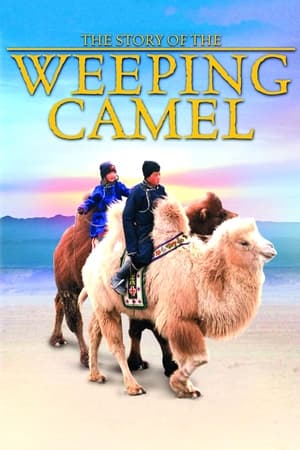
When a Mongolian nomadic family's newest camel colt is rejected by its mother, a musician is needed for a ritual to change her mind.
EDC designs, implements, and evaluates programs to improve education, health, and economic opportunity worldwide. Collaborating with both public and private partners, they strive for a world where all people are empowered to live healthy, productive lives.
One Million B.C. is a 1940 American fantasy film produced by Hal Roach Studios and released by United Artists. It is also known by the titles Cave Man, Man and His Mate, and Tumak. The film stars Victor Mature as protagonist Tumak, a young cave man who strives to unite the uncivilized Rock Tribe and the peaceful Shell Tribe, Carole Landis as Loana, daughter of the Shell Tribe chief and Tumak's love interest, and Lon Chaney, Jr. as Tumak's stern father and leader of the Rock Tribe.
In 1980s Brooklyn, a resilient family, evicted from public housing, refuses to succumb to homelessness or welfare. Instead, they construct their own home-one scrap of discarded wood at a time.
This documentary follows the lives of several extraordinary people who have been diagnosed with social anxiety disorder. Through personal interviews, viewers learn about the symptoms, emotions, and challenges these people face and about the treatments available to help people on their road to recovery.