The film follows Ongka's struggles to accumulate huge numbers of pigs and other items of value to present at a Moka ceremony to another tribe.
"Louceiras" portraits the daily life of the last ceramists of the Brazilian indigenous ethnic group Kariri-Xocó, who earn a living from clay. They inherit a tradition passed from mother to daughter concerning the art of choosing, manufacturing and cooking clay pots and pans. Living in a village by the São Francisco river in the city of Porto Real do Colégio(AL), they share with their people the secret of medicinal herbs, the Toré dance, the labour songs (rojão) and the secret of Ouricuri.
Children and teenagers throw sticks, berries, and leaves at each other from perches in a large baobab tree.
In 1935, German scientists dug for bones; in 1943, they murdered to get them. How the German scientific community supported Nazism, distorted history to legitimize a hideous system and was an accomplice to its unspeakable crimes. The story of the Ahnenerbe, a sinister organization created to rewrite the obscure origins of a nation.
The Siekopaai Nation embarks on a quest across the borders that divide its ancestral territory to connect its communities. With the help of CEFO Indígena and the Popular Free Media Lab, they install new Community Internet Networks that bring their families together and project their culture to the whole world, after an 8 decade struggle. Along the way, they learn how to use this new tool from the globalized world, and harness it to strengthen their elders' vision and begin a new era in the fight for their sovereignty.
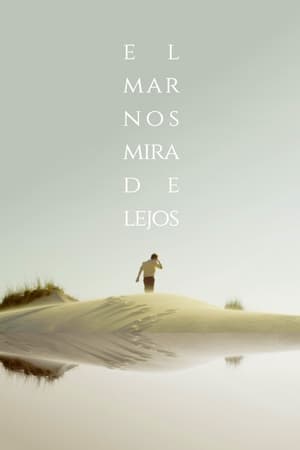
Huelva, Spain, an isolated region lost in time. The grass, the sand and the sky are the same that those foreigners saw in the spring of 1895, when they crossed the sea from a distant country to mark the unspoiled terrain and extract its wealth, when the tower was new, when people could climb to the top of the highest dune and imagine that the city of Tartessos was still there, in the distance, almost invisible in the morning brume.
The concrete costs for culture and creativity is here illustrated in punchy images.
The subject is two grotesque-looking human beings who are sitting on the deck of a ship. The two weird individuals sit cross-legged and do the bidding of a man in oriental costume. The point of the film seems to be directed at the fact that the bone structure of the two subjects makes them look like monkeys or apes, and the spectators seem to be trying to get them to behave like monkeys, that is, scratch themselves, etc.
A short film on Gnawa trance shot in south Morocco.
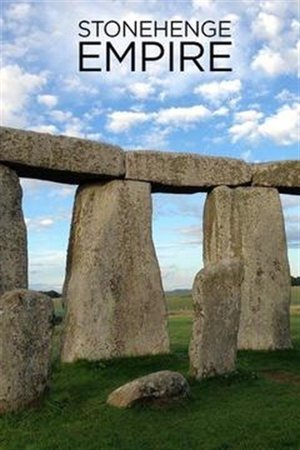
For centuries, Stonehenge has been cloaked in mystery. Who built it? How did they do it? Why did they do it and what is its significance? Now, a team of archaeologists takes a high-tech approach to find out, and their discoveries will exceed all expectations. Learn the full story of the world's most investigated prehistoric site, featuring a forgotten people who were meticulous planners, profound believers and true warriors. It's a 10,000-year-old tale, pieced together by state-of-the-art survey equipment and compelling archaeological evidence.
Big Science - Was Tiere denken
Vaastu Marabu documents the theory and practice of the Vaastu tradition of Indian art, architecture, craft and design. One of the foremost shilpis (designer-builder-sculpter) of India, Shri. V. Ganapati Sthapati of Mammallapuram, meditates on his art and his occupation. The film shows the process of making stone idols at Mammallapuram, near Madras, of casting bronzes in Kumbakonam, and of building stone temples at Kamudhi, near Madurai and at Ratnagiri, near Vellore. It illustrates the continuity of the tradition and reveals a technology that is ancient, yet still relevant today. The film explores the process of translating inner experience into art, and invites us to experience the naked beauty of the form while understanding the metaphysical message. The art of the Vishwakarma has given form and expression to all denominations of metaphysical thought in India. The film also probes the underlying scientific and mathematical principles.
From delivery riders and rideshare drivers to the invisible workers training artificial intelligence, millions of people around the world are caught in a radical transformation of work. Through intimate, deeply personal stories spanning multiple continents, The Gig Is Up reveals the human cost of platform capitalism. Promising freedom and flexibility, companies like Uber, Amazon and Deliveroo have created a system in which algorithms determine who works, what they earn and when they can be fired. As workers confront precarious livelihoods, corporate power and an increasingly uncertain future, they also find ways to resist. A sweeping yet intimate portrait of the people behind the digital economy, the film explores a growing global struggle over the future of work.
Filmmaker Kevin McMahon accompanies the Haida delegation on a repatriation trip to Chicago in 2003. His film reveals the whole repatriation process through the stories and experiences of the people who participated, both Museum staff and the Haida people.
A celebration of the diversity of Ethiopia's culture and wildlife. It journeys from North to South - spanning mountains, rainforests and the hottest place on Earth. It documents Muslims mixing with Christians as they have for over a millennia and the 'honey people' of the forest, filmed here for the first time. Visually stunning and unsentimental, this is Ethiopia as you've never seen it before.
Native Mexican people grouped in front of the camera.
Ju/'hoan women often share an intimate sociability and spend many hours together discussing their lives, enjoying each other's company and children. In this short film, Ju/'hoan women rest, talk and nurse their babies while lying in the shade of a baobab tree. This film is a good illustration of "collective mothering" in which several women support each other and share the nurturing role.
This film depicts a moment of flirtation between N!ai, the young wife of /Gunda, and her great-uncle /Ti!kay. The two share a "joking relationship," a Ju/'hoan kin relationship which provides opportunities for casual intimacy, emotional release, and support.
Amazônia Indomável
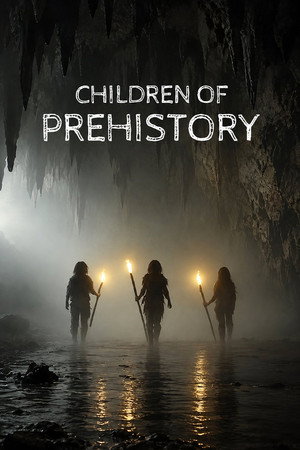
What if children were the most overlooked figures of Prehistory? Through the latest archaeological discoveries, and an investigation into a teenager who died 26,000 years ago, this spectacular documentary, featuring illustrations brought to life with AI, reveals their daily lives, their learning, their games, their role in rituals, and even their possible involvement in cave art, radically transforming our view of Paleolithic societies.